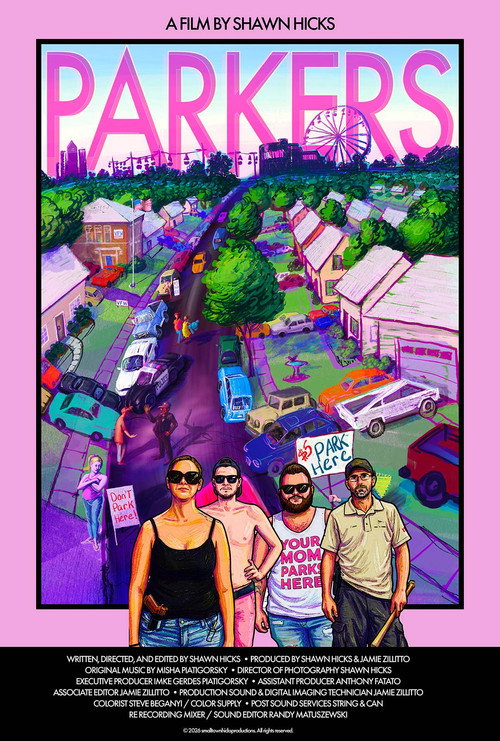
Parkers (2026)
Directed by Shawn Hicks
Shawn Hicks arrives with a camera and an apparently sincere belief that the parking situation outside the Iowa State Fair deserves feature-length documentary treatment.
Consciousness Markers
The director's stated intent, that the film should remind audiences of their 'everyday sameness' and shared desire for dignity and belonging, carries a mild sermon quality. It is delivered gently, but it is still a sermon.
An 86-year-old grandmother flagging down cars on her birthday receives a warm portrait, but the film makes no feminist argument about it. She is simply flagging down cars.
The micro-economy angle touches on economic precarity, but the film celebrates rather than condemns the hustle. These are proud small-time entrepreneurs, not victims of capital.
No evidence of deliberate diversity casting or representation architecture. The subjects are whoever lives on the East Side of Des Moines and showed up to park cars, which is not the same thing.
No LGBTQ+ themes, characters, or framing identified in any available material. The film is about parking.
No racial consciousness framing detected. The documentary does not appear to interrogate its subjects through a racial lens.
No climate themes present. The film depicts a great many SUVs and pickup trucks arriving in a residential neighborhood, which is arguably the opposite.
No body positivity themes or framing identified.
No neurodivergence themes or representation identified.
No historical revisionism present. The film concerns events happening in August, in Iowa, right now.
Why it received this score
Shawn Hicks arrives with a camera and an apparently sincere belief that the parking situation outside the Iowa State Fair deserves feature-length documentary treatment. He is correct. The result is a portrait of working-class Midwestern micro-entrepreneurship so resolutely uninterested in progressive cultural signaling that it almost constitutes a provocation in the current documentary landscape. Almost. The film observes its subjects, residents of Des Moines's East Side who convert their front yards into improvised parking lots for eleven days each August, with the kind of patient, unglamorous attention that the genre reserves for subjects it considers quietly noble. They are quietly noble. The film knows this and says so, several times.
The social consciousness here is of the pre-ideological variety: a genuine concern for people who are just trying to pay their property taxes, buy their kids some school clothes, and get through the heat without too much trouble from drunks. There are guns present, carried openly, described as being there "just in case." The film does not editorialize about the guns. This is, in the current documentary climate, a remarkable act of restraint. Director Hicks does permit himself a brief outbreak of thesis statement in the press materials, invoking dignity, security, belonging, and the chance to be seen, which is the approved vocabulary of humanist documentary filmmaking and scores only marginally on the lecture scale. He keeps most of it out of the film itself, which is the correct decision.
What we have, then, is a document of Americana so straightforwardly affectionate toward its subjects that it resists easy categorization by either side of the culture war, a fact that has apparently delighted Des Moines audiences and Iowa Public Radio in equal measure. The progressive markers that typically populate the documentary form are absent here with a thoroughness that feels almost deliberate. There are no systemic critiques, no identity frameworks, no calls to action. There is an 86-year-old grandmother waving cars into a yard on her birthday. The taxonomy struggles. The film does not.
Analysis generated by our Consciousness Algorithm
Synopsis
Every summer, nearly a million people pour into the Iowa State Fair. To get there, they have to pass through a different kind of attraction: a neighborhood of "parkers" who turn their yards into improvised parking lots, hustling twenty-dollar bills out of SUVs, pickups, and minivans.