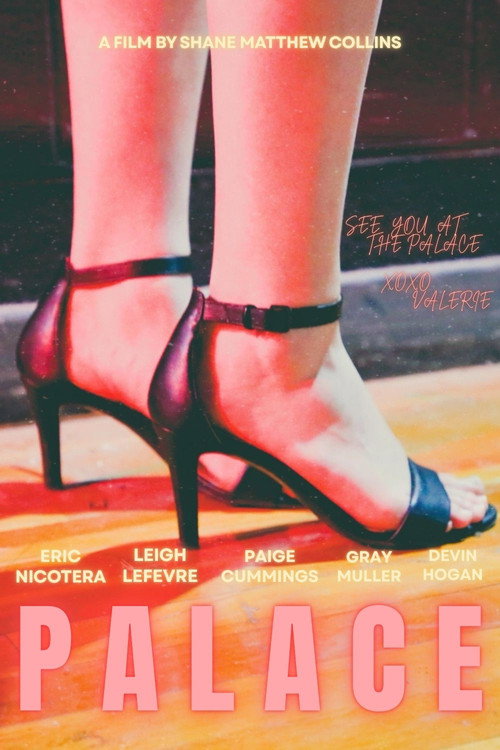
P A L A C E (2026)
Directed by Shane Matthew Collins
Shane Matthew Collins' eighteen-minute short arrives bearing the thesis that demolishing a theatre is a bad idea, a position that the building's vengeful ghosts argue more persuasively than any zoning board ever could.
Consciousness Markers
The antagonist is a corporate demolition supervisor indifferent to cultural heritage, and the film frames his disregard for the theatre as a kind of moral failing. The critique is atmospheric rather than polemical, and stops well short of a systemic indictment.
The premise carries a mild preservationist moral, in which the ghosts of artists essentially punish a man for not caring about art. The message is delivered via supernatural consequence rather than speechifying, keeping the lecture energy low.
No evidence of casting choices driven by representation mandates or demographic balancing. The ensemble appears to have been assembled on the basis of the story's requirements.
No LGBTQ+ themes, characters, or subtext are documented in any available coverage of the film.
Female characters are present among the haunting spirits, but no feminist framework or gender-politics commentary is evident in the film's themes or reception.
No racial consciousness messaging or commentary on systemic racial dynamics has been identified in the film or its surrounding discourse.
The film's conflict concerns urban demolition and preservation of artistic spaces, not environmental or climate themes.
No body positivity themes or messaging are present or documented.
No neurodivergent characters or related themes are evident in the film.
The film is an original supernatural narrative, not a historical retelling. No revisionist impulses are at work.
Why it received this score
Shane Matthew Collins' eighteen-minute short arrives bearing the thesis that demolishing a theatre is a bad idea, a position that the building's vengeful ghosts argue more persuasively than any zoning board ever could. The film pits a corporate supervisor named Shannon against the lingering souls of performers who simply refused to vacate the premises after death, which, as a labor dispute, is difficult to resolve through conventional HR channels. Collins, a former stage performer himself, brings a genuine affection for the spaces where live performance lives and dies, and the film's best quality is that this affection registers as atmosphere rather than argument.
The social consciousness on display here is of the pre-ideological variety: a generalized sympathy for artists and a suspicion of men in hard hats who do not pause to ask why a building has been empty for decades. The anti-capitalist undertow is present but mild, the kind you might feel wading in a very shallow river. No one delivers a speech about the commodification of cultural space. The ghosts simply make their case through the traditional methods available to ghosts, and the film is better for this restraint.
On our scale of progressive cultural markers, P A L A C E scores with the tranquility of a building that has not yet been demolished. It is a horror film about memory and artistic devotion, made by a student filmmaker with a clear point of view and the good sense not to editorialize beyond what the genre requires. We note it, we classify it, and we move on, as the living must.
Analysis generated by our Consciousness Algorithm
Synopsis
New Orleans' beloved Historic Palace Theatre is set for demolition, when the supervisor behind the project discovers why it closed down from the souls lost inside.