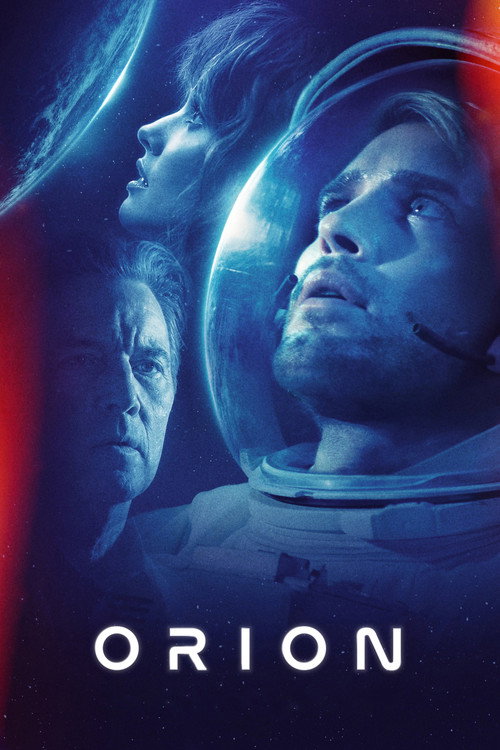
Orion (2026)
Directed by Jaco Bouwer
Jaco Bouwer's Orion arrives as a contained, warehouse-bound sci-fi thriller in the tradition of films that use a single location and a tight budget to ask questions that larger productions tend to avoid, specifically: what is memory, who controls truth, and why does NASA always seem to have a suspicious interrogator on staff.
Consciousness Markers
The cast includes women in substantive roles and a modestly diverse ensemble, though the film shows no evidence of diversity being foregrounded as a thematic or marketing priority. It reads as unremarkable genre casting.
Critics note the film engages with post-truth epistemology and the constructedness of reality, and the producer's own press quotes lean into this framing. The sermonizing remains contained within the genre's philosophical traditions rather than breaking into open advocacy.
Female cast members appear in roles of some agency, but no feminist framework or gender-politics commentary is evident in the critical reception or promotional materials.
The film's themes of government overreach and institutional paranoia carry a faint anti-establishment undercurrent, though this is standard sci-fi fare and not a pointed critique of capitalism or wealth.
No LGBTQ+ characters, themes, or subtext are identified in any available research or critical coverage of the film.
No racial consciousness themes, race-based casting commentary, or social justice framing around race are present in the film or its discourse.
The film is a contained psychological sci-fi thriller with no identified environmental or climate messaging.
No body positivity themes or commentary are present in the film or its critical reception.
While the film explores fractured memory and subjective perception, this is a plot device rather than any advocacy framing around neurodivergence.
The film is an original sci-fi thriller with no historical revisionism or recontextualization of real events.
Why it received this score
Jaco Bouwer's Orion arrives as a contained, warehouse-bound sci-fi thriller in the tradition of films that use a single location and a tight budget to ask questions that larger productions tend to avoid, specifically: what is memory, who controls truth, and why does NASA always seem to have a suspicious interrogator on staff. The film follows a NASA official tasked with coaxing recollections out of an amnesiac astronaut, the sole survivor of a crew that met some unspecified fate in space. Critics have been quick to draw comparisons to Arrival, which is the highest compliment the genre press knows how to give any film in which humans attempt to communicate with something they do not understand.
The film's social consciousness, such as it is, operates at the level of philosophy rather than advocacy. Themes of subjective truth and institutional paranoia are present, and the production's press materials lean into a post-truth framing with the enthusiasm of a film school thesis. Drew Van Acker, pulling double duty as producer and lead, has stated in interviews that the film asks whether we can accept that another person's truth might differ from our own. This is, to be clear, a question that has been asked by every introductory epistemology course since Descartes, and by at least a dozen sci-fi films since Contact. The film does not appear to have invented it.
What Orion conspicuously lacks is the full constellation of progressive markers that would elevate it to the upper registers of the cultural sensitivity scale. There is no climate allegory, no body politics, no rainbow subtext tucked between the interrogation scenes. The government-as-villain framing earns a modest nod in the anti-establishment column, and the ensemble's gender diversity is noted, but neither element feels engineered. This is, in the taxonomy of modern genre cinema, a film that is simply trying to be a film. We record this observation without judgment, and with only mild surprise.
Analysis generated by our Consciousness Algorithm
Synopsis
A NASA interrogator is tasked with helping an amnesiac astronaut recover his memory in order to determine "who" or "what" killed the rest of the crew before they crash-landed back on Earth.