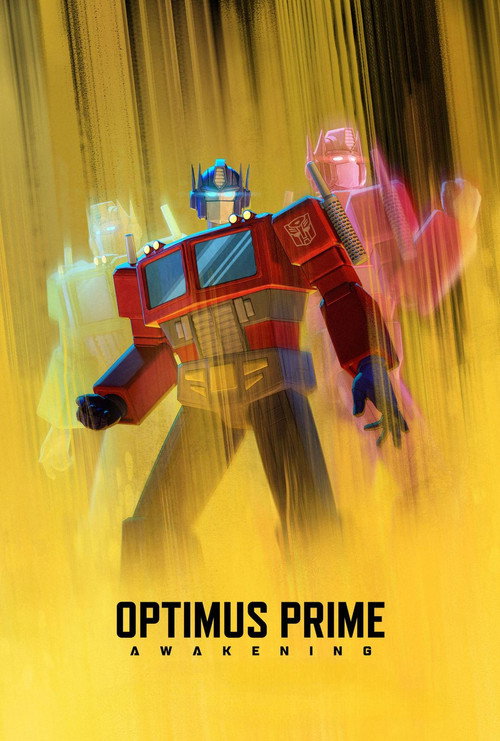
Optimus Prime Awakening (2026)
Directed by Joshua Wassung
Twelve minutes is not a long time to spend in a Cybertronian afterlife, but Joshua Wassung's Optimus Prime Awakening makes economical use of the runtime, delivering a short film whose thematic ambitions are, by the standards of a property created to sell articulated plastic trucks to children, surprisingly earnest.
Consciousness Markers
The film's central message, delivered by a divine entity urging Optimus to abandon cycles of violence, carries a mild sermonizing quality. It is brief and earned by the narrative context, however, and stops well short of hectoring.
The cast is composed entirely of legacy voice actors reprising roles they have held for forty years. No evidence of diversity-conscious casting initiatives.
No LGBTQ+ themes, characters, or subtext are present. The film's romantic landscape consists entirely of robots with no discernible gender presentation concerns.
No feminist themes are present. The principal characters are male-coded robots engaged in theological contemplation, which is a different genre entirely.
No racial consciousness themes are present. The characters are extraterrestrial mechanical beings, and the film declines to map human racial dynamics onto them.
No climate or environmental themes are present. Cybertron's ecological status is not addressed, and the film does not appear to be concerned with it.
No anti-capitalist themes are present. The film is, somewhat ironically, a Hasbro-produced short attached to a theatrical re-release of a film that was originally a toy commercial.
No body positivity themes are present. The characters are large transforming robots, and their relationship with their physical forms is not interrogated.
No neurodivergence themes are present. No characters are coded as neurodivergent, nor does the narrative engage with cognitive difference in any form.
No revisionist history is present. The short expands on established Transformers lore rather than recontextualizing it through a modern ideological lens.
Why it received this score
Twelve minutes is not a long time to spend in a Cybertronian afterlife, but Joshua Wassung's Optimus Prime Awakening makes economical use of the runtime, delivering a short film whose thematic ambitions are, by the standards of a property created to sell articulated plastic trucks to children, surprisingly earnest. The film deposits Optimus Prime in a metaphysical antechamber following his canonical death in the 1986 feature, where a divine presence known as The One urges him to release his grip on endless war and allow a new generation to carry the burden. This is, on its face, a meditation on mortality, legacy, and the exhausting futility of perpetual conflict. It is not, by any measurable standard, a text preoccupied with the social justice concerns of the current decade. We searched. We found a robot heaven and a great deal of sincerity.
The film's most notable cultural register is elegiac rather than progressive. Peter Cullen's final performance as the character he voiced for four decades casts an unavoidable shadow over the proceedings, and the film appears to have been constructed, at least in part, with that biographical weight in mind. The One's instruction to let go and trust the next generation reads, in context, less like a lecture and more like a farewell. It is the gentlest possible sermon, delivered to an audience already in the process of grieving. The score of 8 on Lecture Energy reflects this single, mild instance of a divine figure dispensing wisdom at a captive robot. Under the circumstances, we find it difficult to hold against anyone.
The remaining nine markers return a collective score of zero, which places Optimus Prime Awakening in the company of films whose primary cultural concern is not the dismantling of systemic structures but the question of whether a giant alien robot made of trucks can find peace. It can. The film says so directly, with a straight face, and with the full orchestral weight the moment deserves. This is a production by Hasbro, a company that has spent half a century monetizing nostalgia, and yet the short manages to feel genuinely felt. That is either a minor miracle or a very effective piece of brand management. Possibly both.
Analysis generated by our Consciousness Algorithm
Synopsis
An animated epilogue to The Transformers: The Movie (1986) and the final performance of Peter Cullen.