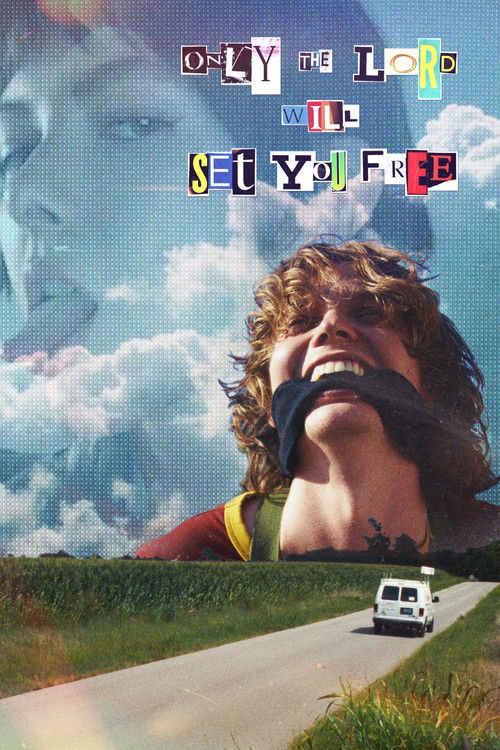
Only the Lord Will Set You Free (2026)
Directed by Max Tullio
A teenager strapped to a bomb in a windowless white van, recalling internet dispatches from a girl who named herself after a thermobaric weapon and a literary critic: this is, by any measure, a precise diagnostic portrait of a very specific kind of male unraveling.
Consciousness Markers
The protagonist's susceptibility to online radicalization and ideological fantasy may imply psychological atypicality, but the film does not appear to frame this as neurodivergence advocacy. A low score for adjacency only.
The enigmatic MOAB_Didion is a female figure who drives the plot and arguably holds all the power in the dynamic, but the film does not appear to frame this through any feminist lens. A marginal score for structural asymmetry, nothing more.
A Columbia MFA directing a film about online radicalization carries a statistical risk of sermonizing, but no evidence of on-the-nose messaging has been documented. A modest score for ambient institutional pressure, held in check.
No evidence of diversity-conscious casting choices or representational agenda. The cast is small and the film's concerns are entirely psychological, not demographic.
No LGBTQ+ themes, characters, or subtext are present or documented in this film.
No racial consciousness themes are present. The film's radicalization narrative is not framed in racial terms based on available evidence.
No climate themes whatsoever. The film is set in a van.
No anti-capitalist critique is present or implied. The antagonist forces here are ideological and personal, not economic.
No body positivity themes are present. The body in question has a bomb strapped to it, which is a different kind of bodily concern entirely.
The film is set in the early 2010s but makes no apparent effort to reframe or critique that period through a revisionist historical lens.
Why it received this score
A teenager strapped to a bomb in a windowless white van, recalling internet dispatches from a girl who named herself after a thermobaric weapon and a literary critic: this is, by any measure, a precise diagnostic portrait of a very specific kind of male unraveling. Max Tullio, Columbia MFA in hand, trains his lens on online radicalization and the seductive geometry of ideological fantasy, which is a subject of genuine cultural urgency. The film does not appear to moralize about it in the approved contemporary fashion. It simply places its protagonist inside the wreckage and lets the audience do the arithmetic.
The social consciousness here is of the older, grimier variety: less a policy position than a psychological autopsy. There is no diversity ensemble assembled to represent the breadth of human experience, no corporate villain composting his profits, no speech delivered at moderate volume to ensure we understand the theme. The film is, in the parlance of our current classification system, notably resistant to classification. A festival short screened in Nashville's "Graveyard Shorts" block at midnight is not typically where one goes to be instructed on intersectionality, and this film does not break with that tradition.
What we have, in the end, is a tightly wound piece of genre-adjacent psychological tension whose primary concern is the private catastrophe of a boy who mistook an online persona for salvation. That is not a progressive agenda. It is something older and considerably less comfortable: a story about loneliness, manipulation, and the specific gravity of the internet's worst rooms. The scoring instrument finds very little purchase here. The film is, on our spectrum, essentially inert, which, depending on your perspective, is either a failure of ambition or a quiet act of discipline.
Analysis generated by our Consciousness Algorithm
Synopsis
In the early 2010s, teenager Pete finds himself bound in the back of a windowless white van, a bomb strapped to his chest. As he recalls internet chats with an enigmatic girl known as MOAB_Didion, it's clear the lines between online love and ideological fantasy have collapsed into real-world danger.