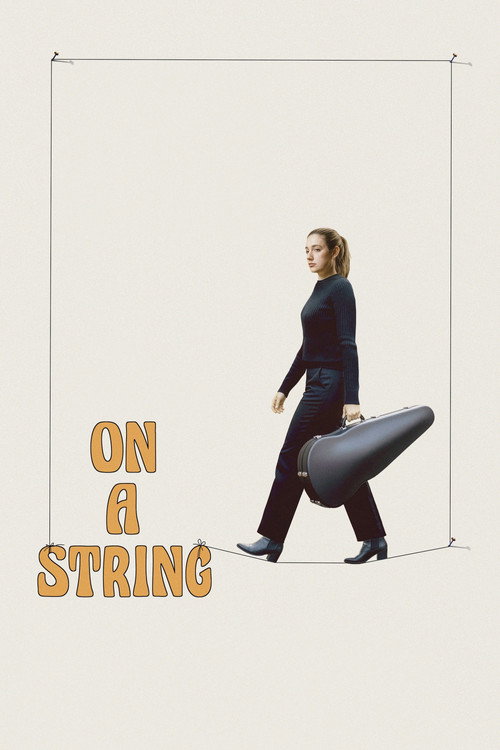
On a String (2026)
Directed by Isabel Hagen
On a String arrives as a small, precise, and genuinely charming comedy about the specific misery of being extraordinarily talented at something the market has decided to value at approximately forty dollars per gig.
Consciousness Markers
The gig economy precarity, underemployment, and the indignity of performing for strangers in exchange for subsistence wages are central to the film's comedy. This is more Woody Allen than Das Kapital, but the systemic squeeze on creative labor is the engine of the humor.
The cast reflects the organic diversity of New York City's classical music scene, including Ling Ling Huang, without any apparent agenda-driven construction. The diversity is incidental to the setting, not the point of the film.
The film is written, directed by, and starring a woman navigating a male-adjacent professional world, and the story centers on female creative ambition and economic frustration. However, no evidence suggests this framing is explicitly feminist in the modern activist sense.
No LGBTQ+ themes, characters, or storylines have been identified in the film's content or discourse. The score is 0.
Race is not a topic, theme, or subtext in any available discussion of the film. Characters of different backgrounds exist in the story without the film commenting on that fact.
No climate, environmental, or ecological themes are present. The film is about viola gigs, not the planet.
No body positivity themes or messaging have been identified. The score is 0.
No neurodivergence themes are present. The film's anxiety-adjacent humor about gifted-kid burnout is relatable, not clinical.
The film is a contemporary original story with no historical subject matter to revise.
By all accounts, including a positive review from a right-leaning critic, the film is conspicuously free of sermonizing. It observes rather than instructs. The score is 0.
Why it received this score
On a String arrives as a small, precise, and genuinely charming comedy about the specific misery of being extraordinarily talented at something the market has decided to value at approximately forty dollars per gig. Isabel Hagen, who wrote, directed, and stars, brings the sensibility of a stand-up comedian to the world of classical chamber music: she is interested in the gap between what things are supposed to mean and what they actually feel like. The result is a film that compares favorably to early Noah Baumbach without the ambient cruelty, and to Woody Allen without the considerable historical baggage that phrase now carries.
From a cultural-thermometer perspective, this film is a cool glass of water in a very warm decade. The gig economy precarity at its center could, in the wrong hands, become a lecture about systemic inequity and the commodification of artistic labor. Hagen declines this invitation. She is more interested in the comedy of performing Beethoven in a stranger's living room while the host's marriage quietly dissolves in the background. The diversity of the cast reflects New York City as it actually exists, which is a form of representation that predates the concept of representation. Conservative critics praised it. That is either a good sign or a very confusing one, depending on your priors.
The film's social consciousness, such as it is, lives entirely in its texture: the recognition that a Juilliard degree and a MetroCard are not incompatible. This is not a film that wants to change your mind about anything. It wants you to wince in recognition and then laugh, which is the oldest and most respectable goal in comedy. In the current taxonomy of cinema, a film that simply does not have an agenda is itself a small act of distinction.
Analysis generated by our Consciousness Algorithm
Synopsis
A young, Juilliard-trained violist is still living at home with her parents in the heart of NYC, while trying to make a living playing gigs with her friends in the homes of strangers.