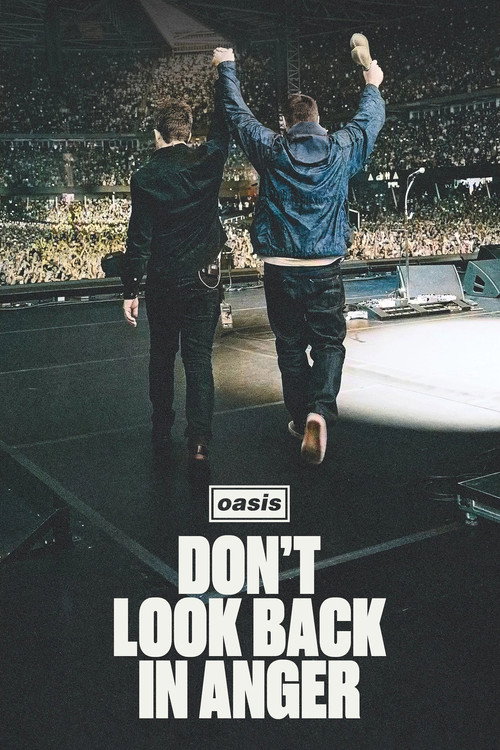
Oasis: Don't Look Back in Anger (2026)
Directed by Dylan Southern
A documentary about two brothers from Manchester who spent fifteen years not speaking to each other and then, upon discovering that stadiums full of people would pay considerable sums to watch them not speak to each other in person, decided to reconcile.
Consciousness Markers
The documentary deliberately profiles a curated selection of international fans including a South Korean free-diver, a Brazilian dog owner, and an Argentine football fan. This is not accidental diversity but a conscious editorial choice to frame the band's appeal as globally inclusive.
Writer Steven Knight's stated intention to tell a story about music uniting people 'in a time of spite and division' and Noel Gallagher's on-camera clarification that Oasis is 'not a right-wing thing' introduce a mild but unmistakable note of social messaging into what is otherwise a straightforward concert film.
One of the fan profiles features an Irish mother whose non-verbal son connects emotionally through Oasis music. The inclusion is humanising rather than political, but it is a deliberate editorial choice.
No LGBTQ+ themes, characters, or framing are present in the film or its surrounding discourse.
The film is a portrait of working-class male brotherhood and reconciliation. No feminist framing is present or implied.
The diverse fan profiles reflect genuine global fandom rather than any commentary on race or racial identity. No racial consciousness framing is detectable.
No climate themes, environmental messaging, or related content appears anywhere in the film or its press materials.
The film actively avoids the most obvious anti-capitalist target available to it: the dynamic ticket pricing scandal that priced working-class fans out of the very tour it celebrates. The omission is, in its own way, a choice.
No body positivity themes or messaging are present in the film.
The film chronicles well-documented events in Britpop history without reframing or recontextualising that history through a modern ideological lens.
Why it received this score
A documentary about two brothers from Manchester who spent fifteen years not speaking to each other and then, upon discovering that stadiums full of people would pay considerable sums to watch them not speak to each other in person, decided to reconcile. The film, directed by Dylan Southern and shaped by Peaky Blinders architect Steven Knight, chronicles the Oasis Live '25 reunion tour with backstage footage, archival material, and the kind of first joint interview that entertainment journalists had presumably given up hoping for. It is a handsome, competent piece of work that knows exactly what it is and delivers it efficiently.
The progressive sensibilities here are present but operating at low wattage. Knight has curated a fan mosaic that spans continents: a free-diver in South Korea, a football supporter in Argentina, an Irish mother whose non-verbal son communicates through the medium of Champagne Supernova. These profiles are warm and the editorial instinct behind them is clearly to demonstrate that working-class solidarity is a universal language. Noel Gallagher also pauses during the film to clarify, unprompted, that Oasis is "not a right-wing thing," a statement that functions simultaneously as a political disclaimer and as evidence that the film's producers are paying close attention to the cultural climate. The social unity messaging from Knight, who describes the project as a corrective to "spite and division," sits lightly on top of the music without ever becoming the main event.
What the film conspicuously declines to address is the dynamic ticket pricing controversy that saw the tour's own working-class fan base priced out of the reunion they had been waiting fifteen years to attend. For a documentary so invested in the romance of working-class origins, the silence on this point is loud. The Gallaghers remain compelling subjects: volatile, funny, occasionally tender, and entirely aware of the camera. The music, predictably, holds up. The film is not trying to change your mind about anything. It is trying to sell you a feeling you already have, and in that narrow ambition, it succeeds.
Analysis generated by our Consciousness Algorithm
Synopsis
Experience the meteoric rise of Oasis through rare footage and untold stories as the band reunites for Oasis Live '25, chronicling their journey from Manchester streets to global rock stardom.