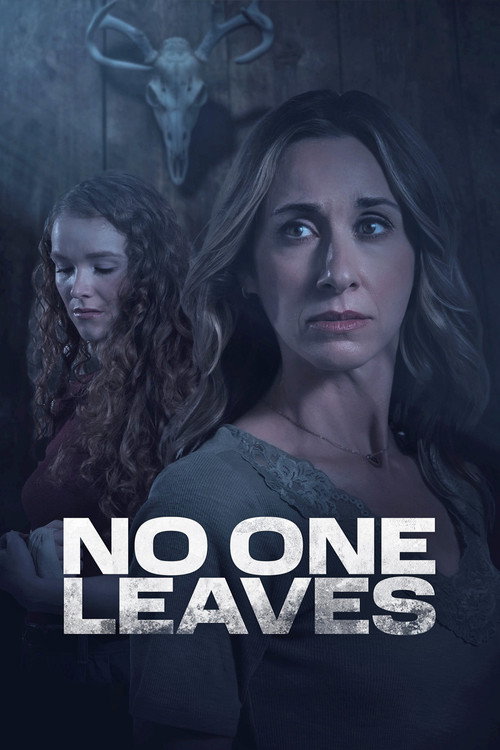
No One Leaves (2026)
Directed by Julia Barnett
No One Leaves arrives bearing all the hallmarks of its natural habitat: the Lifetime TV movie, that peculiar ecosystem where women's intuition is always correct, neighbors are never to be trusted, and dinner parties reliably escalate into something requiring law enforcement.
Consciousness Markers
The story centers on a woman whose intuition drives the plot, a durable Lifetime staple that predates modern feminist discourse by several decades. The female protagonist believing and acting where others doubt her is present, but it is genre convention, not manifesto.
The cast includes Gabriela Gonzalez and a modestly diverse ensemble, consistent with standard Lifetime TV casting practices rather than any deliberate representational agenda. No evidence of diversity as a narrative or promotional talking point.
Lifetime thrillers occasionally carry an implicit cautionary message about trusting one's instincts and the dangers lurking in seemingly safe domestic spaces. Any such messaging here appears to be atmospheric rather than sermonizing.
No LGBTQ+ characters, themes, or subtext have been identified in any available plot summary or review. The film operates entirely within a conventional heterosexual domestic thriller framework.
No racial themes, commentary, or consciousness have been identified in any coverage of the film. Race appears to be a non-factor in the narrative.
The rural farm setting has produced zero climate messaging. No environmental themes of any kind appear in the available research.
No critique of capitalism, wealth, or economic structures is present. The film is a captivity thriller, not a treatise on labor relations.
No body positivity themes or messaging have been identified. The film does not engage with this topic in any documented way.
No neurodivergent characters or related themes are present in any available description or review of the film.
The film is an original contemporary thriller with no historical setting or subject matter to revise.
Why it received this score
No One Leaves arrives bearing all the hallmarks of its natural habitat: the Lifetime TV movie, that peculiar ecosystem where women's intuition is always correct, neighbors are never to be trusted, and dinner parties reliably escalate into something requiring law enforcement. Director Julia Barnett deploys the genre's established grammar with evident competence. A woman suspects something is wrong, the people around her are skeptical, and she is proven right. This is not a story about systemic injustice or the architecture of oppression. It is about a captive on a farm, and it has the decency to remain exactly that.
From a social consciousness standpoint, the film's most notable quality is its almost aggressive indifference to the cultural moment. The female protagonist operates as the moral and narrative center, which in Lifetime's context is as unremarkable as the presence of a kitchen. The cast carries a degree of demographic variety consistent with the network's standard approach, deployed without comment or ceremony. No marker on our scale receives anything approaching a meaningful score. The film does not lecture. It does not crusade. It does not pause to acknowledge its own progressiveness, because it has none to acknowledge.
In a cultural landscape where even the most modest thriller feels compelled to carry the weight of several social movements, No One Leaves represents a kind of purity. It wants to frighten you about your neighbors. It succeeds or fails entirely on those terms. We note this not as praise or criticism, but as taxonomy. Some wines are simply table wine. They are not worse for it.
Analysis generated by our Consciousness Algorithm


Synopsis
When Meredith and her husband go to have dinner with their neighbor on the next farm over, he introduces them to his visiting niece. But as the evening progresses, Meredith begins to suspect that this young woman isn't his niece, but his captive.