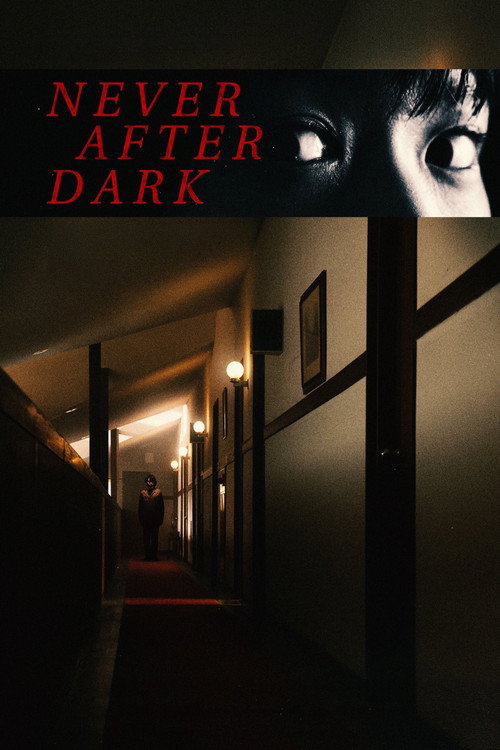
Never After Dark (2026)
Directed by Dave Boyle
Dave Boyle's Never After Dark arrives at the intersection of J-Horror atmosphere and Western indie craft, a cross-cultural haunted-house film that festival audiences at SXSW and Overlook have received with considerable enthusiasm, and which Stephen King has called "amazing and haunting."
Consciousness Markers
The film centers on a female psychic protagonist and is noted by critics for its themes of sisterhood and female autonomy. These elements are present and deliberate, though they operate within genre conventions rather than as a political program.
The film features an entirely Japanese cast in a Japanese-language production, a deliberate creative choice by a non-Japanese director who has built his career around Japanese collaborations. Western festival discourse has framed this as a notable representation achievement, lending it a mild activist valence it may not have sought.
The cross-cultural production context has generated minor discourse about a Caucasian director making Japanese-language cinema, but the film itself does not foreground racial identity as a theme or argument.
The film's central inversion, that living humans are more dangerous than ghosts, carries a faint humanist thesis. Critics noted it as a thematic subversion, though the film does not appear to deliver this idea through speeches or heavy-handed messaging.
No LGBTQ+ characters, themes, or subtext were identified in any available material on the film.
No climate themes, environmental messaging, or ecological subtext were identified.
No anti-capitalist critique, class commentary, or wealth-consciousness was identified in the film or its reception.
No body positivity themes or related discourse were identified.
No neurodivergent characters or related framing were identified.
The film is an original horror story with no historical setting or revisionist historical argument.
Why it received this score
Dave Boyle's Never After Dark arrives at the intersection of J-Horror atmosphere and Western indie craft, a cross-cultural haunted-house film that festival audiences at SXSW and Overlook have received with considerable enthusiasm, and which Stephen King has called "amazing and haunting." We note that Stephen King says this about a great many films. The film follows Airi, a traveling psychic who mediates between the living and the dead, and who discovers at a remote house that the most dangerous entity present does not require an exorcism so much as a restraining order. The central thesis, that ghosts follow rules while humans do not, is presented with atmospheric seriousness and is not, to the film's credit, underlined three times in red pen.
The feminist dimension of Never After Dark is the marker most worth cataloguing. Critics at Cinema Femme and Next Best Picture have identified a distinctly feminine perspective running through the narrative: sisterhood, autonomy, and the emotional labor of guiding the departed onward. These are real themes, present in the text, and they elevate the film above standard haunted-house mechanics. They also stop well short of the genre's more aggressive recent tendency to announce itself as a corrective to something. Airi is a complex female protagonist because the script made her one, not because a press release demanded we notice.
The production's cross-cultural DNA, an American director fluent in Japanese, a fully Japanese cast, a collaboration built on long-standing professional relationships, generates a faint hum of discourse in festival circles. The film itself, however, does not appear to be interested in that discourse. It is interested in grief, dread, and a creature called the Gaping Mouth Man, which is precisely the correct priority for a horror film. Never After Dark scores low on the progressive-sensibilities index not because it is retrograde, but because it is, at its core, a film about a woman who talks to ghosts and the trouble that follows. That is sufficient. It does not need to be more.
Analysis generated by our Consciousness Algorithm
Synopsis
A traveling psychic who helps lost souls cross over encounters a powerful entity at a remote house. While investigating its origins, she uncovers dark secrets and faces a deadly threat from an unexpected source.