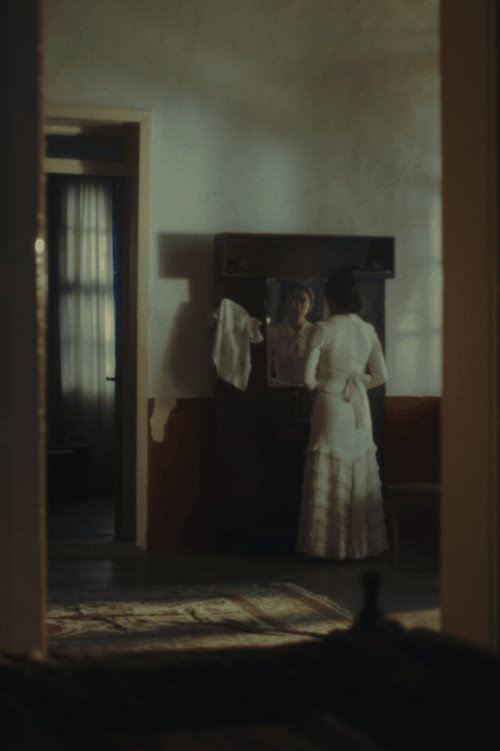
My Soul in Exile (2026)
Directed by Sevana Alik
My Soul in Exile arrives bearing the full weight of its source material: a 1922 novel by Zabel Yessayan, a Western Armenian feminist intellectual who understood displacement not as a metaphor but as a biographical condition.
Consciousness Markers
The film centers on a female artist's struggle for identity and meaning, adapted from the work of a noted feminist intellectual. The protagonist's inner conflict is framed around her art and selfhood in a patriarchal, collapsing society, which carries genuine feminist weight rooted in a century-old text.
The film is cast entirely from within the Armenian diaspora community, which reflects authentic cultural representation. This is organic to the project's mission of preservation rather than a modern diversity mandate.
The film screened in the FEMINNO educational and cultural series, and the director's crowdfunding statements frame the project in terms of meaning and national collapse. The earnestness is present but appears to stem from genuine cultural grief rather than contemporary sermonizing.
The Armenian national identity and displacement are central to the narrative, but this operates as ethnic and historical consciousness, not the modern American racial justice framework. The framing is one of preservation, not contemporary racial discourse.
The film engages with the pre-genocide Armenian experience, a historically documented catastrophe. There is no evidence of revisionist framing, though centering the female perspective on that history carries a mild corrective impulse.
No LGBTQ themes, characters, or subtext are identified in the source material, research, or promotional materials.
No climate, environmental, or ecological themes are present in a 1910-set Armenian historical drama.
No anti-capitalist messaging or class critique is identified in the research or source material summary.
No body positivity themes or related discourse are present.
No neurodivergence themes or characters are identified.
Why it received this score
My Soul in Exile arrives bearing the full weight of its source material: a 1922 novel by Zabel Yessayan, a Western Armenian feminist intellectual who understood displacement not as a metaphor but as a biographical condition. Director Sevana Alik, working with a crowdfunded budget and the Lebanese city of Ghazir standing in for a world that no longer exists, has made a short film about a young woman who returns home to find her art and her nation simultaneously disintegrating. The subject is genuinely devastating. The progressive credentials, such as they are, predate the terminology by approximately a hundred years.
The feminist architecture of the story is real and not trivial. Emma, the protagonist, is an artist confronting the question of whether her inner life has any claim on a society in the process of being erased. This is not a modern studio film deploying a female lead as a demographic calculation. It is an adaptation of a text written by a woman who survived the Armenian Genocide and later vanished into a Soviet gulag. The distinction matters. The film screened in the FEMINNO educational series, which confirms a certain cultural positioning, but positioning is not the same as hectoring, and there is no evidence this film mistakes the two.
What we have here, in the taxonomy of social consciousness, is a period piece that earns its gravity honestly. The racial and ethnic awareness is Armenian national identity, not the American framework that typically registers on these instruments. The lecture energy is low, the climate content is zero, and the anti-capitalist content is also zero, because the Ottoman Empire circa 1910 presents different villains. This film is small, sincere, and culturally specific in ways that resist easy modern categorization. We note this without complaint. It is, frankly, a relief.
Analysis generated by our Consciousness Algorithm
Synopsis
A young woman returns home from her studies to find both her country and her art in a state of exile. Based on the novel by Zabel Yesayan.