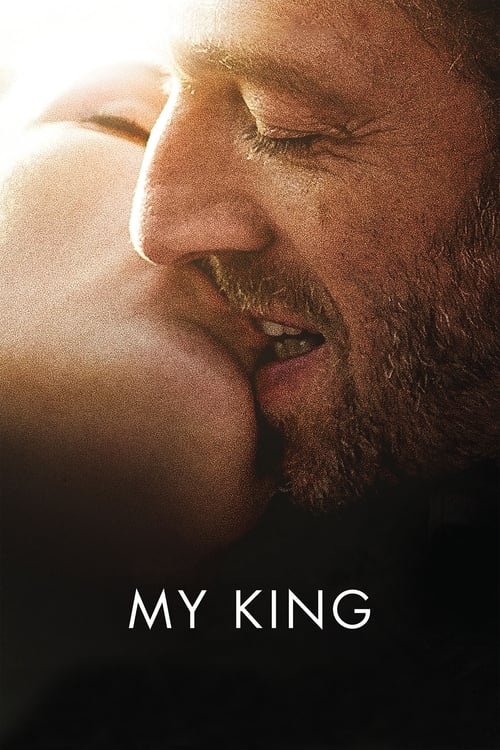
My King (2015)
Directed by Maïwenn
No — My King is not especially woke, scoring 24 out of 100 on our wokeness meter.
My King, or Mon Roi, arrives from 2015 with the confidence of a film that has already decided what it is: a two-hour autopsy of a marriage conducted from a seaside rehabilitation clinic.
Consciousness Markers
Directed by a woman and centered on a woman's subjective experience of a toxic marriage, emotional abuse, and divorce, the film offers a female perspective but does not advance an explicit feminist political agenda.
The cast is predominantly white French actors, with no evident deliberate race- or identity-conscious casting choices; minority presence, if any, is incidental and unremarked.
No LGBTQ+ characters, relationships, or themes appear in the narrative.
No engagement with racial identity, racism, or racial justice themes.
No environmental or climate-related content.
Debt and repossession appear as personal plot complications, not as a critique of capitalism or wealth inequality.
No body-positive themes or narratives about body image acceptance.
Depression, addiction, and rehabilitation are depicted, but these are mental health and substance issues, not neurodivergence as commonly defined.
No historical events or figures are revised or reinterpreted.
The film is a character-driven relationship drama and does not preach or deliver explicit social or political lessons.
Why it received this score
My King, or Mon Roi, arrives from 2015 with the confidence of a film that has already decided what it is: a two-hour autopsy of a marriage conducted from a seaside rehabilitation clinic. Tony, played by Emmanuelle Bercot, wrecks her knee on a ski slope and spends her recovery assembling the wreckage of Georgio (Vincent Cassel), a restaurateur of boundless appetite and vanishing accountability. He flicks water at women. He rents an apartment across the street. He lets the furniture be repossessed. The film observes all of this with patience and a certain rueful elegance, and it never once feels the need to explain to us what we are watching.
Maïwenn directs with a woman's eye on a woman's interior life, and Bercot took the Best Actress prize at Cannes for the trouble. That counts for something in the ledger. The film sits inside Tony's subjectivity, tracks her depression and her medication, and treats her willingness to keep trying as a genuine question instead of a punchline. What it does not do is convert any of this into an argument. There is no thesis tacked to the wall, no closing statement about the institution of marriage or the men who profit from it. The camera stays on the bruise. It declines to name the hand.
The rest of the cultural inventory is bare. The cast is French and white and no one remarks on it. There is no racial reckoning, no climate anxiety, no body politics, no LGBTQ thread. Debt arrives as a plot device, a lawyer and some movers, not as a verdict on late capitalism. Depression and drug use are treated as conditions to be survived, not as neurodivergence to be celebrated. And the film never lectures. It is, at bottom, a long, well-acted argument between two people who should have stopped years earlier. We classify it accordingly, with respect and without enthusiasm.
Analysis generated by our Consciousness Algorithm


Synopsis
Tony is admitted to a rehabilitation center after a serious ski accident. Dependent on the medical staff and pain relievers, she takes time to look back on a turbulent relationship that she experienced with Georgio.
Questions about My King
Is My King woke?
No — My King is not especially woke, scoring 24 out of 100 on our wokeness meter. That earns it a verdict of Based.
Does My King have any woke elements?
1 of the 10 markers register at 30 or above, led by Feminist Agenda (40). On Feminist Agenda: Directed by a woman and centered on a woman's subjective experience of a toxic marriage, emotional abuse, and divorce, the film offers a female perspective but does not advance an explicit feminist political agenda.
How does My King compare to other 2015 movies?
It ranks #55 of the 289 films from 2015 we've scored; their average is 15. The wokest is Chi-Raq (78).
How is the Woke Score calculated?
An AI-assisted process researches the film and its reception, scores it 0–100 on ten markers, then combines those into one 0–100 Woke Score. It measures a specific set of 2020s cultural themes, not film quality.