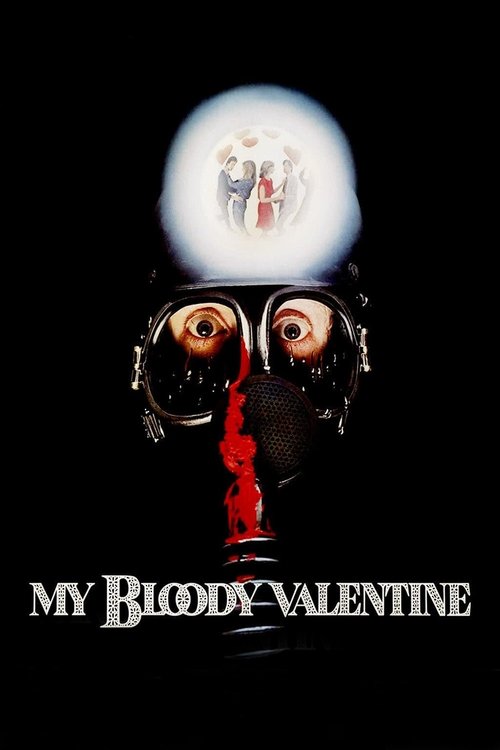
My Bloody Valentine (1981)
Directed by George Mihalka
No — My Bloody Valentine is not woke, scoring 0 out of 100 on our wokeness meter.
My Bloody Valentine arrives from 1981 with a premise that practically begs for a modern rewrite.
Consciousness Markers
The cast is entirely white, with no meaningful racial or ethnic diversity in the principal or supporting roles.
There are no LGBTQ+ characters, themes, or subtext in the film.
The film is a conventional 1980s slasher with women primarily as victims and no feminist critique or agenda.
Race is not addressed or thematized; the story is set in an all-white mining town.
The mining disaster involves methane gas and safety negligence, but the film makes no environmental or climate-crisis argument.
The backstory involves negligent supervisors, but the film does not critique capitalism, wealth, or class structures in any sustained way.
There is no body-positive messaging or celebration of diverse body types.
Mental illness and trauma are used as horror tropes, not as neurodivergent representation or advocacy.
The film is a fictional slasher and does not revise or reinterpret historical events.
The film is a straightforward genre exercise with no preachy or didactic social messaging.
Why it received this score
My Bloody Valentine arrives from 1981 with a premise that practically begs for a modern rewrite. A Nova Scotia mining town, a methane explosion caused by two supervisors who abandoned their posts for a Valentine's Day dance, a sole survivor who eats his dead colleagues to live and then returns with a pickaxe. The ingredients sit there, unclaimed. A contemporary production would have found the corporate negligence and built a sermon on top of it. This film uses it as backstory and moves on to the business of impaling teenagers on a showerhead.
What the film offers instead is craft of a narrow, stubborn kind. George Mihalka shot much of it 2,700 feet underground in a real colliery, and the methane levels limited how many bulbs the crew could safely rig. That constraint does more for the atmosphere than any script note could. The killer wears mining gear and a gas mask. The town is white, working, and uninterested in examining itself. The love triangle between T.J., Sarah, and Axel exists to generate friction before the bodies drop. Nobody pauses to explain what any of it means, because nobody involved thought it needed explaining.
The MPAA cut the film to ribbons for an R rating, and the restored footage has spent four decades surfacing in pieces. That censorship saga is the most interesting thing about it, which says something. There is no social program here, no casting statement, no argument about bodies or minds or the planet or the arrangement of wealth. The trauma of young Axel, who watched his father murdered, functions as a third-act reveal, nothing more. This is a machine for delivering murders per gallon of popcorn, and it delivers. We grade it accordingly, and the grade is a clean, unbothered zero across every ledger we keep.
Analysis generated by our Consciousness Algorithm


Synopsis
Twenty years after a Valentine's Day tragedy claimed the lives of five miners, Harry Warden returns for a vengeful massacre among teen sweethearts gearing up for another party.
Questions about My Bloody Valentine
Is My Bloody Valentine woke?
No — My Bloody Valentine is not woke, scoring 0 out of 100 on our wokeness meter. That earns it a verdict of Ultra Based.
Does My Bloody Valentine have any woke elements?
No. All 10 markers score zero.
How does My Bloody Valentine compare to other 1981 movies?
It ranks #32 of the 43 films from 1981 we've scored; their average is 5. The wokest is The Fox and the Hound (18).
How is the Woke Score calculated?
An AI-assisted process researches the film and its reception, scores it 0–100 on ten markers, then combines those into one 0–100 Woke Score. It measures a specific set of 2020s cultural themes, not film quality.