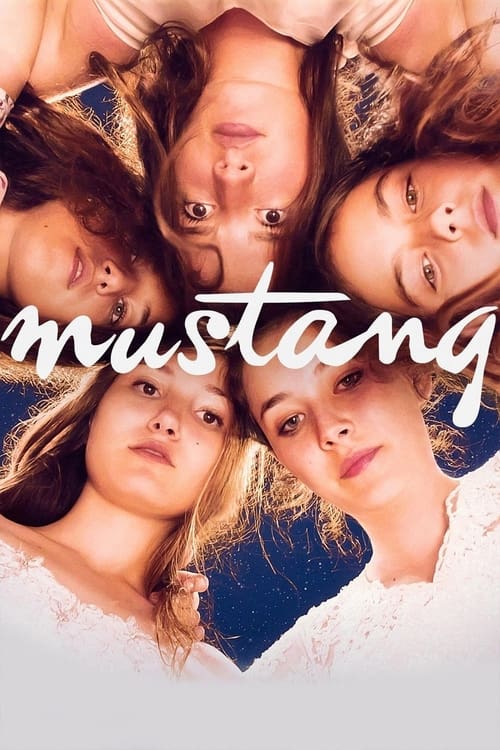
Mustang (2015)
Directed by Deniz Gamze Ergüven
Yes — Mustang is woke, scoring 60 out of 100 on our wokeness meter.
A remote Anatolian village, five orphaned sisters, and a grandmother who has appointed herself the gatekeeper of their futures.
Consciousness Markers
The film is fundamentally about the systematic oppression of girls — forced marriage, virginity inspections, domestic confinement, and sexual abuse — and their rebellion against patriarchal control. This is a sustained feminist indictment, though framed as a lament rather than a manifesto.
The film carries a clear social message about the treatment of women in conservative Anatolian society, but critics noted it operates more as a bittersweet, angry lament than a didactic lecture. The righteous anger is present but channeled through character and escape rather than explicit sermonizing.
The cast is entirely Turkish performers playing Turkish characters in a Turkish-set production, which is authentic but organic to the film's origin rather than a deliberate diversity-casting statement. The five-sister ensemble foregrounds young female leads, but there is no cross-cultural or minority-insertion agenda at play.
There are no LGBTQ+ characters, relationships, or themes anywhere in the narrative.
The film's conflict is gendered and cultural, not racial; there is no engagement with racial identity or racial justice as a theme.
No environmental or climate themes appear in the film.
The antagonists are family and conservative tradition, not economic systems; there is no critique of capitalism or wealth inequality.
The film deals with sexuality and bodily autonomy, but through the lens of oppression and shame rather than body-positivity messaging.
No neurodivergent characters or themes are present.
The film is a contemporary fictional drama, not a reworking of historical events or figures.
Why it received this score
A remote Anatolian village, five orphaned sisters, and a grandmother who has appointed herself the gatekeeper of their futures. Mustang opens with the sort of youthful transgression that would barely register elsewhere, a game of chicken on the beach with some boys, and then spends the rest of its runtime cataloguing the punishment. The windows acquire bars. The schoolbooks are traded for sewing lessons. The girls are paraded before suitors like livestock at a country fair. Director Deniz Gamze Ergüven films all of this with a cool, unhurried eye, letting the horror accumulate in the furniture and the locked doors instead of announcing itself from a pulpit.
The film's animating fury is directed squarely at patriarchal tradition, and it is difficult to argue the target is undeserved. Virginity inspections, forced engagements, a marriage bed examined for blood by in-laws: the machinery of control is laid out with methodical precision. The righteous anger here is genuine, but it moves through character and image, through the youngest sister's football obsession and the eldest's quiet defiance, not through speeches. It laments. It does not lecture, though the lament is loud enough that some audiences will hear a sermon anyway. The Turkish reception was predictably split, with accusations of orientalism lobbed from several quarters, which is its own separate conversation.
The ensemble, drawn from a casting search across Turkey, gives the film its pulse, particularly the five young actresses who function as a single organism until the family unit begins to fracture. There is no broader representational project at work, no thematic engagement with race, class economics, climate, or neurodivergence, and the narrative has no interest in manufacturing any. What remains is a tight, sorrowful machine about girls who are told their bodies belong to everyone but themselves, and who eventually steal a car and drive away from it. The escape is the argument. Everything before it is the evidence.
Analysis generated by our Consciousness Algorithm


Synopsis
In a Turkish village, five orphaned sisters live under strict rule while members of their family prepare their arranged marriages.
Questions about Mustang
Is Mustang woke?
Yes — Mustang is woke, scoring 60 out of 100 on our wokeness meter. That earns it a verdict of Woke.
What makes Mustang woke?
2 of the 10 markers register at 30 or above, led by Feminist Agenda (82) and Lecture Energy (40). On Feminist Agenda: The film is fundamentally about the systematic oppression of girls — forced marriage, virginity inspections, domestic confinement, and sexual abuse — and their rebellion against patriarchal control.
How does Mustang compare to other 2015 movies?
It ranks #6 of the 289 films from 2015 we've scored; their average is 15. The wokest is Chi-Raq (78).
How is the Woke Score calculated?
An AI-assisted process researches the film and its reception, scores it 0–100 on ten markers, then combines those into one 0–100 Woke Score. It measures a specific set of 2020s cultural themes, not film quality.