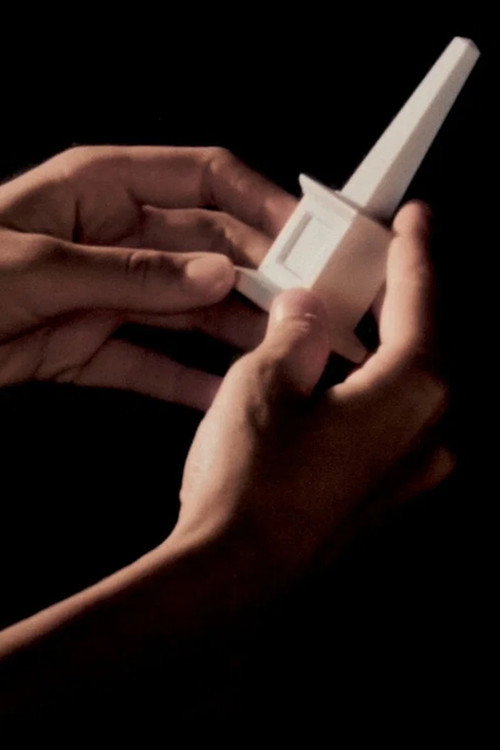
Morne Fortune (2026)
Directed by Mara Chavez
Morne Fortune arrives at the New York Film Festival's Currents section as a 13-minute experimental short that has, by any measurable standard, done more ideological work per minute than most feature films manage in two hours.
Consciousness Markers
Racial consciousness is the film's entire foundation. It exists specifically to recover the suppressed history of Black freedom fighters and to reframe a colonial British monument as a monument to enslaved ancestors. This is not incidental; it is the film's stated purpose.
Revisionist historiography is the film's second core pillar. It explicitly and structurally dismantles the official colonial narrative of the Inniskilling Monument and assembles, in its place, an alternative historical record honoring those the official account erased.
The film maintains an inherently argumentative posture, as any counter-monument must. It works primarily through assembly, texture, and testimony rather than direct sermonizing, which keeps the score moderate despite the clarity of its political intent.
Colonial slavery carries implicit critiques of economic exploitation, and the film's challenge to imperial power structures gestures in this direction. The framing, however, is historical and anti-colonial rather than explicitly anti-capitalist.
The film centers Black Caribbean voices and testimonies by design, though it operates outside any conventional casting framework. The foregrounding of marginalized perspectives is structural rather than performative.
No LGBTQ+ themes, characters, or framing appear anywhere in the film's documentation or research summary.
The film does not engage with feminist themes in any documented way. The co-directors are women, but the film's argument is historical and anti-colonial, not feminist in its orientation.
No climate or environmental themes appear in the film or its surrounding discourse.
No body positivity themes or related content are present in the film.
No neurodivergence themes or representation are present in the film.
Why it received this score
Morne Fortune arrives at the New York Film Festival's Currents section as a 13-minute experimental short that has, by any measurable standard, done more ideological work per minute than most feature films manage in two hours. Co-directors Mara Chavez and doris duhennois train their attention on a stone obelisk atop a hill in St. Lucia and conclude, with the calm certainty of people who have already won the argument before the film begins, that the British colonial record requires supplementation. This is not a controversial position in the circles where this film will be seen, which is perhaps the point.
The filmmakers assemble celluloid fragments, digital scraps, and spoken testimonies into what they call an alternative monument, a counter-archive honoring the Black freedom fighters whose participation in the Caribbean revolutionary wars was subsequently buried beneath the official narrative of British military triumph. The racial consciousness and revisionist historiography here are not subtextual. They are the text. The film's politics are worn as a structural principle: the very act of assembly is the argument. There is something genuinely rigorous about this approach, and something genuinely exhausting about the way avant-garde festival shorts have learned to make exhaustion feel like rigor.
What the film does not do, to its credit, is harangue. It works through texture and juxtaposition instead of direct address, which places it several notches below peak lecture energy on the scale we maintain here. The colonial critique is real and historically grounded. The foregrounding of erased Black Caribbean voices is not a gesture; it is the film's entire reason for existing. We note this with the same measured gravity we bring to all assessments, and we move on to the next monument awaiting reinterpretation.
Analysis generated by our Consciousness Algorithm
Synopsis
The British colonial government erected the Inniskilling Monument atop Morne Fortune, in St. Lucia, to commemorate a 1796 military victory over the French. But to many islanders, it's also a monument to their enslaved ancestors, who took up arms alongside the First Republic. Challenging received histories, Mara Chavez and doris duhennois assemble testimonies on celluloid and digital scraps into an alternative monument.