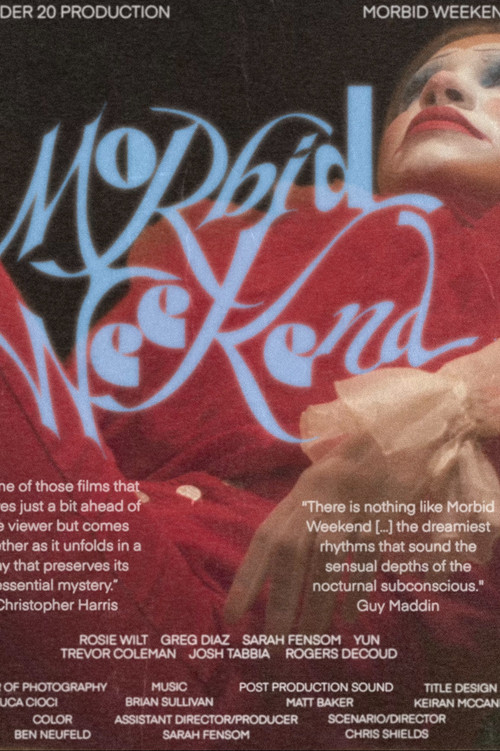
Morbid Weekend (2026)
Directed by Chris Shields
Morbid Weekend arrives from the microcinema circuit with the quiet confidence of a film that has absolutely nothing to prove to you, and knows it.
Consciousness Markers
The film is grounded in the director's personal experience of minimum-wage labor and explicitly engages with 'shitty jobs' and the roles workers play. This is working-class solidarity rather than polished anti-capitalist messaging, but the labor critique is present at the level of subject matter.
The cast is a loose ensemble of Los Angeles artists of varied backgrounds, which appears organic to the film's community-made production rather than a deliberate representational agenda. No evidence of casting-as-statement.
The film's thematic concerns with labor and identity are conveyed through form and atmosphere rather than dialogue or argument. Made without a script, it has no mechanism for sermonizing. The score reflects only the faintest trace of intentionality around its subject matter.
No LGBTQ+ themes, characters, or messaging were identified in any available research or critical commentary on the film.
No feminist framing or gender-politics commentary was identified. The film's concerns appear to be existential and aesthetic, not gender-political.
No racial consciousness themes or commentary were identified. The San Gabriel Valley setting carries cultural specificity, but no evidence suggests the film treats race as an explicit subject.
No climate or environmental themes were identified in the film's premise, director's statement, or critical reception.
No body positivity themes or messaging were identified in any available material about the film.
No neurodivergence themes or representation were identified in the film's premise or critical commentary.
The film has no historical setting or revisionist ambitions. It is a contemporary, present-tense work of urban observation.
Why it received this score
Morbid Weekend arrives from the microcinema circuit with the quiet confidence of a film that has absolutely nothing to prove to you, and knows it. Directed by Chris Shields without a script, without significant dialogue, and apparently without the burden of a distribution strategy, it follows a pizza delivery person into death and beyond, through the nocturnal textures of the San Gabriel Valley. The film is 68 minutes long. This feels correct.
The cultural threat level here is negligible. Shields draws on his own experience of minimum-wage labor, and the film carries a genuine sympathy for people doing unremarkable work in unremarkable places. This is the closest it comes to a progressive agenda: it treats a delivery worker as a person worthy of a film. We have classified this under anti-capitalist sentiment and moved on. The casting, assembled from the director's community of Los Angeles artists and musicians, reflects that community without apparent calculation. There are no speeches. There are no lessons. Guy Maddin called it "exquisite." The film does not appear to care either way.
What we are left with is a work of urban poetics that scores historically low on every axis of contemporary social consciousness, not because it is reactionary, but because it is too busy being a film. The experimental tradition from which Morbid Weekend emerges predates the current cultural moment by several decades and shows no interest in catching up. It is, in the taxonomy of this office, essentially inert. We mean this as a compliment.
Analysis generated by our Consciousness Algorithm
Synopsis
A pizza delivery person dies on the job and a series of strange events follow.