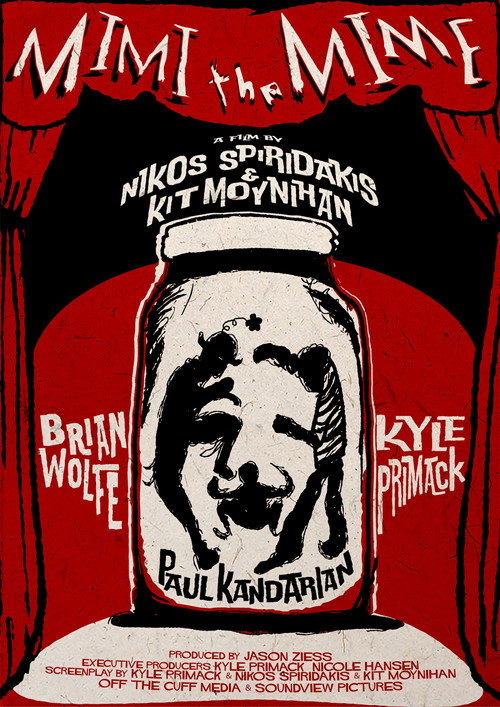
Mimi The Mime (2026)
Directed by Nikos Spiridakis
Mimi The Mime arrives from the 2026 Dances With Films festival as a 23-minute short about two broke performers who discover that punching each other is more lucrative than performing.
Consciousness Markers
The premise is rooted in economic desperation and the indignity of performing for tips, which carries a faint whiff of critique toward a system that rewards violence over art. The film does not pursue this thread with any ideological intent, however, and the characters embrace the market rather than condemn it.
No evidence of casting choices made in service of representation mandates or diversity optics. The film casts two men in greasepaint and silence, which is, if anything, a refusal to be seen at all.
No LGBTQ+ themes, characters, or subtext are present. The only relationship on screen is a mutually hostile financial partnership between a mime and a clown.
No feminist framing is present. The film's universe appears to contain no women, which is not a statement so much as a logistical reality of two men fighting on a sidewalk.
Racial identity is not addressed, invoked, or implied at any point. Both combatants are defined exclusively by their face paint.
No climate themes are present. The film is set outdoors, but the environment is not consulted for its opinion.
No body positivity messaging is present. Bodies are used primarily as instruments of slapstick punishment.
No neurodivergent characters or themes are present. Choosing to be a mime is a lifestyle decision, not a diagnosis.
No historical revisionism is present. The film invents its own small, grubby mythology and leaves the historical record entirely undisturbed.
There is no lecture energy detectable anywhere in this film. A mime, by professional obligation, cannot lecture. This may be the format's single greatest contribution to cinema.
Why it received this score
Mimi The Mime arrives from the 2026 Dances With Films festival as a 23-minute short about two broke performers who discover that punching each other is more lucrative than performing. It is, in the taxonomy of social consciousness, essentially a blank canvas. The film was conceived during the 2023 Hollywood labor strikes, which is the sort of origin story that could have produced a searing indictment of late-stage capitalism and the commodification of creative labor. It did not. Instead, it produced a mime fighting a clown for loose change, which is, on reflection, the more honest document.
The film draws its DNA from Commedia dell'Arte traditions rather than from any contemporary cultural agenda, and it shows. The two leads are defined entirely by their craft and their desperation, not by their identities. Nobody is asked to do any heavy lifting beyond the physical comedy. The closest the film comes to a thesis is the observation that violence sells better than art, a finding that will surprise no one who has ever checked a box office chart. The anti-capitalist reading is available, technically, but the film does not wave it at you. It simply cashes the check and moves on.
In a cultural moment when the pressure to mean something is applied to even the most modest short film, Mimi The Mime is a curiosity: a work that is content to be exactly what it is. Two men in face paint. A sidewalk. The market, rendering its verdict. We record this absence of messaging not as a criticism but as a data point, filed carefully alongside all the films that tried much harder and achieved considerably less.
Analysis generated by our Consciousness Algorithm
Synopsis
A homeless mime and a struggling clown fight over the attention of a crowd on a NYC sidewalk. When their fight draws more attention and money than their performances ever could, they realize they struck gold. Broke, desperate and out of options, the pair transform their slapstick routines into an underground bare-knuckle sensation called 'Mime vs Clown'.