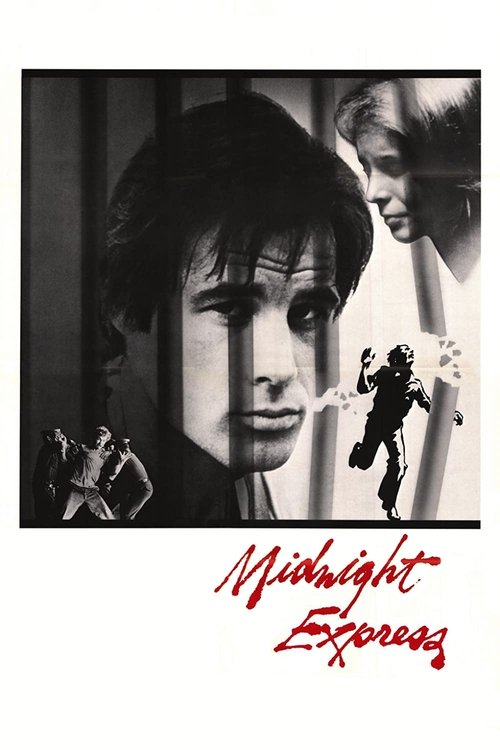
Midnight Express (1978)
Directed by Alan Parker
No — Midnight Express is not woke, scoring 0 out of 100 on our wokeness meter.
Midnight Express arrives from 1978 with a reputation for raw, unrelenting punishment and an equally unrelenting willingness to treat an entire nation as a gallery of sadists.
Consciousness Markers
The cast is overwhelmingly white Westerners, with Turkish performers consigned to villainous or degraded roles. There is no representation-casting agenda at work here.
No LGBTQ+ themes or characters. The prison rape attempt is depicted as brutality, not as queer representation.
No feminist content. Susan functions as the loyal girlfriend who restores Billy's resolve; the film has no interest in gender politics.
The film was widely condemned for anti-Turkish caricature, the opposite of progressive racial consciousness. No racial-justice framing exists.
No environmental or climate themes whatsoever.
No critique of capitalism or wealth. The protagonist is himself a drug smuggler seeking profit.
No body-positivity themes. The body is a site of punishment and torture, not affirmation.
Billy's psychological breakdown is depicted as trauma from abuse, not as neurodivergent identity or representation.
The film deviates from Hayes's memoir for shock value, but this is sensationalistic fabrication rather than a progressive reframing of history.
A raw prison drama that aims to horrify rather than preach. It carries no modern moralizing or social-issue sermonizing.
Why it received this score
Midnight Express arrives from 1978 with a reputation for raw, unrelenting punishment and an equally unrelenting willingness to treat an entire nation as a gallery of sadists. Alan Parker directs Oliver Stone's adaptation of Billy Hayes's memoir with sweaty urgency and genuine craft. The film's moral universe is simple: an American drug smuggler is caught, and the Turkish penal system responds with beatings, degradation, and a warden who seems to have wandered in from a propaganda poster. This is not a work of modern social consciousness. It is a horror machine, and it works.
The cast is a roster of white Westerners in peril, with Turkish performers assigned to menace, corruption, or blank brutality. There is no representation-casting project here, no LGBTQ subtext, no feminist counterpoint. Susan exists to restore Billy's resolve, and the film's only interest in her is what she can do for him. Race enters as caricature, not as consciousness. The Turkish characters are broadly drawn as degenerate, stupid, or cruel, a fact that drew protests, bans, and accusations of racism at the time and has aged into an embarrassment that the screenwriter eventually acknowledged.
There is no climate sermon, no eat-the-rich parable, no body-positivity affirmation, no neurodivergent identity, no progressive revision of history, and no lecture. The film wants to horrify, not instruct. Its deviations from Hayes's account serve shock value, not a righteous reframing. Billy's breakdown is trauma, not diagnosis. The prison body is a site of torture, not affirmation. What remains is a grim, effective thriller about escape, and a reminder that a film can be powerful, influential, and awarded without carrying a single item from the contemporary moral checklist.
Analysis generated by our Consciousness Algorithm


Synopsis
Billy Hayes is caught attempting to smuggle drugs out of a country. The courts decide to make an example of him, sentencing him to more than 30 years in prison. Hayes has two opportunities for release: the appeals made by his lawyer, his family, and the American government, or the "Midnight Express".
Questions about Midnight Express
Is Midnight Express woke?
No — Midnight Express is not woke, scoring 0 out of 100 on our wokeness meter. That earns it a verdict of Ultra Based.
Does Midnight Express have any woke elements?
No. All 10 markers score zero.
How does Midnight Express compare to other 1978 movies?
It ranks #24 of the 27 films from 1978 we've scored; their average is 8. The wokest is The Wiz (52).
How is the Woke Score calculated?
An AI-assisted process researches the film and its reception, scores it 0–100 on ten markers, then combines those into one 0–100 Woke Score. It measures a specific set of 2020s cultural themes, not film quality.