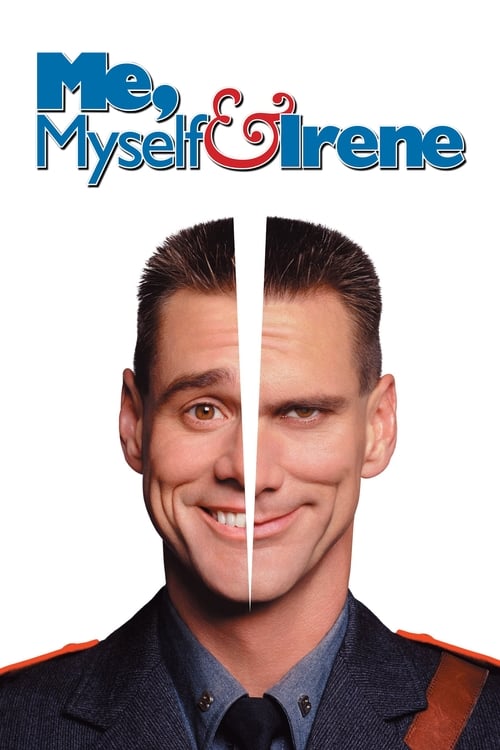
Me, Myself & Irene (2000)
Directed by Peter Farrelly
No — Me, Myself & Irene is not woke, scoring 8 out of 100 on our wokeness meter.
Me, Myself & Irene arrives from 2000 as a Farrelly brothers slapstick vehicle for Jim Carrey's dual turn as a meek Rhode Island trooper and his aggressive alter ego.
Consciousness Markers
The cast includes Anthony Anderson and the biracial triplets, but their presence is deployed as crude stereotype-driven punchlines rather than any conscious, dignity-affirming representation.
The film centers on Dissociative Identity Disorder, but it is played for slapstick laughs and was formally condemned by NAMI for perpetuating harmful myths — the opposite of the modern neurodivergence sensibility.
No LGBTQ+ characters, themes, or subtext of any kind.
Irene is a classic damsel-in-distress and romantic prize; the film's gender politics are firmly of the pre-woke gross-out comedy era.
Race appears only as the setup for jokes about a 'black midget' and biracial 'genius' triplets, which is stereotype humor, not racial consciousness.
EPA agents appear as incidental plot furniture (and are corrupt), with no environmental message whatsoever.
No economic critique or anti-capitalist themes present.
No body-positivity themes; the film's humor frequently trades on physical mockery.
No historical revisionism; the film is a contemporary fictional farce.
A deliberately tasteless Farrelly-brothers slapstick with no preachy or didactic messaging.
Why it received this score
Me, Myself & Irene arrives from 2000 as a Farrelly brothers slapstick vehicle for Jim Carrey's dual turn as a meek Rhode Island trooper and his aggressive alter ego. The film has no interest in social instruction; its comic engine is crude provocation, and its treatment of identity is the stuff of broad farce. The supporting cast includes Anthony Anderson and a trio of biracial triplets, but their presence functions as setup for stereotype-driven punchlines about a black midget and genius children. That is not representation with intent. It is demographic shorthand for a joke.
The gender politics are equally pre-modern. Irene is a damsel escorted, kidnapped, and finally proposed to, a romantic prize whose agency is mostly logistical. No LGBTQ themes surface. Race is a punchline, not a consciousness. The EPA agents are corrupt plot furniture, offering no environmental sermon. There is no economic critique, no anti-capitalist ire, and no body-positivity gesture. The film's humor often trades on physical mockery, which places it at a comfortable distance from contemporary sensitivity.
Where the film brushes against modern neurodivergence discourse, it does so backward. Charlie's dissociative identity disorder is played for slapstick, and the National Alliance on Mental Illness formally objected to the conflation of schizophrenia with split personality. That is not a sensitive portrait of neurodivergence; it is a punchline with a diagnosis attached. The film offers no revisionist history and no lecturing. It is a box office success from a different cultural moment, and it earns its low classification through sheer indifference to the pieties that would arrive later.
Analysis generated by our Consciousness Algorithm


Synopsis
Rhode Island State Trooper Charlie Baileygates has a multiple personality disorder. One personality is crazy and aggressive, while the other is more friendly and laid back. Both of these personalities fall in love with the same woman named Irene after Charlie loses his medication.
Questions about Me, Myself & Irene
Is Me, Myself & Irene woke?
No — Me, Myself & Irene is not woke, scoring 8 out of 100 on our wokeness meter. That earns it a verdict of Ultra Based.
Does Me, Myself & Irene have any woke elements?
Very few. None of the 10 markers reaches 30, the level where a marker counts as present; the highest is Representation Casting at 15.
How does Me, Myself & Irene compare to other 2000 movies?
It ranks #65 of the 125 films from 2000 we've scored; their average is 13. The wokest is But I'm a Cheerleader (72).
How is the Woke Score calculated?
An AI-assisted process researches the film and its reception, scores it 0–100 on ten markers, then combines those into one 0–100 Woke Score. It measures a specific set of 2020s cultural themes, not film quality.