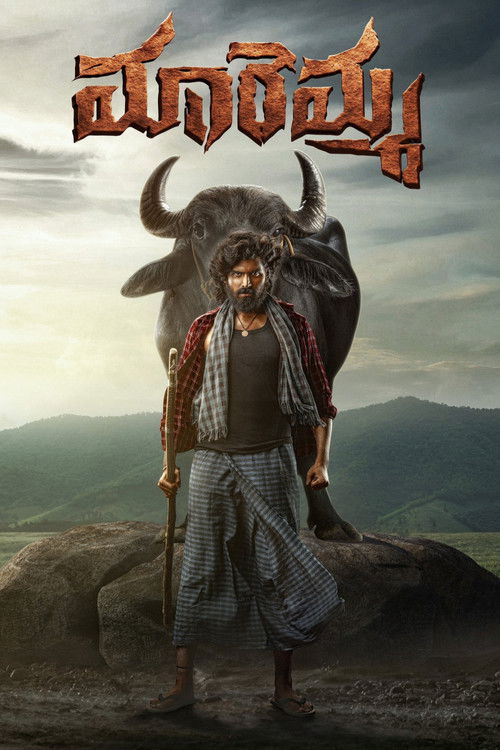
Maremma (2026)
Directed by Manchala Nagaraj
Manchala Nagaraj's debut feature arrives set in the Warangal district of Telangana during the early 2000s, which is to say it arrives in a world that has not yet been informed of its obligation to have opinions about itself.
Consciousness Markers
The film draws its cast from the Telangana region and presents authentic rural South Indian demographics, though this reads as organic cultural specificity rather than a self-conscious diversity mandate. No evidence of casting engineered to signal progressive credentials.
A local landlord functions as an antagonist whose occult scheming disrupts the village, gesturing toward feudal exploitation as a narrative villain. However, reviewers noted the subplot lacked social depth, making this a structural convenience rather than ideological argument.
The film appears to have gestured toward a message about ritual animal sacrifice without committing to it. Critics specifically noted it failed to deliver any social critique on this front, which means the lecture never quite materialized, leaving only a faint residue of intent.
No LGBTQ+ characters, themes, or subtext are present or documented in any source. The film's setting and cultural context make this absence entirely unsurprising.
The narrative centers on a male protagonist's bond with a sacred bison, village elders, and a feudal landlord. No feminist framing, female-empowerment arc, or critique of patriarchal tradition is evident.
The film is rooted in a single, internally coherent cultural community in Telangana. There is no cross-racial dynamic, no commentary on racial hierarchy, and no deployment of the modern racial-consciousness framework.
The story involves agricultural village life and sacred animals, but no ecological messaging, climate anxiety, or environmental advocacy of any kind surfaces in the film or its reception.
No body-positivity discourse, fat-acceptance themes, or commentary on physical appearance norms appears anywhere in the film or its surrounding coverage.
No neurodivergent characters or related themes are present or implied. The film shows no interest in this territory.
The film presents its early-2000s Telangana village setting and the Maremma Talli festival traditions with apparent reverence and ethnographic sincerity, not as a platform for historical reinterpretation.
Why it received this score
Manchala Nagaraj's debut feature arrives set in the Warangal district of Telangana during the early 2000s, which is to say it arrives in a world that has not yet been informed of its obligation to have opinions about itself. The film concerns a sacred bison, a goddess festival, a landlord with occult ambitions, and the cyclical calamity that descends on a village every twelve years with the reliability of a subscription service nobody asked for. Critics have observed that the film captures authentic folk customs, local dialect, and traditional music with genuine texture. This is noted here not as praise but as data.
The most interesting thing about Maremma, from a cultural-consciousness cartography standpoint, is what it almost does. The narrative premise, centered on ritual animal sacrifice and its attendant disasters, contains the skeleton of a socially pointed film. A more culturally ambitious production would have used this scaffolding to erect a commentary on superstition, feudal power, and the cost of tradition to the individual. Maremma reportedly declines to do so. The landlord villain exists as a plot mechanism. The sacrifice exists as atmosphere. The message, per the critics who went looking for it, simply did not show up, presumably delayed by the same forces responsible for weak character motivation and TV-serial production values.
The result is a film that scores almost nothing on the modern progressive-sensibility spectrum, and does so entirely by accident. There is no ideological discipline here, no deliberate rejection of the contemporary lecture format. The film is simply elsewhere, absorbed in a bison and a goddess and the specific grief of a village that cannot stop losing things. In a crowded field of films straining urgently to mean something, this quality of oblivious self-containment is, if not refreshing, at least taxonomically distinct.
Analysis generated by our Consciousness Algorithm
Synopsis
In a village bound by ancient traditions, the Maremma Goddess festival is a time of both reverence and fear. Every 12 years, a male bull is sacrificed to the deity, yet with each ceremony, calamity befalls the villagers. Despite their efforts, the elders fail to prevent disaster. Determined to break the cycle, they enact a new decree: any household whose bull bears a male calf in the next 100 days must offer it to the goddess. As the deadline approaches, the fate of the village hangs in the balance, and the true test of their resolve begins.