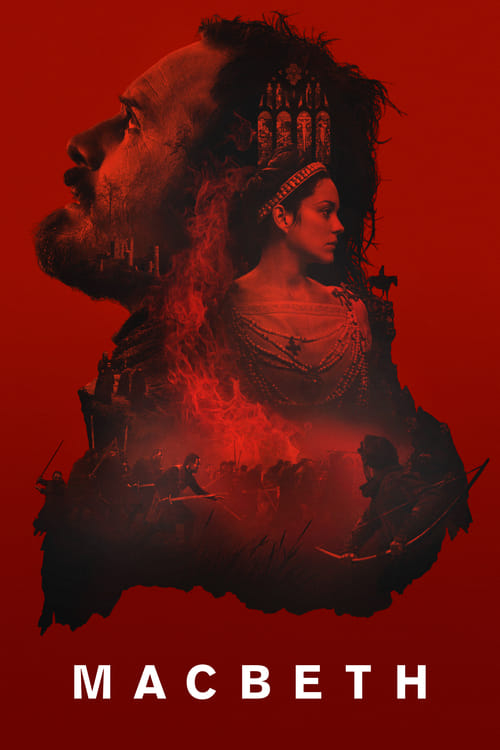
Macbeth (2015)
Directed by Justin Kurzel
No — Macbeth is not woke, scoring 6 out of 100 on our wokeness meter.
This Macbeth, directed by Justin Kurzel, arrives caked in mud, salt, and grief.
Consciousness Markers
Lady Macbeth is a prominent and forceful character, but the film treats her ambition and guilt as Shakespearean tragedy rather than modern feminist advocacy.
The production deliberately reinterprets Macbeth as a trauma- and PTSD-affected figure, but this is framed as psychological tragedy rather than modern neurodivergence advocacy.
The cast is composed almost entirely of white British and French actors, with no color-conscious or diversity-driven casting.
There are no LGBTQ+ characters, relationships, or themes in the film.
The film does not engage with race, racial injustice, or racial identity.
There is no environmental or climate-related messaging.
The story concerns political ambition and power, not capitalism or class economics.
The film contains no body-positivity themes or messaging.
The film is a Shakespeare adaptation, not a revisionist account of real historical events.
The film presents its themes through Shakespearean drama and atmosphere rather than modern sermonizing or direct audience instruction.
Why it received this score
This Macbeth, directed by Justin Kurzel, arrives caked in mud, salt, and grief. Fassbender's thane is less a man devoured by ambition than a veteran hollowed out by it, and the film opens with a funeral Shakespeare never wrote, the Macbeths burying a child before any prophecy is spoken. That choice reframes the whole tragedy as a study in trauma, the sort of post-combat psychological ruin that modern audiences have learned to name. It is a legitimate interpretation and an affecting one. It is also, in the ledger of contemporary social consciousness, a modest entry: the film treats the condition as Shakespearean fate, not as a cause demanding advocacy.
Marion Cotillard's Lady Macbeth is a formidable presence, all clenched jaw and whispered instruction, and she drives her husband toward the dagger with a conviction that has unsettled playhouses for four centuries. The film lets her ambition stand as tragedy, not as a manifesto. The ensemble around them is uniformly pale, drawn from British and French stages, and nobody involved appears to have considered that eleventh-century Scotland might accommodate a broader palette. Race does not enter the frame, literally or figuratively.
There is no sermon here. No villain is exposed as a fossil fuel executive. No thane denounces the extractive logic of crown and castle. No witch delivers a closing monologue about self-acceptance. Kurzel's camera lingers on smoke and heather and blood, and the moral instruction is left to the audience, as Shakespeare left it. The result is a film of severe beauty and almost no contemporary messaging, a bloody chamber piece that trusts its viewers to draw their own conclusions from the fog. We classify it accordingly, with a certain respect for its restraint.
Analysis generated by our Consciousness Algorithm


Synopsis
Macbeth, the Thane of Glamis, receives a prophecy from a trio of witches that one day he will become King of Scotland. Consumed by ambition and spurred to action by his wife, Macbeth murders his king and takes the throne for himself.
Questions about Macbeth
Is Macbeth woke?
No — Macbeth is not woke, scoring 6 out of 100 on our wokeness meter. That earns it a verdict of Ultra Based.
Does Macbeth have any woke elements?
Very few. None of the 10 markers reaches 30, the level where a marker counts as present; the highest is Feminist Agenda at 10.
How does Macbeth compare to other 2015 movies?
It ranks #200 of the 289 films from 2015 we've scored; their average is 15. The wokest is Chi-Raq (78).
How is the Woke Score calculated?
An AI-assisted process researches the film and its reception, scores it 0–100 on ten markers, then combines those into one 0–100 Woke Score. It measures a specific set of 2020s cultural themes, not film quality.