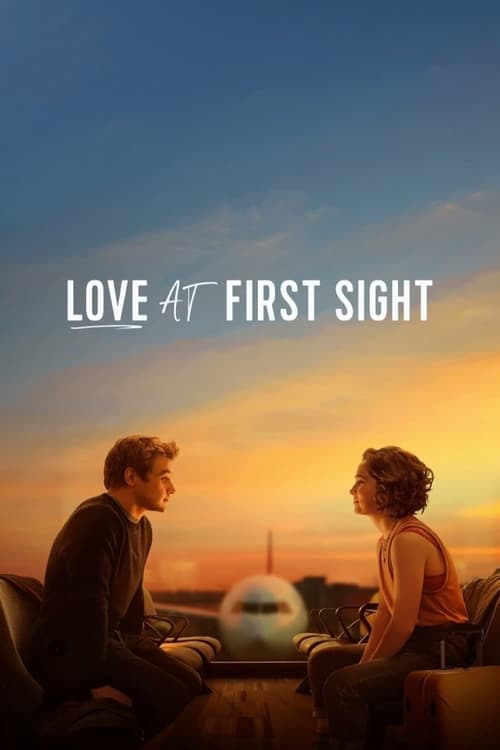
Love at First Sight (2023)
Directed by Vanessa Caswill
No — Love at First Sight is not woke, scoring 13 out of 100 on our wokeness meter.
The romantic comedy remains the most conservative of genres, and Love at First Sight is a faithful servant of that conservatism.
Consciousness Markers
The cast includes a reasonably diverse supporting ensemble (Jameela Jamil, Katrina Nare, Jordan Frazier) alongside its white leads, but the film never comments on or foregrounds this diversity.
A female director and female lead anchor the film, but its content is a thoroughly traditional heterosexual romance with no feminist argument or subversion.
A narrator frames the story and Oliver muses on statistical inference, but these are narrative devices rather than preachy messaging.
No LGBTQ+ characters, relationships, or themes appear anywhere in the narrative.
Race is never a subject of the film; characters of color exist without any racial commentary or thematic weight.
No environmental or climate themes are present.
No critique of wealth, class, or capitalism appears; the film is a gentle romance with no economic politics.
Body image and body positivity are not addressed at all.
Oliver's listed fears (germs, the dark, surprises) are framed as grief-driven quirks, not as neurodivergence, and the film makes no such claim.
The film is a contemporary fictional romance with no historical subject matter to revise.
Why it received this score
The romantic comedy remains the most conservative of genres, and Love at First Sight is a faithful servant of that conservatism. Two attractive young people meet at JFK, share a charger, fall in love across an eight-hour flight, and lose each other at customs. What follows is a reunion engineered by coincidence and presided over by a narrator who seems contractually obliged to inform us how it all ends. The film wants nothing more than to be sweet, and it largely succeeds, though sweetness of this kind requires no argument and offers none.
Vanessa Caswill directs from Katie Lovejoy's adaptation of Jennifer E. Smith's novel, and the production has assembled a supporting ensemble that includes Jameela Jamil, Katrina Nare, and Jordan Frazier. This diversity is simply present. It is never summoned to make a point, and the film does not appear aware that a point might be available. The central romance is a thoroughly traditional one, heterosexual, marriage-bound, resolved by a kiss and a promise of fifty-eight years. A female director and a female lead do not convert this into a statement. It is a love story, plainly told.
Where the film gestures toward ideas, it does so lightly. Oliver studies statistical inference and measures his grief in numbers. The narrator frames the proceedings with tidy omniscience. These are narrative devices, not sermons. The film's most substantial material concerns a mother with terminal lung cancer who has chosen to forgo treatment, and even this is handled with a soft hand, never escalating into a message about autonomy or dignity. The result is an amiable, unambitious romance. It has no designs on our politics and intends no offense. On the evidence, it also intends very little else.
Analysis generated by our Consciousness Algorithm


Synopsis
Hadley and Oliver begin falling in love on a flight from New York to London, but when they lose each other at customs, can they defy all odds to reunite?
Questions about Love at First Sight
Is Love at First Sight woke?
No — Love at First Sight is not woke, scoring 13 out of 100 on our wokeness meter. That earns it a verdict of Ultra Based.
Does Love at First Sight have any woke elements?
1 of the 10 markers register at 30 or above, led by Representation Casting (30). On Representation Casting: The cast includes a reasonably diverse supporting ensemble (Jameela Jamil, Katrina Nare, Jordan Frazier) alongside its white leads, but the film never comments on or foregrounds this diversity.
How does Love at First Sight compare to other 2023 movies?
It ranks #128 of the 200 films from 2023 we've scored; their average is 24. The wokest is Origin (84).
How is the Woke Score calculated?
An AI-assisted process researches the film and its reception, scores it 0–100 on ten markers, then combines those into one 0–100 Woke Score. It measures a specific set of 2020s cultural themes, not film quality.