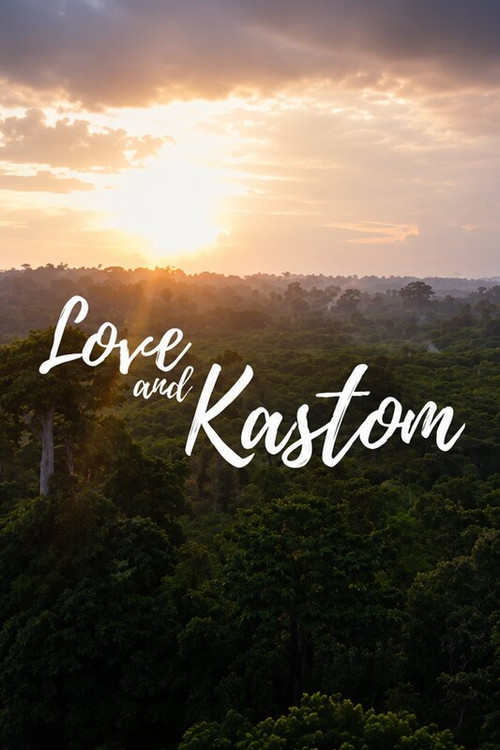
Love and Katsom (2026)
Directed by Adrian Stevanon
Love and Katsom arrives as a documentary about a wedding, which is to say it arrives as a documentary about everything: identity, belonging, the negotiation between the world one was raised in and the world one came from, and the precise logistical complexity of a traditional Vanuatu bride price ceremony.
Consciousness Markers
The film is built around Ni-Vanuatu and Pasifika subjects, co-produced explicitly through a Pacific Regional Media Fund designed to center Pacific voices and build Indigenous broadcasting capacity. The representational intent is structural, not incidental.
The narrative explicitly frames Benina's journey as cultural reclamation for diaspora youth disconnected from ancestral land and traditions. This is conscious racial and ethnic identity work, though it is grounded in genuine personal story rather than political lecture.
A coordinator from the Vanuatu Women's Centre appears to contextualize the Bride Price ceremony, introducing a mild gender-lens framing. The film does not appear to critique or subvert the tradition, however, keeping this score low.
The co-producer's stated goal of telling the story 'from our perspective' and the fund's explicit capacity-building mission lend the project a gentle advocacy tone. The film itself does not appear to sermonize, but the surrounding apparatus has a purposeful message-delivery quality.
The film's framing of kastom as something to be reclaimed by diaspora youth carries a mild corrective-historical impulse, positioning traditional Pacific custom against the erasure of colonialism. This is implicit rather than polemical.
No LGBTQ+ themes, characters, or framing are present or reported in this documentary about a traditional Vanuatu marriage ceremony.
No climate themes, environmental messaging, or ecological framing are identified in any available coverage of the film.
There is no anti-capitalist or wealth-critique framing present. The film focuses on cultural tradition, not economic systems.
Body positivity as a theme is entirely absent from this documentary's subject matter and reported content.
No neurodivergence themes or related representation are present or reported.
Why it received this score
Love and Katsom arrives as a documentary about a wedding, which is to say it arrives as a documentary about everything: identity, belonging, the negotiation between the world one was raised in and the world one came from, and the precise logistical complexity of a traditional Vanuatu bride price ceremony. Adrian Stevanon follows Benina and Kersom with the patience of someone who understands that kastom does not operate on a film festival deadline. The result is a work that is, at its core, a love story, though it has been funded, framed, and distributed in ways that carry considerable institutional intent.
The film's most culturally self-aware gesture is structural. Produced through the inaugural Aotearoa New Zealand Pacific Regional Media Fund, co-created with Vanuatu Broadcasting and Television Corporation, and explicitly designed to let Ni-Vanuatu storytellers tell their own stories, the film arrives pre-loaded with a mission statement. Co-producer Rick Malao's framing, that this project allows his community to speak for itself, is admirable and also, by the standards of our current cultural moment, entirely legible as a programmatic goal. The presence of a Vanuatu Women's Centre coordinator to contextualize the bride price exchange adds a careful gender-awareness note, though the film appears to observe tradition with more curiosity than critique. It does not seem to have arrived to argue with anyone's grandmother.
What keeps the film from tipping into full advocacy mode is, apparently, the wedding itself. Benina's journey back to ancestral land as a diaspora woman reconnecting with Ni-Vanuatu heritage is genuinely moving material, and the red mat exchange and kastom gift rituals are documented with the kind of specificity that resists reduction into talking points. The film is less interested in telling us what to think about Pacific culture than in showing us what it looks like up close. In the current landscape of purposefully conscious documentary filmmaking, that restraint is, if not radical, at least polite.
Analysis generated by our Consciousness Algorithm
Synopsis
A Vanuatu-New Zealand documentary following real-life couple Kersom and Benina as they navigate modern romance and traditional kastom around their wedding.