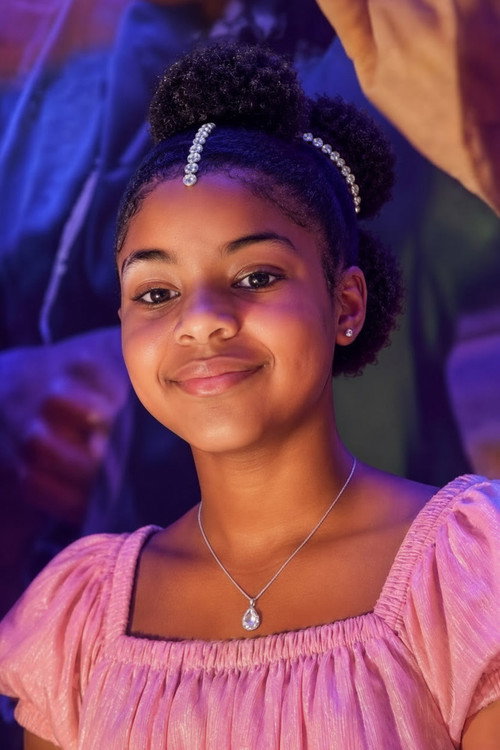
Loretta Robinson:An American Dream (2026)
We arrive at Loretta Robinson: An American Dream with the particular caution one reserves for a film whose synopsis appears to have been written by the film itself.
Consciousness Markers
Racial identity is load-bearing to the film's stated purpose. The synopsis explicitly positions the subject's race as the defining lens through which her achievements are to be understood, and 'breaking barriers for Black girls and women' is the film's declared thesis.
The film's central premise, as described in its own synopsis, is that a Black woman playing the Good Witch of the South is a barrier-breaking achievement worthy of documentary treatment. The casting is not merely incidental; it is the entire point.
The synopsis frames the subject's achievements as victories specifically for 'all black girls and women,' invoking a broadly empowerment-oriented narrative, though no specific feminist framework is evident beyond that framing.
The synopsis, which reads as though written by the film's own publicist, carries a mild but detectable self-congratulatory tone around the subject's barrier-breaking significance, suggesting the film may narrate its own importance at some length.
No evidence of LGBTQ+ themes, characters, or messaging in the available material.
No evidence of climate-related themes or messaging in the available material.
No evidence of anti-capitalist themes in the available material. The film appears to celebrate individual achievement within existing industry structures, which is closer to the opposite disposition.
No evidence of body positivity themes or messaging in the available material.
No evidence of neurodivergence themes or representation in the available material.
No evidence of revisionist historical framing. The film appears to be a contemporary biographical piece about a living person's career.
Why it received this score
We arrive at Loretta Robinson: An American Dream with the particular caution one reserves for a film whose synopsis appears to have been written by the film itself. The documentary, scheduled for release in late 2026, concerns the rise of Joh'Vonnie Monroe, a performer who, according to the text submitted to TMDB, has shattered records, broken barriers, and earned comparison to Billie Burke, the original Glinda of 1939. No external critic, journalist, or casual observer has yet weighed in to confirm or complicate this assessment. The film is, at present, its own sole advocate.
The racial consciousness score here is modest but earned. The synopsis does not merely mention that its subject is a Black woman who played the Good Witch of the South; it presents that fact as the film's entire gravitational center. The barriers broken are named, the beneficiaries identified ("all Black girls and women"), and the achievement is pre-certified as historic before a single frame has been publicly screened. This is a recognizable structural move: the barrier-breaking narrative deployed not as a conclusion the audience is invited to reach, but as a premise they are expected to accept on arrival. Whether the film earns it is a question the year 2026 will eventually answer.
What keeps the overall score restrained is the near-total absence of verifiable cultural footprint. No reviews, no discourse, no controversy, no confirmed production company. The EGOT comparison is ambitious. The Billie Burke comparison is specific. The film's popularity score of 1.8975 suggests the broader public has not yet been informed of these comparisons. We note this without judgment. Every legend begins somewhere, and some begin on TMDB with zero votes and a release date nine months away.
Analysis generated by our Consciousness Algorithm
Synopsis
Joh'Vonnie Monroe:An American Dream is a film of how Joh'Vonnie Monroe got started,what achievements and records she has shattered and the barriers she broke for all black girls and woman to play The Good Witch Of The South she first gained the role in the film The Wonderful Wizard Of Ha's on TMDB for this she has received praise for her performance as the iconic chachter even being called The Next EGOT and being compared to Billie Burke. Her debut music album Joh'Vonnie Monroe Introduces The Good Witch Of the South Features as the film's soundtrack.