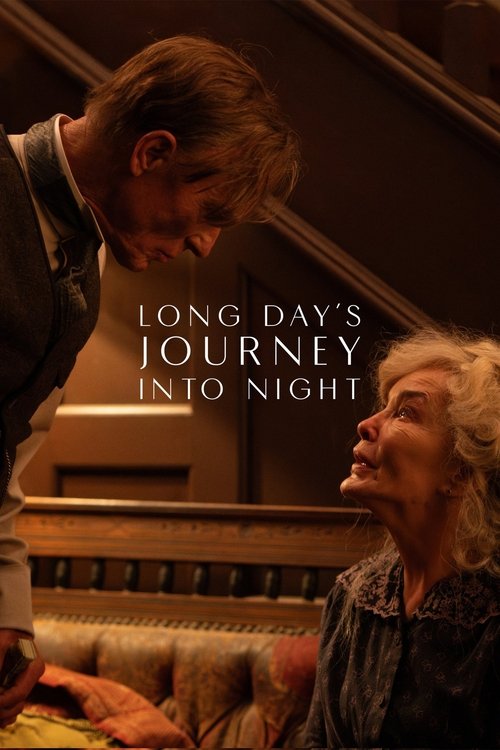
Long Day's Journey into Night (2026)
Directed by Jonathan Kent
Jonathan Kent's adaptation of Eugene O'Neill's autobiographical masterwork arrives as something of a relic in the current cultural landscape: a film that is simply about people destroying each other in a room.
Consciousness Markers
James Tyrone's notorious penny-pinching, a central dramatic engine of O'Neill's play, carries an implicit critique of a man who let financial anxiety hollow out his family's wellbeing. It remains a character study, not a systemic argument, and the score reflects its incidental rather than ideological nature.
Mary Tyrone is a woman trapped by dependency, isolation, and a domineering husband, and O'Neill's text does not shy away from the cruelty of her position. However, this is tragedy, not advocacy, and the film shows no sign of reframing her suffering through a modern feminist lens.
The cast is composed of white actors playing Irish-American characters in a 1912-set period piece. There is no evidence of casting designed to make a statement about representation; the roles are filled according to the source material's specifications.
Eugene O'Neill's play contains no LGBTQ+ themes, and the research identifies no attempt by this adaptation to introduce any. The domestic drama is rigidly heterosexual in its architecture.
The Irish-American identity of the Tyrone family is a biographical and historical fact, not a platform for 2020s racial consciousness discourse. No research suggests the adaptation engages with race in any contemporary sense.
The film is set in a Connecticut summer house in 1912. There is no climate messaging of any kind, which, given the period, would have been an impressive feat of anachronism.
No evidence of body positivity themes. The bodies in this film are primarily vehicles for psychological anguish, which is a different genre of concern entirely.
Addiction and possible tuberculosis are central to the narrative, but neither is framed through a neurodivergence lens. O'Neill was writing tragedy, not a modern destigmatization campaign.
The 1912 setting is rendered faithfully and without any apparent agenda to reinterpret the period through a contemporary ideological frame. The history here is personal, not political.
Critical reception focused entirely on performance quality and adaptation fidelity. There are no reports of the film delivering moral instruction to its audience on contemporary social matters.
Why it received this score
Jonathan Kent's adaptation of Eugene O'Neill's autobiographical masterwork arrives as something of a relic in the current cultural landscape: a film that is simply about people destroying each other in a room. The Tyrone family, assembled in their Connecticut summer house over the course of one fog-soaked day in 1912, are consumed by addiction, recrimination, and the specifically Irish-American art of nurturing grievances until they achieve the density of stone. Jessica Lange and Ed Harris reprise their stage roles with the kind of commitment that makes the audience feel they have trespassed on a private catastrophe. There is no agenda here. There is only damage.
The progressive sensibilities detectable in this material are of the O'Neill vintage, which is to say they predate our current classification systems by several decades. Mary Tyrone's suffering within a patriarchal domestic structure is rendered with unflinching clarity, but the film does not pause to acknowledge its own moral courage on this point. James Tyrone's miserliness functions as a character flaw with consequences, not as a critique of late capitalism. The fog that rolls in at the end is meteorological. These are refreshing constraints.
What the film offers, in place of contemporary cultural markers, is the older and arguably more demanding form of discomfort: the kind that has no villain to satisfyingly identify, no system to blame, no resolution to reach for. David Lindsay-Abaire's compression of O'Neill's three-to-four-hour text into 109 minutes was the primary controversy attached to this production, which tells you everything about where it sits on the spectrum of cultural provocation. A film whose most contentious act is editing. We note this and move on.
Analysis generated by our Consciousness Algorithm
Synopsis
Over the course of a day, a married couple, Mary and James Tyrone, and their two sons, Jamie and Edmund, grapple with Mary's morphine addiction and confront each other over the past in a series of emotionally tense and volatile exchanges.