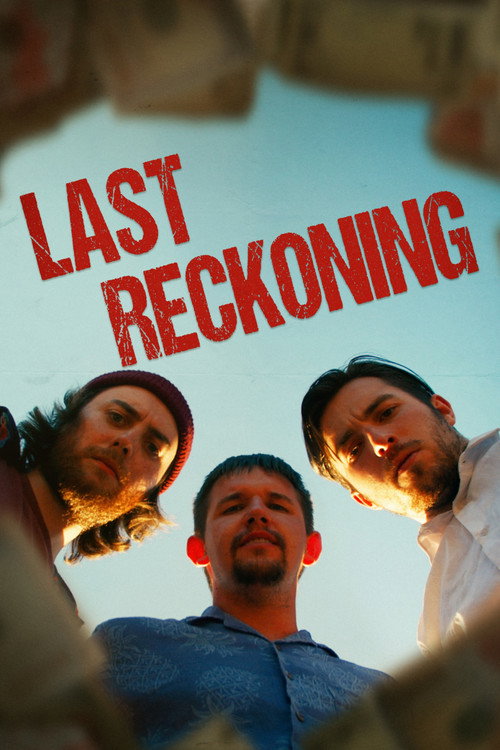
Last Reckoning (2026)
Directed by Alberto Nunes
Last Reckoning arrives at 64 minutes, crowdfunded, micro-budgeted, and screened at ZEPFEST in Utah, which is a specific combination of circumstances that tells you a great deal about what to expect before the first frame.
Consciousness Markers
The gig-economy framing of Dan's parole-era employment gestures vaguely at economic precarity, though the film does not appear to pursue this as a thesis so much as a plot convenience.
The moral dilemma at the film's core, return the money or run, carries a faint ethical undertow, but there is no indication the film sermonizes about it at any length.
No evidence of casting driven by representational imperatives. The cast appears assembled by the gravitational pull of regional availability and Indiegogo goodwill.
No LGBTQ+ themes, characters, or storylines are present or documented anywhere in the film's materials.
The premise centers entirely on a male protagonist navigating a male-dominated criminal underworld. No feminist framing is in evidence.
No racial consciousness themes, commentary, or systemic critique of any kind has been identified in the film or its surrounding discourse.
A duffel bag of gangster money does not, at any point, become a metaphor for carbon emissions. Score accordingly.
No body positivity content or commentary of any kind is documented.
No neurodivergence themes are present. The 'eccentric friend' descriptor does not, by itself, constitute a diagnosis.
The film is an original crime thriller with no historical setting or revisionist ambitions whatsoever.
Why it received this score
Last Reckoning arrives at 64 minutes, crowdfunded, micro-budgeted, and screened at ZEPFEST in Utah, which is a specific combination of circumstances that tells you a great deal about what to expect before the first frame. Director Alberto Nunes has crafted a lean genre exercise about a parolee named Dan who acquires a bag of criminal money through no fault of his own and must decide whether integrity or self-preservation should win the afternoon. It is, in the grand tradition of crime thrillers, a film about a man making bad choices in a world full of other men making worse ones.
From a social consciousness standpoint, Last Reckoning is a document of almost archaeological purity. The film's gig-economy backdrop, wherein Dan drives strangers around for income while trying to stay out of prison, offers a fleeting brush with economic precarity that a more ambitious production might have weaponized into a manifesto. Nunes declines. The precarity is simply context, the way weather is context, and the film moves on to the gangsters without pausing to file a policy brief. The moral dilemma at the center carries the faintest ethical undertow, a quiet suggestion that the right thing and the safe thing are rarely the same, but the film does not appear to linger on this point with a megaphone.
The result is a crime thriller that is, by the metrics of this analysis, almost aggressively neutral. It has a man, a bag of money, some gangsters, and an eccentric friend. It is 64 minutes long. It was funded by people who believed in it enough to contribute small sums on the internet. Whatever its flaws or virtues as cinema, it has not generated a single documented argument about representation, ideology, or the direction of culture. In a cultural landscape where everything is a provocation, that is, if nothing else, a data point.
Analysis generated by our Consciousness Algorithm

Synopsis
Despite his best efforts to stay away from crime while he's out on parole, Dan's life takes a turn when a duffel bag full of cash meant for gangsters is mistakenly placed in his trunk. With the help of his eccentric friend, he has to choose whether to return the money to keep his family and friends safe, or to run and save himself.