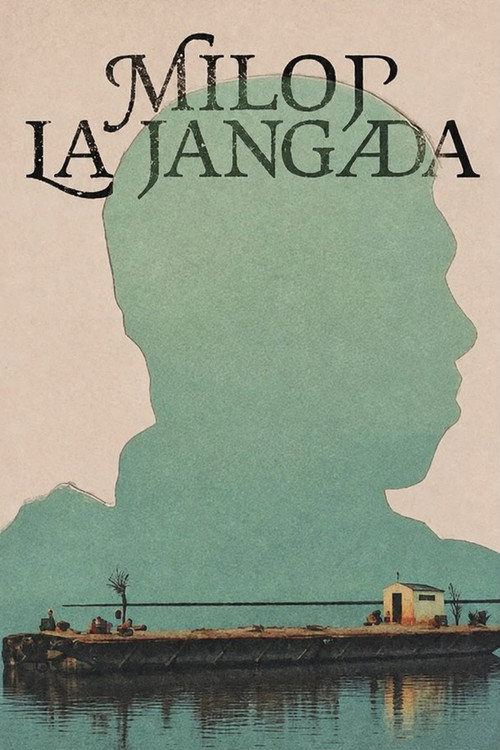
La jangada (2026)
Directed by Lucas Rosas
A nineteen-year-old Argentine trap artist loads thirty-five musicians onto a raft, floats them down the Paraná Delta, and films the result.
Consciousness Markers
Milo J's widely reported statement that Argentina's 'secondary color is brown' functions as the film's ideological spine, foregrounding mestizo and Indigenous heritage against the country's European-leaning mainstream pop identity. The selection of provincial folk traditions historically associated with marginalized communities deepens this register.
The ensemble is assembled with clear intentionality: urban trap artists from Buenos Aires share a floating stage with provincial folk musicians from Santiago del Estero, Tucumán, and Catamarca. Milo J's public declarations about Argentina's 'brown' identity confirm that the casting is a thesis, not a coincidence.
The song 'El Invisible' delivers explicit working-class commentary, referencing informal trash collectors and political cynicism with lines about not wanting charity. The jangadero tradition itself is rooted in the labor of river workers. The anti-capitalist content is real but concentrated in specific tracks rather than the film's overall structure.
The film recuperates protest folk figures like Mercedes Sosa and Silvio Rodríguez for a Generation Z audience, repositioning historically marginalized regional music as central rather than peripheral to Argentine cultural identity. This is revisionism through curation.
The film carries a clear cultural argument about authenticity, roots, and identity, and the surrounding media discourse from its artists is pointed. The argument is delivered through music rather than speeches, which softens the sermonizing considerably.
Soledad Pastorutti and Mon Laferte occupy meaningful roles in the ensemble, but the film makes no feminist argument. Their presence reads as artistic, not programmatic.
The choice to perform on a floating raft in the Paraná Delta, surrounded by wetlands, carries some environmental symbolism, but the film does not pursue a climate agenda. The river is a backdrop, not a cause.
No LGBTQ+ themes, representation, or framing are present in the film's content or surrounding discourse.
No body positivity themes or messaging are present in the film.
No neurodivergence themes or representation are present in the film.
Why it received this score
A nineteen-year-old Argentine trap artist loads thirty-five musicians onto a raft, floats them down the Paraná Delta, and films the result. This is either an act of profound artistic vision or the most ambitious birthday party in the history of Sony Music Argentina. The film does not encourage us to decide.
La jangada operates as a cultural argument dressed as a concert film. Director Lucas Rosas trains his cameras on the confluence of urban hip-hop and provincial chacarera as though documenting a geological event, and the cumulative effect is not subtle. When Milo J publicly declares that Argentina's "secondary color is brown," he is not making small talk. The film is the visual footnote to that thesis: every casting choice, every Carabajal family harmony, every Agarrate Catalina murga verse functions as evidence in a case being assembled against the European-facing mythology of Argentine pop culture. The jangadero, that working-class timber raft worker of the Alto Paraná, has been conscripted as a symbol, and he has no say in the matter.
To the film's credit, it delivers its argument through music rather than monologue, which is the most tolerable form of persuasion available to the contemporary artist. The refusal of click tracks and studio backing is a genuine aesthetic commitment, and the live acoustic performances on the water carry an earned weight. "El Invisible," with its lyrics about informal trash collectors and politicians hunting for votes, is the film's most nakedly political moment, and it lands because it is also, simply, a good song. La jangada is aware of what it is doing and does it with conviction. Whether that conviction constitutes cultural reclamation or a very well-produced thesis statement is a question the raft floats serenely past without answering.
Analysis generated by our Consciousness Algorithm
Synopsis
La Jangada is the union of 35 musicians embraced by nature with a common goal: to bring to life songs that are born from the heart of this country. In search of the vastness that these songs convey, we wanted to bring a piece of Santiago del Estero's land straight to the Río de La Plata.