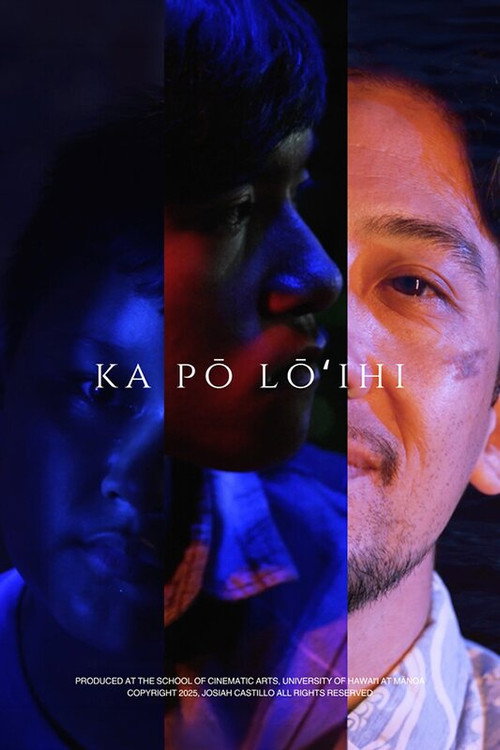
Ka Pō Lōʻihi (2026)
Directed by Josiah Jordan Castillo
Ka Pō Lōʻihi, translated as "the long night," is a twelve-minute experimental short that takes its title's promise seriously.
Consciousness Markers
The film is written and directed by a Native Hawaiian filmmaker and centers an indigenous Hawaiian protagonist navigating cycles specific to that community. The representation is organic to the story's cultural roots, not a casting exercise, but it is the film's entire identity.
The film engages with systemic cycles of incarceration and drug abuse as they affect Native Hawaiians, which carries an implicit racial dimension. The framing is cultural and personal rather than activist, keeping this score measured.
The film's meditation on systemic incarceration and its implicit argument for traditional healing carry a gentle moral current. Festival descriptions suggest the tone is experiential and meditative, however, keeping the sermonizing impulse well in check.
No LGBTQ+ themes, characters, or framing are present in any available synopsis or coverage of the film.
The film centers on a male protagonist's personal and spiritual struggle. No feminist framing or agenda is present.
No climate or environmental themes are present in the film.
No anti-capitalist or class-critique framing is present. The film's concerns are personal, familial, and spiritual.
No body positivity themes or messaging are present in the film.
No neurodivergence themes or framing are present in the film.
The film does not engage in historical revisionism. Its cultural grounding in Hawaiian tradition is presentational, not corrective.
Why it received this score
Ka Pō Lōʻihi, translated as "the long night," is a twelve-minute experimental short that takes its title's promise seriously. Director Josiah Jordan Castillo, a Maui-raised filmmaker operating firmly within the Hawaiian regional arts ecosystem, constructs a portrait of generational trauma among Native Hawaiian men that is sincere, culturally specific, and largely uninterested in performing for a mainland progressive audience. This is, in the current landscape, a genuinely notable quality. The film concerns itself with Kekai, a man incarcerated and confronted by his own childhood, and with whether the traditional Hawaiian reconciliation practice of Hoʻoponopono can serve as a path out of cycles that statistics have long documented. It is a film about a community, told from inside that community, which is a different enterprise entirely from a film about a community told from a conference room in Los Angeles.
The social consciousness here is of the older, quieter variety: it lives in the subject matter itself rather than in the camera's approving gaze. The film's engagement with systemic incarceration and substance abuse carries an implicit argument, yes, but the argument is delivered through atmosphere and spiritual inquiry rather than through characters explaining their circumstances to each other for the benefit of the audience. The indigenous cultural framework, specifically the invocation of Hoʻoponopono as a redemptive force, is the film's genuine ideological core. It is not a token. It is the whole point.
What the film lacks, from the perspective of this taxonomy, is the specific performative machinery of 2020s progressive signaling. There are no solidarity statements embedded in the mise-en-scène, no demographic checkboxes being visibly ticked, no sense that the film is aware of its own virtue. It is a short film made by a young Hawaiian filmmaker about the place he comes from. The scoring instrument in our hands is not really designed for this particular wine, and the instrument's limitations say more about the instrument than about the wine.
Analysis generated by our Consciousness Algorithm
Synopsis
Ka pō lōʻihi is an experimental short film about Kekai, a native Hawaiian born into a broken family where violence, drug abuse, and corruption rob him of his innocence. When his single mother passes away, Kekai is left to his own devices and struggles to break free of the generational curse of systemic drug abuse and incarceration. Kekai, a defeated and will-stricken adult, is forced to face his childhood trauma alone in his cell. Will Kekai's ignorance prevent his journey through the vast darkness to Hoʻoponopono?