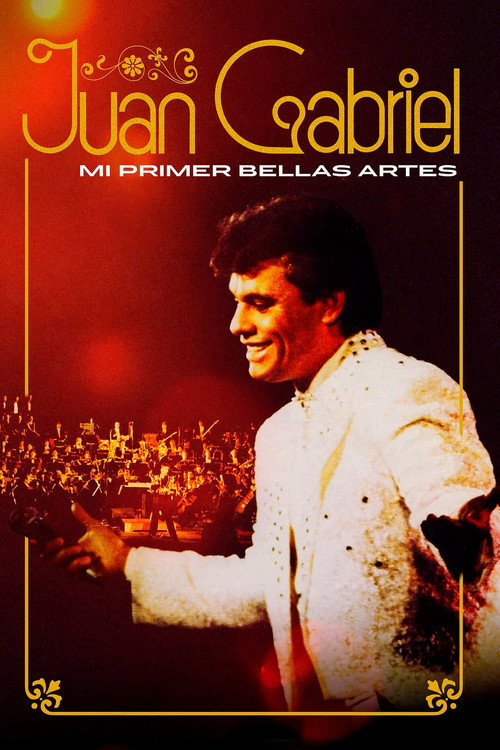
Juan Gabriel: Mi Primer Bellas Artes (2026)
Directed by María José Cuevas
The Palacio de Bellas Artes was built, one imagines, with a very specific idea of what kind of art it would house.
Consciousness Markers
Juan Gabriel's gender nonconformity and his role in creating LGBTQ+ visibility within Mexican popular culture is a substantive and documented theme in the film's critical framing. The 2026 release explicitly foregrounds his legacy as a queer cultural pioneer who 'queerized the Mexican macho,' per cited musicologists.
The film is built entirely around Mexican artists, commentators, and cultural figures, with the theatrical release timed explicitly to Hispanic Heritage Month. The representation is culturally organic rather than a corrective casting gesture, but the 2026 framing leans into it as a statement of Latin cultural pride.
The film's release strategy is explicitly tied to Mexican Independence Day and Hispanic Heritage Month, and critical discourse frames the 1990 performance as a reclamation of working-class Mexican cultural identity against elite institutional gatekeeping. The racial and ethnic pride framing is present but celebratory in register.
The 2026 theatrical cut actively recontextualizes the 1990 concert through a modern lens, emphasizing queer identity, class struggle, and cultural democratization in ways that the original event did not explicitly articulate. The addition of new framing material and the director's stated interpretive goals constitute a modest revisionist overlay.
The class-subversion narrative, a working-class pop artist storming an elite institution reserved for high culture, is a genuine and recurring theme in both the film and its critical reception. It is historically grounded in 1990 rather than a product of contemporary activist framing, which tempers the score.
Director María José Cuevas's public statements, including the assertion that Juan Gabriel 'was more powerful than power itself,' carry a sermonizing quality, and the film's critical framing has a thesis it wants the audience to absorb. The concert footage itself, however, requires no argument, which keeps the overall lecture energy in check.
Director María José Cuevas has a documented history of centering marginalized figures in Mexican entertainment, and Elena Poniatowska, a prominent feminist activist, appears in commentary. However, the film's subject is a male icon and feminist themes are incidental rather than structural.
There is no evidence of climate themes in the film's content, framing, or promotional materials.
There is no evidence of body positivity themes in the film's content or framing.
There is no evidence of neurodivergence themes in the film's content or framing.
Why it received this score
The Palacio de Bellas Artes was built, one imagines, with a very specific idea of what kind of art it would house. Opera. Ballet. The dignified suffering of the European classical tradition. In 1990, Juan Gabriel arrived in a sequined suit and politely disagreed. This documentary, directed by María José Cuevas and released in 2026 to coincide with Mexican Independence Day, presents that moment of polite disagreement in 4K Dolby Atmos, which is perhaps the most fitting possible upgrade.
The film works best when it simply steps aside and lets the concert breathe. Juan Gabriel performing ranchera and popular ballads with the National Symphony Orchestra, before an audience that had not been asked to sit quietly, is a genuinely extraordinary spectacle. The 2026 framing materials, featuring commentary from journalist Elena Poniatowska and archival rehearsal footage from Juan Gabriel's personal collection, are less content to let the images speak for themselves. Cuevas, whose previous work has consistently examined counter-cultural figures in Mexican entertainment, brings a clear interpretive agenda: the 1990 performance was an act of class insurgency, a queering of the national cultural establishment, and a vindication of working-class popular art against elite gatekeeping. She is not wrong. She is also not subtle.
The release strategy tells you everything about the film's self-understanding: U.S. theaters on September 15, Hispanic Heritage Month, the 10th anniversary of Juan Gabriel's death, a free public screening in Chicago with live mariachi. Every contextual choice signals that this is not merely a concert film but a cultural argument dressed in sequins. The argument is largely sound. Juan Gabriel's gender nonconformity in a patriarchal industry was real and consequential, and the critical literature marshaled here to support that reading is legitimate scholarship. The film earns its convictions. It simply carries them in a very large, very visible bag, and makes sure you have noticed the bag at least three times before the credits roll.
Analysis generated by our Consciousness Algorithm
Synopsis
Mexico's most iconic concert comes to U.S. theaters on September 15th, celebrating Mexican Independence Day and commemorating the 10th anniversary of Juan Gabriel's passing. Experience his legendary first performance at Mexico City's "Palacio de Bellas Artes" in 1990—a landmark event that forever transformed Mexican music. More than three decades later, this historic concert returns in a special theatrical release with newly restored picture and sound, plus an exclusive new opening featuring never-before-seen rehearsal footage from Juan Gabriel's personal archive that offers a unique glimpse into the making of this unforgettable night. Every song, every standing ovation, and every iconic moment has been revitalized, allowing longtime fans and new audiences to experience this extraordinary performance like never before. Celebrate the timeless legacy of Juan Gabriel on the big screen in this once-in-a-generation cinematic event.