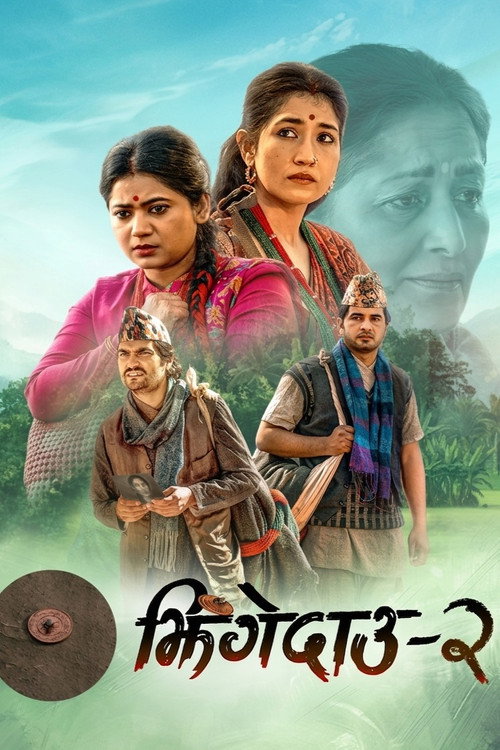
Jhingedaau 2 (2026)
Directed by Gyanendra Bahadur Deuja
Gyanendra Bahadur Deuja returns with the sequel to his 2022 hit, and he has been admirably candid about why: it made money the first time.
Consciousness Markers
The film features a predominantly female-driven conflict with two lead actresses at its center, though this appears to be a function of the story's domestic premise rather than any deliberate representational agenda. No evidence of casting choices engineered to satisfy diversity quotas or make a broader cultural statement.
The two daughters-in-law are the engines of both the comedy and the drama, which gives them narrative prominence. However, the story ultimately affirms traditional domestic roles and maternal authority rather than challenging the structures that contain these women.
The film carries an implicit moral about filial piety and the importance of respecting the family matriarch, which could be read as gentle sermonizing. It is, however, the kind of sermon that has been delivered in South Asian family dramas since before the concept of a culture war existed.
No LGBTQ+ themes, characters, or subtext were identified in any available material. The film operates squarely within the framework of heterosexual joint-family dynamics.
The film is a Nepali domestic comedy-drama with no evident engagement with race as a social or political category. No evidence of racial consciousness framing was found.
No climate themes, environmental messaging, or ecological subtext were identified. The rural setting is backdrop, not a statement.
The central dispute is a family property argument over a tree, which is the opposite of anti-capitalist critique. The director openly cited commercial franchise logic as his primary motivation for making the film, which is refreshingly honest.
No body positivity themes or messaging were identified in any available material about the film.
No neurodivergent characters or related themes were identified in the film or its surrounding discourse.
The film engages with a nostalgic vision of traditional Nepali rural life rather than revising or recontextualizing it. If anything, the historical gaze here is reverential.
Why it received this score
Gyanendra Bahadur Deuja returns with the sequel to his 2022 hit, and he has been admirably candid about why: it made money the first time. This level of transparency is rare in cinema and should perhaps be celebrated. What the film delivers is a domestic comedy-drama rooted in the eternal Nepali institution of daughters-in-law disagreeing over property, in this case a tree, while the family matriarch registers her displeasure by disappearing entirely. The matriarch, it turns out, is the most culturally subversive figure in the film, deploying absence as her primary tool of negotiation. This is a power move that predates any modern social movement by several centuries.
On the spectrum of progressive cultural sensibilities, Jhingedaau 2 registers as approximately inert. The female leads, Keki Adhikari and Aanchal Sharma, drive every scene with evident skill, but the film is not interested in interrogating the joint-family structures that produce their conflict. It is interested in resolving that conflict through the restoration of maternal authority and domestic harmony, which is a conservative moral delivered with warmth. The rural and urban landscapes of Nepal function as texture, not as a treatise on inequality. No one stops to explain systemic issues to the audience. This is, by contemporary standards, almost provocative.
The film's most culturally notable quality is its complete comfort with what it is. It does not aspire to discomfort anyone. The only lecture present is the age-old one about respecting your mother, which has been the concluding argument of South Asian family cinema since the medium's inception and shows no signs of retirement. Scored against our ten markers of modern progressive sensibility, Jhingedaau 2 emerges as a document of almost archaeological traditionalism, a family drama that would have felt equally at home in any decade of Nepali cinema. We note this without judgment. Someone has to hold the line.
Analysis generated by our Consciousness Algorithm
Synopsis
As Khanalni goes missing, her two sons and their wives embark on a search to find her, uncovering unexpected challenges along the way.