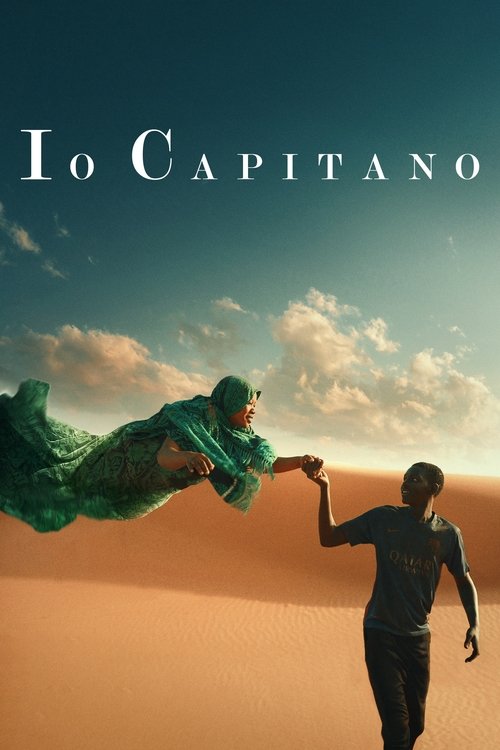
Io Capitano (2023)
Directed by Matteo Garrone
Yes — Io Capitano is woke, scoring 60 out of 100 on our wokeness meter.
Matteo Garrone's Io Capitano follows two teenage cousins from Dakar, Seydou and Moussa, as they attempt the route north through Mali, Niger, the Sahara, Libya, and finally the Mediterranean.
Consciousness Markers
The entire plot is a scathing examination of systemic exploitation and racialized suffering faced by Black migrants in global transit.
The film centers entirely on the journey and experience of two Senegalese teenagers, providing a powerful and specific representation of marginalized voices.
The journey is defined by the commodification of human life, from false passports to slave auctions and smuggling operations.
The film relies on cinematic drama and emotional sweep rather than delivering didactic political speeches.
While women appear, the narrative focus remains squarely on the male protagonists' survival, lacking a defined feminist agenda.
The Sahara and Mediterranean are backdrops, but the focus remains on human trafficking and political failure, not environmental crisis.
No evidence of LGBTQ+ themes or characters within the narrative.
No thematic focus on body image or diverse body representation.
No characters exhibit traits related to neurodivergence.
The film documents contemporary migration realities rather than actively rewriting established historical facts.
Why it received this score
Matteo Garrone's Io Capitano follows two teenage cousins from Dakar, Seydou and Moussa, as they attempt the route north through Mali, Niger, the Sahara, Libya, and finally the Mediterranean. The production cast its leads on the African continent, and the film's attention never drifts from Seydou's face. That choice does the heavy lifting. We watch checkpoints, bribes, and a smuggler's prison from inside the experience of a boy who keeps believing the next leg will be better. The representation here is specific and earned, not decorative.
The film's real subject is the machinery that prices human beings. False passports are sold at rest stops. Rebels shake down a truckload of travelers. A slave auction in Libya is staged with the flat efficiency of a livestock market. Garrone lets the economics speak for themselves, which gives the indictment its force. He does not halt the story for a speech. The camera stays on the fence the two men are made to build and on the patriarch who eventually releases them, and the horror settles in without announcement. The political content is severe, but it arrives as narrative pressure, not as a sermon.
Where the film declines to go is equally instructive. The women who appear, including one abandoned in the desert, are ghosts inside the boys' story, and no feminist program organizes the frame. Climate is weather here, not a cause. There is no queer thread, no body-image discourse, no neurodivergent subplot, and no attempt to rewrite the historical record. This is contemporary reportage with a fable's pulse. The moral seriousness is enormous. The preaching is minimal.
Analysis generated by our Consciousness Algorithm


Synopsis
Longing for a brighter future, two Senegalese teenagers embark on a journey from West Africa to Italy. However, between their dreams and reality lies a labyrinth of checkpoints, the Sahara Desert, and the vast waters of the Mediterranean.
Questions about Io Capitano
Is Io Capitano woke?
Yes — Io Capitano is woke, scoring 60 out of 100 on our wokeness meter. That earns it a verdict of Woke.
What makes Io Capitano woke?
3 of the 10 markers register at 30 or above, led by Racial Consciousness (90), Representation Casting (85) and Eat the Rich (75). On Racial Consciousness: The entire plot is a scathing examination of systemic exploitation and racialized suffering faced by Black migrants in global transit.
How does Io Capitano compare to other 2023 movies?
It ranks #14 of the 200 films from 2023 we've scored; their average is 24. The wokest is Origin (84).
How is the Woke Score calculated?
An AI-assisted process researches the film and its reception, scores it 0–100 on ten markers, then combines those into one 0–100 Woke Score. It measures a specific set of 2020s cultural themes, not film quality.