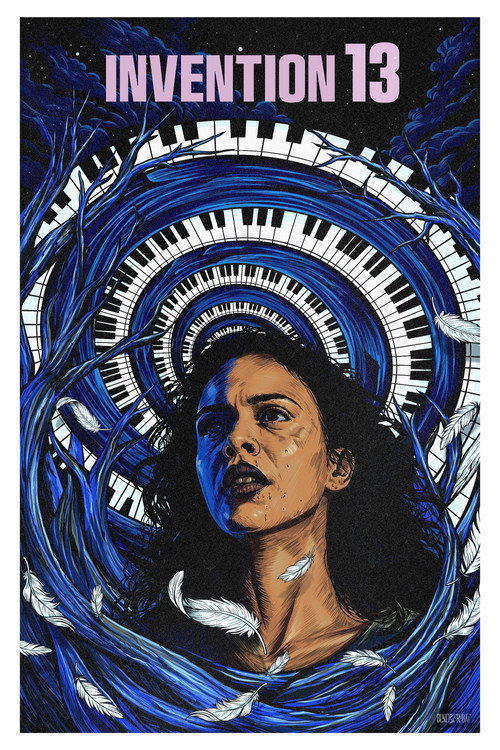
Invention 13 (2026)
Directed by Conor Oberst
Conor Oberst, the Omaha singer-songwriter long associated with emotive indie rock and its attendant progressive sympathies, makes his directorial debut with a 15-minute Super 16mm dark fantasy about a man losing his composure over a Bach keyboard exercise.
Consciousness Markers
The cast is modestly mixed, including a professional skateboarder and a French newcomer, though this appears to be a function of the director's personal and artistic network rather than any conscious diversity mandate. No evidence of casting choices made for representational purposes.
No LGBTQ+ themes, characters, or content are present in this film. The surreal obstacles facing the pianist are musical and psychological in nature, not identity-based.
There is no discernible feminist framing or agenda. The film's central struggle is a man versus a Bach invention, which is, by most accounts, a gender-neutral adversary.
No racial consciousness themes are present. The film has generated no discourse around race, and its content, a surrealist meditation on artistic frustration, does not engage with the subject.
The cold, windy night setting is atmospheric, not allegorical. No climate themes are present or implied.
No anti-capitalist critique is present. The film's obstacles are fantastical and personal, not structural or economic.
No body positivity themes are present. The film is a short dark fantasy about a pianist. Bodies are not the subject.
No neurodivergence themes are present. The pianist's frustration and surreal experience could be read as broadly psychological, but there is no framing around neurodivergence specifically.
No revisionist history is present. Bach's Invention No. 13 remains, as far as this film is concerned, exactly what it always was: very difficult.
There is no lecture energy detectable. A 15-minute Super 16mm short about musical obsession and surreal fantasy has not taken the opportunity to instruct the audience on how to be better people.
Why it received this score
Conor Oberst, the Omaha singer-songwriter long associated with emotive indie rock and its attendant progressive sympathies, makes his directorial debut with a 15-minute Super 16mm dark fantasy about a man losing his composure over a Bach keyboard exercise. The film's central conflict, a pianist versus the A minor Invention No. 13, is perhaps the most apolitical premise imaginable. Bach composed the piece in 1723, and it has been frustrating pianists ever since, entirely without ideological assistance.
The production is a genuine exercise in atmospheric craft: practical effects, hand-drawn animation, grainy film stock, and a score by Nathaniel Walcott conspire to create something closer to a waking nightmare than a music lesson. Phoebe Bridgers contributes voiceover work, and professional skateboarder Nelly Morville appears in a supporting role, which is either a bold casting choice or simply what happens when your social circle contains interesting people. The film premiered at Beyond Fest alongside a 1977 Japanese horror film, which is, frankly, the correct context for it.
From a social consciousness perspective, Invention 13 is a document of near-total restraint. The creative figures involved hold progressive views in their public lives, and they have elected, with admirable discipline, to make a short film about music and madness instead of a short film about their progressive views. The obstacles the pianist faces are surreal and personal. They are not systemic. We note this without complaint.
Analysis generated by our Consciousness Algorithm
Synopsis
On a cold, windy night, a frustrated pianist encounters strange obstacles while trying to learn Bach's notoriously intricate Invention 13.