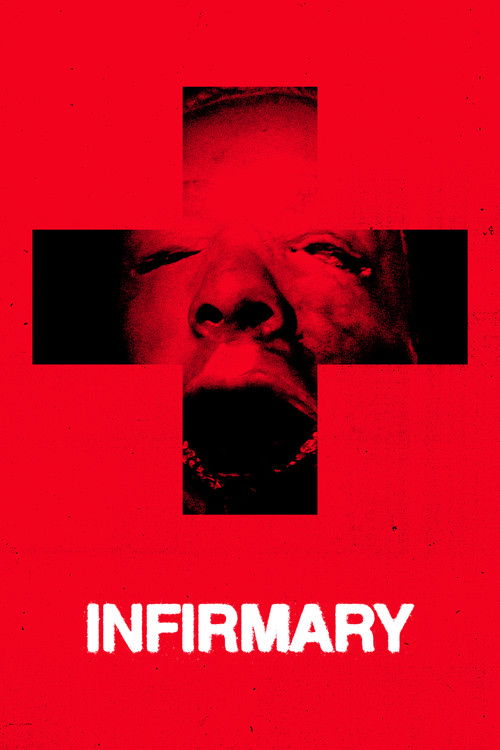
Infirmary (2026)
Directed by Nicholas Pineda
Nicholas Pineda's "Infirmary" arrives with a premise as stripped-down as its budget: a security guard, a bodycam, an abandoned psychiatric hospital, and a five-person crew with nowhere to hide.
Consciousness Markers
The cast includes Black and white leads without any apparent agenda around the casting itself. The racial mix appears to be a natural production choice, not a thematic statement.
No LGBTQ+ themes, characters, or references are present in the film or its surrounding discourse.
Female characters appear in the cast but the film contains no feminist framing, commentary on gender dynamics, or related themes.
Race is not raised as a conscious theme. The interracial workplace dynamic between Edward and Lester is framed through institutional cynicism and hazing, not racial identity.
No climate, environmental, or ecological themes are present in any form.
The demolition of the old psychiatric facility is a plot backdrop, not a critique of capital or development. No anti-capitalist messaging is present.
No body positivity themes, messaging, or relevant character dynamics are present.
The psychiatric hospital setting is treated as a horror location, not as an occasion for commentary on mental health or neurodivergence.
The film invents its own fictional institutional history for horror purposes. There is no revisionist engagement with real historical events or figures.
The film contains no sermonizing, no moral speeches, and no moments in which characters pause the horror to share their values. It is refreshingly disinterested in the audience's ideological development.
Why it received this score
Nicholas Pineda's "Infirmary" arrives with a premise as stripped-down as its budget: a security guard, a bodycam, an abandoned psychiatric hospital, and a five-person crew with nowhere to hide. The film is, in the most clinical sense, a delivery mechanism for atmosphere. It does not pause to instruct the audience on anything. It does not care about your feelings. It is here to make you uncomfortable, and it pursues that goal with the focused indifference of a man who has a job to do and would prefer not to discuss it.
The cultural footprint of this film is essentially zero, which is itself a kind of achievement in the current landscape. The protagonist is a discharged veteran, his supervisor a former cop who left the force under murky circumstances, and their dynamic is one of institutional hazing and mutual suspicion. A lesser film, or a more culturally ambitious one, would have found a dozen opportunities to editorialize on those details. Pineda does not take a single one. The psychiatric facility setting, historically a rich vein for commentary on how society treats its most vulnerable, is here treated purely as architecture. It is dark. It has corridors. Something is wrong with it. That is all.
For the purposes of our classification exercise, "Infirmary" presents a challenge not of complexity but of absence. There is nothing to score. The film's progressive credentials are precisely as robust as its catering budget, which is to say, the evidence suggests there was no catering budget. A racially mixed cast moves through the frame as a natural consequence of casting, not a statement. No one lectures anyone about anything, except perhaps about proper bodycam maintenance. We log the zeros, we close the file, and we move on.
Analysis generated by our Consciousness Algorithm


Synopsis
A guard vanished on his first night at an old psych hospital in 2023. His bodycam footage shows unexplainable incidents that continue to baffle investigators.