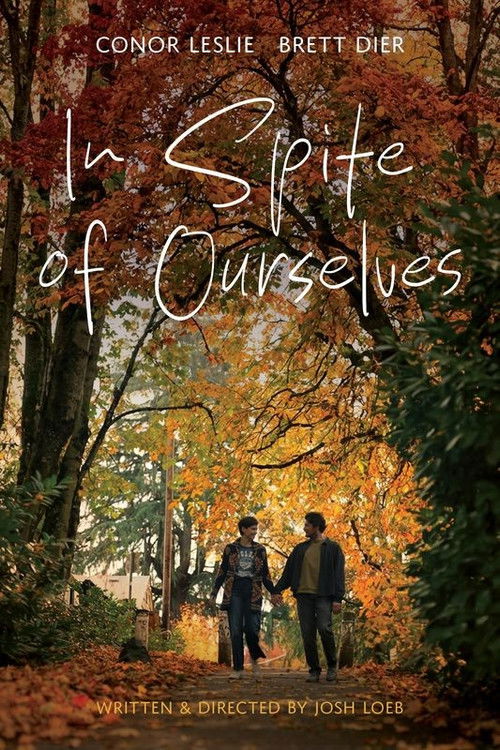
In Spite of Ourselves (2026)
Directed by Josh Loeb
In Spite of Ourselves arrives as a small, self-possessed independent romantic comedy that has the good manners to be mostly about two people rather than a social agenda.
Consciousness Markers
Hannah is framed as a career-driven baker navigating professional ambition in Portland's culinary scene, with one review deploying the phrase 'girlboss' in her direction. The framing is mild and organic to the character rather than programmatic.
Hannah's progressive hearing loss and Archie's father's dementia are genuine plot elements, but they function as sources of emotional drama and avoidance rather than as advocacy for disability identity. The film appears to be telling a story that includes illness, not making a statement about it.
One noted scene deliberately reframes the post-first-date sex cliché around mutual vulnerability and communication, which critics described in terms that suggest a degree of intentional messaging. It is a single scene, not a sustained sermon, and registers as a mild pulse rather than a full homily.
The leads are a conventional heterosexual male-female pairing with no evident diversity-driven casting agenda. The supporting ensemble is modestly varied but without any signal that the film is making a statement about it.
No LGBTQ+ characters, themes, or subtext are present in any available material about the film.
No racial consciousness themes, interracial commentary, or racial identity discourse appear anywhere in the film's available material.
The film contains no climate messaging, environmental themes, or ecological anxiety of any kind.
Both leads are strivers: a baker building a career and a comedian chasing success. The film treats professional ambition as aspirational, not suspect.
No body positivity discourse, size representation framing, or commentary on physical appearance as a social construct is present.
This is a contemporary romantic comedy set in Portland and Los Angeles. No historical period, revisionist framing, or reclaimed narrative is involved.
Why it received this score
In Spite of Ourselves arrives as a small, self-possessed independent romantic comedy that has the good manners to be mostly about two people rather than a social agenda. Brett Dier and Conor Leslie play Archie and Hannah, respectively: a commitment-averse Los Angeles comedian and a career-focused Portland baker whose two weeks of bliss are interrupted by the gravitational pull of real life, which in this film takes the form of a father with dementia, a gradually failing ear, and the general indignity of living in separate cities. Director Josh Loeb, making his feature debut after a career feeding people rather than filming them, demonstrates a preference for emotional specificity over grand gestures. This is, in the taxonomy of romantic comedies, a relatively responsible specimen.
The film does register faint traces of cultural awareness in a handful of places. Hannah is coded as a driven, professionally ambitious woman navigating a culinary world that has opinions about her, and the film's treatment of a post-first-date intimacy scene has been described by reviewers in terms suggesting a conscious effort to model communication and mutual pacing. These are not crimes. They are, at most, mild misdemeanors: the kind of progressive sensibilities that feel less like a manifesto and more like a filmmaker who read a few thoughtful essays and let them quietly inform the texture of a scene. The disability elements, meanwhile, are deployed as emotional weight rather than representation advocacy, which is the correct use of disability in a story.
What the film conspicuously lacks is the exhausting quality of a film that believes it is important. It does not appear to want to change your mind about anything except perhaps the value of honesty in a long-distance relationship. In the current landscape, this constitutes a form of restraint that deserves acknowledgment, if not exactly a medal.
Analysis generated by our Consciousness Algorithm
Synopsis
Hannah is a determined Portland baker, and Archie, an up-and-coming Los Angeles comedian with a tendency to dodge commitment. What begins as immediate, undeniable chemistry turns into two blissful weeks together—until real life intervenes. Pulled back into their separate worlds, the pair must navigate distance, doubts, and their own hilariously messy insecurities to determine whether love can truly go the distance.