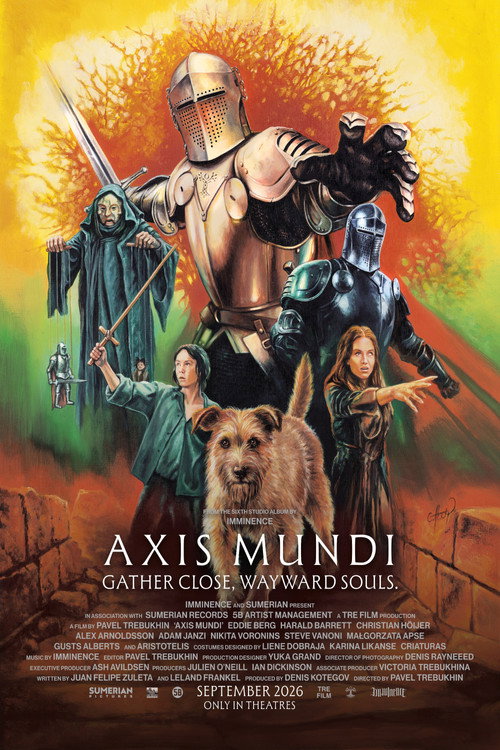
Imminence: Axis Mundi (2026)
Directed by Pavel Trebukhin
Here is a film that has looked deeply into the abyss of contemporary progressive cinema and decided, with considerable conviction, to discuss something else entirely.
Consciousness Markers
The cast is assembled for a dark medieval fantasy with no documented emphasis on diversity casting or representation as a creative mandate. Characters are archetypes, not demographics.
No LGBTQ+ themes, characters, or subtext are present or documented anywhere in the film's narrative or reception.
A female character (Małgorzata Apse as the Witch) exists in the story, but her role is a classic dark-fantasy archetype with no feminist framing or agenda identified in reviews or promotional materials.
The film operates entirely within a mythological medieval framework. No racial consciousness, commentary on race, or related themes are present.
The fractured world setting is supernatural and spiritual in origin, not an ecological allegory. No climate themes are identified.
No anti-capitalist themes, class critique, or wealth commentary of any kind is present. The enemies here are metaphysical, not economic.
No body positivity themes or messaging are present. The film is entirely unconcerned with this category.
No neurodivergent characters or themes are identified anywhere in the film's narrative or cultural reception.
The medieval setting is entirely fictional and mythological, not a revisionist treatment of actual historical events or figures.
Critical reception explicitly confirms the absence of political or social subtext. The film delivers its existential themes without sermonizing or addressing the audience's moral shortcomings.
Why it received this score
Here is a film that has looked deeply into the abyss of contemporary progressive cinema and decided, with considerable conviction, to discuss something else entirely. "Imminence: Axis Mundi" is a 61-minute Swedish metalcore albumovie set in a fractured medieval world, concerning an immortal knight, his shadowy double, and a mythical bridge between life and death. It has no opinions about systemic inequality. It does not wish to educate us. It is simply about a cursed man trying to die, which, after surveying the current cultural landscape, feels almost radical.
The film draws its thematic vocabulary from Bergman, Boorman, and Eggers: fate, mortality, spiritual corruption, the long shadow of betrayal. These are old concerns, pre-Twitter in origin, and the filmmakers pursue them with the focused sincerity of people who have never once considered whether their knight should pause to reflect on his privilege. The cast, assembled from a constellation of European names that would challenge most spellcheckers, inhabits this world with apparent commitment. The puppet theater motifs are a nice touch. Nobody learns a lesson about allyship.
We are left, then, with a film that scores at or near zero across every marker in our taxonomy, not through any reactionary posturing, but through pure, unbroken indifference to the entire framework. The Axis Mundi is a mythological concept. It is not a metaphor for structural oppression. This critic notes that absence, files it carefully, and moves on.
Analysis generated by our Consciousness Algorithm
Synopsis
A knight protagonist must combat an arc of betrayal, a moral reckoning, and a spiritual corruption.