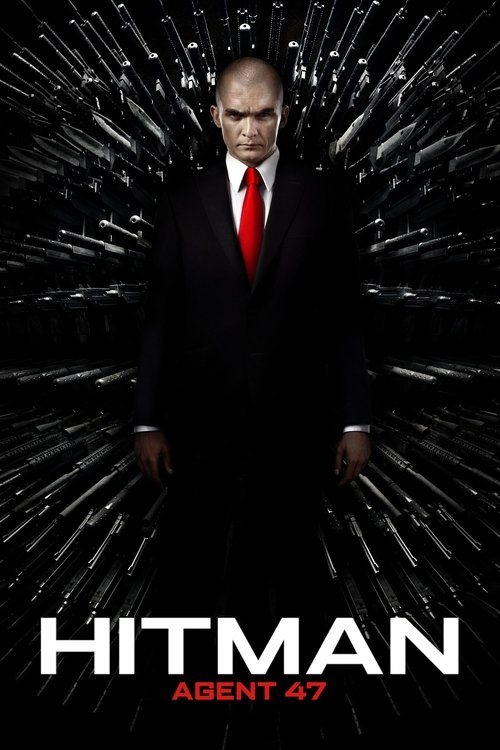
Hitman: Agent 47 (2015)
Directed by Aleksander Bach
No — Hitman: Agent 47 is not woke, scoring 12 out of 100 on our wokeness meter.
Hitman: Agent 47 arrives as a reboot of a 2007 film that itself adapted a video game series about a bald assassin with a barcode on his skull.
Consciousness Markers
Cast includes Angelababy as Diana Burnwood and other non-white supporting actors, but diversity is incidental and likely market-driven rather than a deliberate social-justice statement.
Katia is a capable co-lead with agency and combat skills, but the film does not advance a feminist agenda or critique patriarchy.
No LGBTQ+ characters, themes, or subtext.
No engagement with racial identity, systemic racism, or racial justice themes.
No environmental or climate-change themes.
Syndicate International is a generic evil corporation, not a critique of capitalism or wealth inequality.
No body-positivity themes or diverse body representation.
Katia's anxiety and heightened senses are framed as genetic enhancement, not neurodivergence representation.
No historical revisionism; the plot is fictional.
The film is a straightforward action thriller with no preachy or didactic messaging.
Why it received this score
Hitman: Agent 47 arrives as a reboot of a 2007 film that itself adapted a video game series about a bald assassin with a barcode on his skull. The 2015 model offers Rupert Friend in the title role, Zachary Quinto as a villain with titanium under his skin, and a plot about a genetically enhanced young woman searching for the scientist who made her. It is a machine assembled from familiar parts, and it runs, after a fashion. Critics were unkind. Audiences shrugged. The whole enterprise has the texture of a direct-to-video release that somehow secured a theatrical window and a Singapore location shoot.
There is a woman at the center, Katia, played by Hannah Ware, and she is given genuine competence. She fights, she deduces, she crashes a stolen helicopter into a corporate headquarters. This is a co-lead with agency, which is more than the genre often manages, though the film never pauses to argue a point about gender and shows no interest in doing so. The casting of Angelababy as Diana Burnwood, the handler, adds a non-white face to a supporting role. The choice reads as market arithmetic, an eye on international receipts, not as a statement. Nobody in the film discusses identity, power, or who deserves what. The assassins simply assassinate.
What remains is a vacuum where social consciousness might have been. There is no romance between women, no climate anxiety, no critique of the corporation that employs the villains. Syndicate International is evil because it is evil, not because it is profitable. Bodies are conventionally sculpted. Katia's sensory overwhelm is a genetic upgrade, not a portrait of a mind that works differently. History is not revised, because the film has no history to revise. And nothing is preached. The screenplay has no thesis to deliver, only a body count and a mid-credits scene insisting that a man who should be dead is not. We are left with a competent, hollow, entirely unbothered piece of product, and it scores, by the standards of our ledger, near the floor.
Analysis generated by our Consciousness Algorithm


Synopsis
An assassin teams up with a woman to help her find her father and uncover the mysteries of her ancestry.
Questions about Hitman: Agent 47
Is Hitman: Agent 47 woke?
No — Hitman: Agent 47 is not woke, scoring 12 out of 100 on our wokeness meter. That earns it a verdict of Ultra Based.
Does Hitman: Agent 47 have any woke elements?
Very few. None of the 10 markers reaches 30, the level where a marker counts as present; the highest is Feminist Agenda at 20.
How does Hitman: Agent 47 compare to other 2015 movies?
It ranks #125 of the 289 films from 2015 we've scored; their average is 15. The wokest is Chi-Raq (78).
How is the Woke Score calculated?
An AI-assisted process researches the film and its reception, scores it 0–100 on ten markers, then combines those into one 0–100 Woke Score. It measures a specific set of 2020s cultural themes, not film quality.