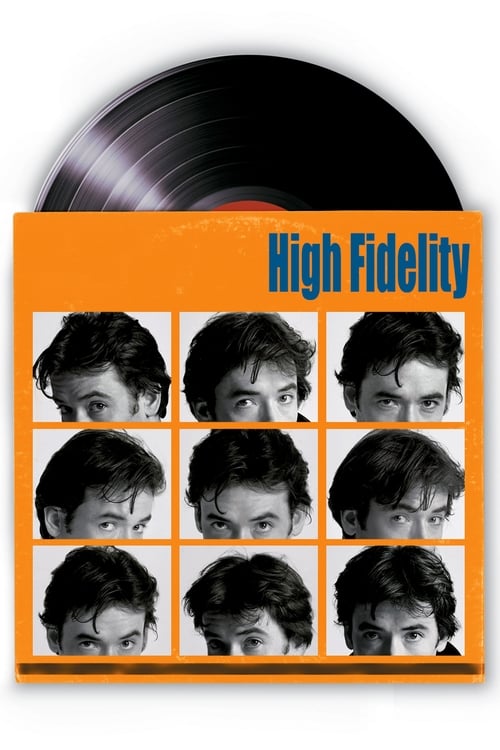
High Fidelity (2000)
Directed by Stephen Frears
No — High Fidelity is not woke, scoring 7 out of 100 on our wokeness meter.
High Fidelity arrives from the year 2000, a romantic comedy about a man cataloging his own failures in five-part lists, and it carries itself with the confidence of someone who has never once been asked to justify an opinion.
Consciousness Markers
The ensemble includes Lisa Bonet as singer Marie DeSalle and a reasonably varied supporting cast, but this is natural, unremarked casting rather than a representation agenda.
The film mildly interrogates Rob's self-absorbed immaturity and lets Penny correct his self-serving breakup narrative, but it remains a male-centered romantic comedy without a feminist program.
There is a faint anti-mainstream, indie-record-store-versus-corporate-taste snobbery, but no genuine eat-the-rich economic critique.
Rob's fourth-wall confessions are personal and confessional rather than preachy; the film never lectures the audience on social issues.
No LGBTQ+ characters or themes appear anywhere in the film.
Race is never addressed or commented upon; Bonet's character exists without any racial framing.
No environmental or climate content whatsoever.
No body positivity themes are present.
Rob's obsessive list-making and music pedantry are played for comedy, never framed as neurodivergence.
The film makes no historical claims to revise.
Why it received this score
High Fidelity arrives from the year 2000, a romantic comedy about a man cataloging his own failures in five-part lists, and it carries itself with the confidence of someone who has never once been asked to justify an opinion. Rob Gordon runs a Chicago record store, argues about pop music with his employees, and speaks directly into the camera about his ex-girlfriends. The film is warm, funny, and entirely comfortable in its own skin. There is no project here. There is a man, a breakup, and a stack of vinyl.
On the matter of representation, Lisa Bonet appears as the singer Marie DeSalle, and the ensemble is varied in a way that never announces itself. Race is simply present and never discussed, which is to say the film has no racial program to speak of. Sara Gilbert, Lili Taylor, and Joelle Carter fill out a cast of women who exist as people first and demographics never. Penny Hardwick eventually corrects Rob's self-serving account of their breakup, which is the closest the film comes to a feminist gesture. It is a small correction. Rob remains the center of gravity throughout.
Elsewhere we find only whispers. The clerks sneer at corporate taste and celebrate obscure vinyl, a posture that flirts with anti-commercial resentment without ever mounting an argument about money or class. Rob's confessional narration is personal and wounded, not preachy; he lectures no one about society. The film asks nothing of its audience except patience with an overgrown adolescent. That it remains charming is its achievement. That it aspires to nothing grander is its character.
Analysis generated by our Consciousness Algorithm


Synopsis
After his long-time girlfriend dumps him, a thirty-year-old record store owner seeks to understand why he is unlucky in love while recounting his "top five breakups of all time".
Questions about High Fidelity
Is High Fidelity woke?
No — High Fidelity is not woke, scoring 7 out of 100 on our wokeness meter. That earns it a verdict of Ultra Based.
Does High Fidelity have any woke elements?
Very few. None of the 10 markers reaches 30, the level where a marker counts as present; the highest is Representation Casting at 15.
How does High Fidelity compare to other 2000 movies?
It ranks #81 of the 125 films from 2000 we've scored; their average is 13. The wokest is But I'm a Cheerleader (72).
How is the Woke Score calculated?
An AI-assisted process researches the film and its reception, scores it 0–100 on ten markers, then combines those into one 0–100 Woke Score. It measures a specific set of 2020s cultural themes, not film quality.