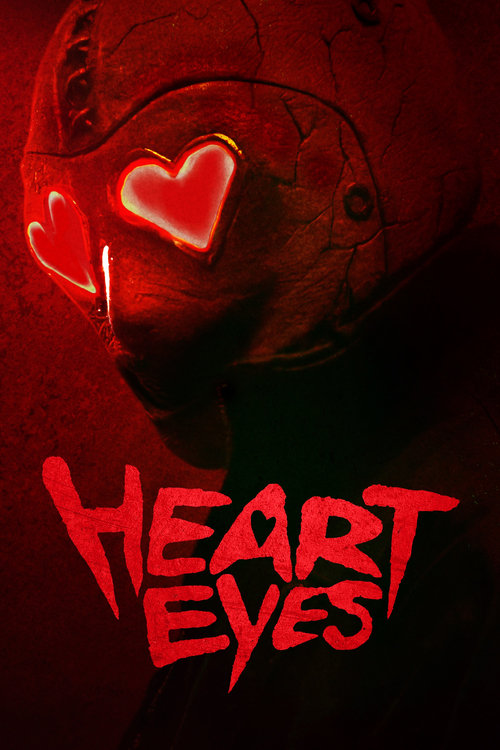
Heart Eyes (2025)
Directed by Josh Ruben
No — Heart Eyes is not especially woke, scoring 29 out of 100 on our wokeness meter.
Heart Eyes arrives with a premise that reads like a marketing meeting gone feral: a masked killer stalks Seattle couples on Valentine's Day, and two coworkers stuck on overtime get mistaken for a romantic pair.
Consciousness Markers
Mixed-race romantic leads and a diverse supporting cast appear naturally, without explicit commentary or box-checking.
A female protagonist, final girl, boss, detective, and villain drive the plot, but there is no sustained feminist critique.
An interracial central romance and diverse cast exist without any racial consciousness or commentary.
Mild satirical jabs at Valentine's Day commercialization and corporate overwork, but no systemic anti-capitalist argument.
No preachy messaging; any social commentary is subsumed by genre thrills and comedy.
No same-sex relationships or LGBTQ+ themes; the villainous polyamorous triad is framed as kink and murder, not queer identity.
No environmental themes or climate messaging.
No body positivity themes or messaging.
No neurodivergence themes or representation.
No revisionist historical narrative or reinterpretation.
Why it received this score
Heart Eyes arrives with a premise that reads like a marketing meeting gone feral: a masked killer stalks Seattle couples on Valentine's Day, and two coworkers stuck on overtime get mistaken for a romantic pair. The film commits to its twin genres with a straight face, and the central romance is carried by a mixed-race pairing that the screenplay never bothers to discuss. Supporting players of assorted backgrounds populate the police station, the office, and the drive-in without a single line drawing attention to the arrangement. This is representation as ambience, and the picture is sturdier for it.
The women do most of the work. Ally pitches campaigns, abandons medical school, and eventually drives the blade home. Her boss Crystal barks orders from a glass office, Detective Shaw carries a badge before revealing darker hobbies, and a desk officer named Fran gets a moment before the lights go out. A final girl with agency is not a thesis, and the film never builds one. The satire stays local and small: a jewelry company monetizing doomed love, a supervisor demanding fresh work on a holiday, a few jabs at corporate overtime that land and then evaporate. The villainous trio, a married couple plus their devoted third, is framed as kink and bloodlust, which is a separate matter from queer identity, and the film treats it that way.
Elsewhere the ledger is nearly blank. No environmental sermon, no body-positive messaging, no neurodivergent characters, no historical revisionism, no lecture. The killings arrive faster than any argument, and whatever social observations the script makes get swallowed by gore and jokes. The result is a competent slasher with a sweet streak and an unusually high body count for a date night. A sequel is already scheduled, which suggests the killer will return to hunt couples again, and the culture will presumably survive it.
Analysis generated by our Consciousness Algorithm


Synopsis
When the "Heart Eyes Killer" strikes Seattle, a pair of co-workers pulling overtime on Valentine's Day are mistaken for a couple by the elusive couple-hunting killer. Now, they must spend the most romantic night of the year running for their lives.
Questions about Heart Eyes
Is Heart Eyes woke?
No — Heart Eyes is not especially woke, scoring 29 out of 100 on our wokeness meter. That earns it a verdict of Based.
Does Heart Eyes have any woke elements?
2 of the 10 markers register at 30 or above, led by Representation Casting (45) and Feminist Agenda (35). On Representation Casting: Mixed-race romantic leads and a diverse supporting cast appear naturally, without explicit commentary or box-checking.
How does Heart Eyes compare to other 2025 movies?
It ranks #64 of the 217 films from 2025 we've scored; their average is 26. The wokest is STRAW (92).
How is the Woke Score calculated?
An AI-assisted process researches the film and its reception, scores it 0–100 on ten markers, then combines those into one 0–100 Woke Score. It measures a specific set of 2020s cultural themes, not film quality.