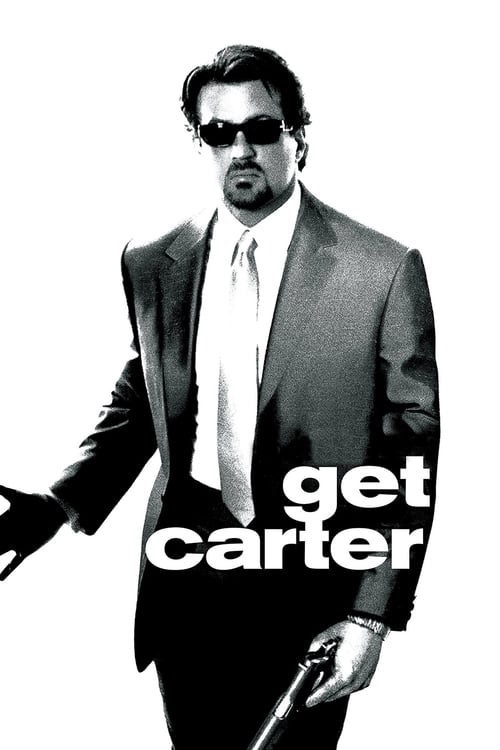
Get Carter (2000)
Directed by Stephen Kay
No — Get Carter is not woke, scoring 5 out of 100 on our wokeness meter.
Get Carter arrives in 2000 as a remake of a 1971 British crime picture, and it carries the grim determination of a studio thriller with nothing on its mind beyond avenging a dead brother.
Consciousness Markers
A corrupt wealthy tech mogul (Kinnear) is among the villains, but the film frames this as individual criminality rather than a systemic critique of capitalism or wealth.
Women in the film are largely victims (Doreen, Geraldine) or objects of male conflict, with no feminist framing or agency-driven critique. The exploitation plot is treated as a crime to avenge, not a gender statement.
The cast is overwhelmingly white, with no diverse casting choices made for representation purposes. This is a standard 2000 studio thriller ensemble.
There are no LGBTQ+ characters, themes, or subtext anywhere in the film.
The film engages with no racial themes or commentary whatsoever.
No environmental or climate-related content exists in the film.
No body positivity themes are present; the film's use of women's bodies is exploitative rather than affirming.
No neurodivergent characters or themes appear in the film.
The film is a contemporary crime thriller with no historical subject matter to revise.
This is a straightforward revenge thriller that makes no attempt to deliver social or moral lessons to the audience.
Why it received this score
Get Carter arrives in 2000 as a remake of a 1971 British crime picture, and it carries the grim determination of a studio thriller with nothing on its mind beyond avenging a dead brother. Sylvester Stallone plays Jack Carter, a Las Vegas enforcer who returns to Seattle to learn that his sibling's drunk-driving death was staged. The film then tours strip clubs, surveillance tapes, and wealthy men behaving badly. It is a period piece of its own moment, a neo-noir assembled from leftover parts, and it flops with a shrug that feels earned.
On the matter of social consciousness, the ledger is nearly blank. The cast is white and the production makes no effort to diversify it. There are no queer characters, no racial commentary, no environmental concern, no meditation on body image, and no neurodivergent figures. Women exist here as victims or as the spoils of male conflict. Doreen and Geraldine suffer, and the camera regards them with the same flat attention it gives a corpse. A feminist reading is available only if we squint, and the film offers none of its own.
Where the picture gestures toward a larger critique, it does so timidly. A wealthy tech mogul, Jeremy Kinnear, sits at the top of the villainous pyramid, using his money to procure women and hide his appetites. The film treats this as the crime of a single bad man, not as a symptom of anything systemic. Wealth is a plot device, not an indictment. The whole affair is a revenge machine, oiled with violence, and it asks nothing of the audience but attention. That it fails even at that is a separate matter, though not an uninteresting one.
Analysis generated by our Consciousness Algorithm


Synopsis
Jack Carter, a mob enforcer living in Las Vegas, travels back to his hometown of Seattle for his brother's funeral. During this visit, Carter realizes that the death of his brother was not accidental, but a murder. With this knowledge, Carter sets out to kill all those responsible.
Questions about Get Carter
Is Get Carter woke?
No — Get Carter is not woke, scoring 5 out of 100 on our wokeness meter. That earns it a verdict of Ultra Based.
Does Get Carter have any woke elements?
Very few. None of the 10 markers reaches 30, the level where a marker counts as present; the highest is Eat the Rich at 10.
How does Get Carter compare to other 2000 movies?
It ranks #89 of the 125 films from 2000 we've scored; their average is 13. The wokest is But I'm a Cheerleader (72).
How is the Woke Score calculated?
An AI-assisted process researches the film and its reception, scores it 0–100 on ten markers, then combines those into one 0–100 Woke Score. It measures a specific set of 2020s cultural themes, not film quality.