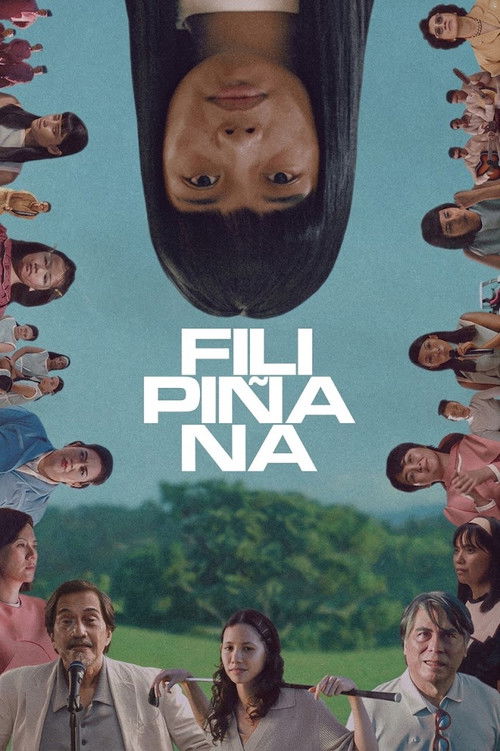
Filipiñana (2026)
Directed by Rafael Manuel
Rafael Manuel's Filipiñana arrives at the precise intersection where art-house formalism and political grievance hold hands and walk solemnly into a Sundance jury room.
Consciousness Markers
The golf course is the film's explicit symbol of capitalist land enclosure, with the director on record asking 'What is a golf course but the gentrification of land?' The club functions as a colonial plantation stand-in, the corrupt politician-patron class is the villain, and executive producer Jia Zhangke's working-class anti-capitalist filmography is not an accident of scheduling.
Post-colonial racial hierarchy is the film's central organizing principle, tracing the legacy of Spanish and American colonial rule through contemporary class structures. The director stated explicitly that Filipino identity cannot be separated from colonial identity, and the film's visual contrasts between foreign patrons and local workers enact that thesis on screen.
The film's visual grammar is built around gendered servitude: Isabel is literally framed through the legs of male patrons, and reviewers consistently describe the club's labor environment as one requiring women to perform subservience with a smile. Institutionalized patriarchy is not subtext here. It is the text.
The film's political thesis is stated clearly enough that its director was invited onto Democracy Now to explain it, and the Philippine Film Academy's own press release used the phrase 'structural violence, class disparity, and post-colonial inequities.' The formalist art-house style keeps the sermonizing at a low simmer rather than a full boil, but the sermon is undeniably present.
The film centers an Ilocana teenage girl as protagonist in a story explicitly about Filipino identity and labor. The cast is predominantly Filipino, with the foreign patrons (Chinese and Western tourists) coded as extractive outsiders, making ethnicity and regional identity load-bearing elements of the narrative architecture.
The film does not rewrite history so much as insist that history never actually ended. Its framing of the golf club as a continuation of colonial plantation logic, and its treatment of Philippine political dynasties as an unbroken inheritance of Spanish-era feudalism, constitutes a pointed counter-narrative to official national progress mythology.
The film opens with a deliberate juxtaposition: Manila residents rationing water from a municipal truck, cut immediately to golf course sprinklers lavishing manicured greens. Critics read this as environmental justice commentary, though the film frames it primarily as a class disparity symbol rather than a dedicated climate polemic.
No LGBTQ+ themes, characters, or narrative elements are identified in any available research or critical coverage of the film.
No body positivity themes or related narrative elements appear in any critical or contextual coverage of the film.
No neurodivergence themes or characters are identified in the available research.
Why it received this score
Rafael Manuel's Filipiñana arrives at the precise intersection where art-house formalism and political grievance hold hands and walk solemnly into a Sundance jury room. The film takes place over a single day at a Manila golf resort, which is either a tight dramatic constraint or a thesis statement about the compression of centuries of colonial violence into one afternoon's tee time. Both readings are correct. Through Isabel, a 17-year-old tee-girl tasked with the Kafkaesque errand of returning a lost club to the club's president, Manuel constructs a meticulous visual argument: sprinklers water the greens while Manila residents ration water by the liter, male patrons loom in the foreground while Isabel is framed, literally, through their legs. The film does not ask you to notice these things. It places them in front of you with the patience of a professor who has given this lecture before and will give it again.
The racial consciousness here operates at a register that goes beyond casting choices or token representation. Manuel is working with post-colonial theory as his primary cinematographic language, and the golf course, that most aggressively land-enclosing of leisure activities, becomes his central metaphor. The director has stated publicly that you cannot discuss Filipino identity without discussing colonial identity, and the film takes that statement seriously enough to build every frame around it. Foreign patrons, predominantly Chinese and Western, move through the club as though it were constructed for their comfort, because, the film argues, it was. The corrupt politician-patriarch who owns the club is not a villain so much as an institution wearing a polo shirt.
Where Filipiñana earns genuine distinction, and where it separates itself from the more earnest corners of its genre, is in its refusal to resolve. The corrupt are not punished. The structural violence is not dismantled. Isabel returns to her post. This is either a devastating formal choice or a convenient way to avoid writing a third act, and the critical consensus has settled firmly on the former. The film's social consciousness is not subtle, but it is, at minimum, cinematically rigorous, which is more than can be said for most films that appear on Democracy Now promotional circuits. Manuel has made a work that festival juries will reward and domestic Filipino audiences will debate, which is perhaps the most honest portrait of the post-colonial condition one could ask for.
Analysis generated by our Consciousness Algorithm
Synopsis
While working at an elite country club outside Manila, a 17-year-old Ilocana worker uncovers the violent truths of her workplace, her country, and her own past after attempting to return a lost golf club to the club's president.