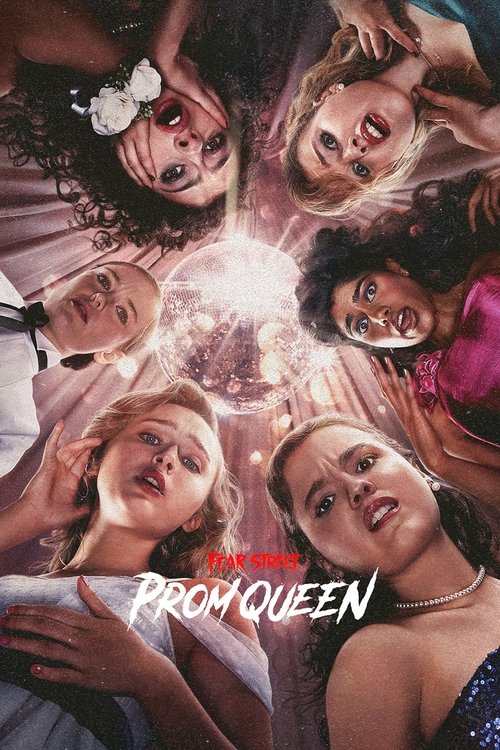
Fear Street: Prom Queen (2025)
Directed by Matt Palmer
No — Fear Street: Prom Queen is not woke, scoring 16 out of 100 on our wokeness meter.
The fourth Fear Street installment arrives with a 1988 setting, a prom, and a masked assailant working through the queen candidates by axe, cleaver, and kitchen knife.
Consciousness Markers
The ensemble is a reasonably mixed teen cast, but the diversity reads as standard-issue slasher casting rather than a deliberate representational statement.
The film centers on girls competing for prom queen and features a female final girl, but it plays this as genre convention and rivalry spectacle rather than a feminist thesis.
No LGBTQ+ characters, romance, or themes appear anywhere in the plot; the central relationships are heterosexual.
Race is never a subject of the film; the killings and rivalries are entirely colorblind in a way that neither engages nor comments on racial dynamics.
There is no environmental theme or climate messaging in the film whatsoever.
No economic critique or class-warfare messaging; the small-town setting is backdrop, not commentary.
Body image and body positivity are not themes; the film's interest in bodies is strictly slasher-related.
No neurodivergent characters or themes are present or explored.
The film is a period slasher set in 1988 with no historical revisionism or reframing of real events.
This is a straightforward teen slasher with no moralizing, messaging, or preachy monologues; critics even noted it lacks the thematic ambition of its predecessors.
Why it received this score
The fourth Fear Street installment arrives with a 1988 setting, a prom, and a masked assailant working through the queen candidates by axe, cleaver, and kitchen knife. It is adapted loosely from an R. L. Stine novel published in 1992, which means the source material predates the current century's moral apparatus by a comfortable margin. We came prepared to take notes on messaging. The notes are mostly a body count, and the bodies are arranged with a certain old-fashioned efficiency.
What registers is modest. The ensemble is a mixed group of teenagers, though this is simply how teenagers are cast now, an ambient fact of the payroll instead of a proclamation. Girls compete for a crown, girls are butchered in classrooms and changing rooms, and one girl survives long enough to bludgeon a matriarch with a trophy while blood pools into the Witch's Mark. A female final girl has been slasher furniture since 1978. The film's engagement with its own gender politics extends no further than a dance-off in the gymnasium, and it treats that as spectacle, not argument.
The absences are total. Race never surfaces as a subject. Money never surfaces as a subject, despite a town with a poor reputation and a vice principal determined to reinvent it. There is no climate anxiety, no class warfare, no body image discourse, no neurodivergent arc, no historical reframing, and no sermonizing of any kind. Critics complained that the film lacked the thematic ambition of its predecessors, which is the nearest thing to praise on offer. An empty slasher, at least, leaves no residue.
Analysis generated by our Consciousness Algorithm


Synopsis
Who will be voted queen at Shadyside High's 1988 prom? For underdog Lori, competition is cutthroat even before someone starts killing off the candidates.
Questions about Fear Street: Prom Queen
Is Fear Street: Prom Queen woke?
No — Fear Street: Prom Queen is not woke, scoring 16 out of 100 on our wokeness meter. That earns it a verdict of Ultra Based.
Does Fear Street: Prom Queen have any woke elements?
1 of the 10 markers register at 30 or above, led by Representation Casting (30). On Representation Casting: The ensemble is a reasonably mixed teen cast, but the diversity reads as standard-issue slasher casting rather than a deliberate representational statement.
How does Fear Street: Prom Queen compare to other 2025 movies?
It ranks #133 of the 217 films from 2025 we've scored; their average is 26. The wokest is STRAW (92).
How is the Woke Score calculated?
An AI-assisted process researches the film and its reception, scores it 0–100 on ten markers, then combines those into one 0–100 Woke Score. It measures a specific set of 2020s cultural themes, not film quality.