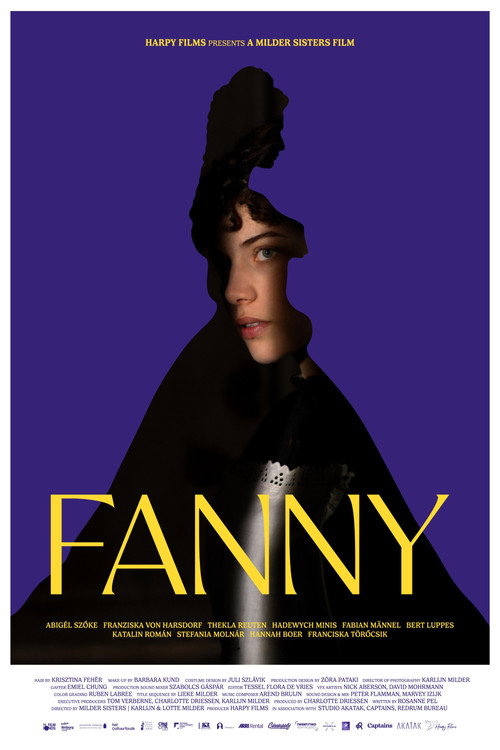
Fanny (2026)
Directed by Karlijn Milder
Fanny arrives from the Milder Sisters as a thirty-minute exercise in period feminist reclamation, set in the powdered and hierarchical world of the Viennese imperial court.
Consciousness Markers
The film's entire premise is built around a woman defying 19th-century gender and class expectations, and the directors publicly frame their creative mission around recovering 'untold, female-driven stories' and celebrating 'female icons.' This is the load-bearing pillar of the project.
The film deliberately excavates a forgotten working-class woman from the margins of 19th-century Viennese court history, recentering the narrative on a female figure the historical record has largely ignored. This is a gentle but genuine act of historical revision.
The project is deliberately female-led both in front of and behind the camera, with an international cast drawn from the Netherlands, Hungary, and Germany. The gender composition is clearly intentional, though it stops well short of a box-ticking diversity exercise.
The directors' stated mission to highlight underrepresented female stories suggests some degree of purposeful messaging, but festival reviews report no heavy-handed moralizing. At thirty minutes, the film has limited runway for sustained sermonizing.
The Viennese court setting implies class hierarchy, and a working hairdresser navigating aristocratic power structures carries faint anti-hierarchical undertones. No pointed critique of capitalism is documented, however.
No LGBTQ+ themes, characters, or subtext are documented in the synopsis, research, or festival materials. The score is zero.
No racial consciousness themes are present in the research, synopsis, or critical commentary. The score is zero.
The film is set in the 19th-century Viennese court. Climate themes are structurally impossible here, and none are reported. The score is zero.
No body positivity themes are present in the available materials. The score is zero.
No neurodivergence themes are present in the available materials. The score is zero.
Why it received this score
Fanny arrives from the Milder Sisters as a thirty-minute exercise in period feminist reclamation, set in the powdered and hierarchical world of the Viennese imperial court. The film follows its titular hairdresser as she commits the radical act of simply not caring what the aristocracy thinks of her, a premise the directors have described with the solemn urgency of people who have been waiting their entire careers to tell exactly this story. The result is a short film that wears its intentions on its sleeve, its corset, and probably its wig stand.
The feminist architecture here is not incidental. The Milder Sisters have publicly committed their production company to "untold, female-driven stories," and Fanny is a faithful execution of that mandate. A working-class woman ascending through talent and audacity to capture the Empress's attention is a tidy allegory for female ambition overcoming institutional gatekeeping, and the film does not appear to be shy about this reading. The revisionist impulse is present too: recovering a forgotten woman from the footnotes of imperial history is a deliberate curatorial choice, not an accident of casting. What is notably absent, however, is any evidence that the film becomes preachy about it. Thirty minutes is a mercifully short window for lecturing, and the research suggests the filmmakers largely trusted their story to carry the argument.
The markers for racial consciousness, LGBTQ+ themes, climate consciousness, body positivity, and neurodivergence are simply not present. This is a film with a focused thesis, and it does not scatter its energy across the full progressive checklist. In the taxonomy of socially conscious cinema, Fanny is a specialist, not a generalist: it has one clear preoccupation, pursues it with evident craft, and leaves the other boxes unfilled. That kind of discipline is, in its own way, almost refreshing.
Analysis generated by our Consciousness Algorithm
Synopsis
The ambitious hairdresser Fanny must survive within the demanding world of the Viennese court. When she pays no mind to the existing rules and moralities of the time, she draws the unexpected attention of the Empress, as well as a public audience.