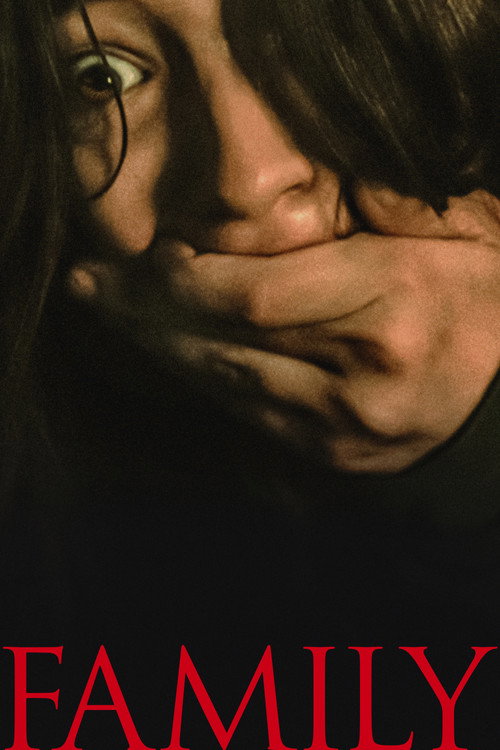
Family (2026)
Directed by Benjamin Finkel
Benjamin Finkel's Family arrives bearing the full weight of its autobiographical origins, the kind of grief-horror film that is conceived at age fourteen and refined over the following decade into something that critics will describe as "atmospheric" and "harrowing" and, if they are feeling generous, "Babadook-adjacent."
Consciousness Markers
Ruth Wilson's character carries the exhausting weight of caregiver burnout, which some critics might reach for as feminist commentary on domestic labor. The film does not appear to frame it that way.
The casting reflects no discernible effort to signal demographic diversity as a political statement. The ensemble is simply a cast.
There are no LGBTQ+ characters, themes, or gestures present. The film is occupied entirely with terminal illness and childhood dread.
No racial themes, race-conscious casting discourse, or commentary on systemic inequality appear anywhere in the film or its reception.
The film's dread is sourced entirely from cancer and grief. The planet is left to fend for itself.
No critique of wealth, capitalism, or class structures is present or implied. The horror here is biological, not economic.
Body image politics do not enter the frame. The film's relationship with the body is existential rather than social.
The child protagonist's spiral into fantasy is framed as a grief response, not as a celebration or representation of neurodivergent experience.
The film operates in a contemporary domestic setting with no historical narrative to revise.
By all available evidence, the film has nothing to say to the audience about how they should live their lives. It is too busy being sad.
Why it received this score
Benjamin Finkel's Family arrives bearing the full weight of its autobiographical origins, the kind of grief-horror film that is conceived at age fourteen and refined over the following decade into something that critics will describe as "atmospheric" and "harrowing" and, if they are feeling generous, "Babadook-adjacent." A ten-year-old girl watches her world contract around a dying parent and concludes, reasonably from her perspective, that the supernatural is responsible. The film does not disagree with her. It is a portrait of a child's mind doing exactly what a child's mind does when the truth is too large to hold directly.
From the perspective of this office's primary area of inquiry, Family is a remarkably clean specimen. It registers essentially nothing across our standard battery of cultural markers. There is no agenda here beyond the exploration of grief, no demographic signaling, no lecture delivered from behind the camera. Ruth Wilson's exhausted mother is not a symbol of systemic injustice. She is simply a woman watching her husband die while also trying to keep a household running, and the film treats this as the private catastrophe it is, not as a data point in a broader argument. This is increasingly rare, and we note it the way a geologist notes the absence of a particular sediment layer: with neutral interest and careful annotation.
The film's lineage, Hereditary, The Babadook, Relic, is a genre now well-established enough to have its own critical vocabulary. Finkel works within it competently. The horror functions as a child's externalised psychology, which is honest and unsentimental and, crucially, not interested in your politics. In a cultural moment when many films feel compelled to earn their emotional weight by demonstrating the correct values first, Family simply proceeds with its story. We record this as a fact. Whether it constitutes a virtue is left as an exercise for the viewer.
Analysis generated by our Consciousness Algorithm


Synopsis
A 10-year-old girl begins to believe her parents are trying to kill her. Convinced a sinister spirit is to blame, she spirals into a haunting fantasy world that mirrors her deepest fears.