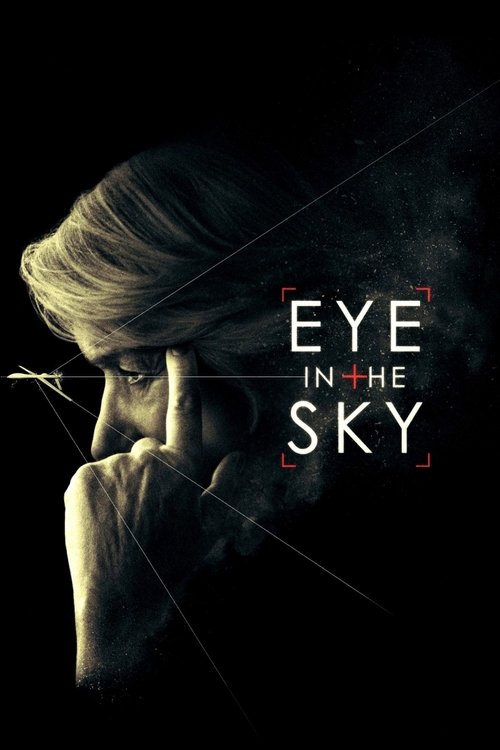
Eye in the Sky (2015)
Directed by Gavin Hood
No — Eye in the Sky is not especially woke, scoring 22 out of 100 on our wokeness meter.
Gavin Hood's 2015 thriller assembles a multinational apparatus of colonels, lawyers, pilots and ministers, all of them bound by video link to a Nairobi safe house where three Al-Shabaab leaders are arming suicide vests.
Consciousness Markers
The film is essentially a dramatized ethical seminar on drone warfare, cycling through legal, political, and military arguments, though it presents competing viewpoints rather than preaching a single conclusion.
The cast is genuinely multinational, with Somali-British actor Barkhad Abdi and Kenyan performers playing Kenyan roles, but this diversity is organic to the Nairobi setting rather than a deliberate representational statement.
Helen Mirren commands the operation as Colonel Katherine Powell, a woman wielding authority in a male-dominated military chain, though the film never frames this as a gender argument.
The collateral death of a Kenyan girl at the hands of Western powers carries an implicit postcolonial weight, but the film treats it as a universal moral dilemma rather than a racial-consciousness thesis.
No LGBTQ+ characters, themes, or subtext appear anywhere in the film.
No environmental or climate themes are present.
The Foreign Secretary's trade mission is incidental; the film has no critique of capitalism or wealth.
No body-positivity themes or messaging.
No neurodivergent characters or themes.
The film is a fictional scenario, not a reworking of documented history.
Why it received this score
Gavin Hood's 2015 thriller assembles a multinational apparatus of colonels, lawyers, pilots and ministers, all of them bound by video link to a Nairobi safe house where three Al-Shabaab leaders are arming suicide vests. The machinery of the film is procedural and precise: a Reaper drone flown from Nevada, a Kenyan agent crawling through a market with an insect-sized camera, a British general herding politicians toward a decision none of them wants to own. Helen Mirren holds the center as Colonel Katherine Powell, issuing orders into a room full of men who outrank her in theory and defer to her in practice. The film never pauses to congratulate itself on that arrangement, which is to its credit. She is simply the most competent person present, and the story treats this as unremarkable.
The moral architecture is a seminar with a body count. Every rung of the chain of command passes the question upward, and every rung offers a fresh argument about legality, proportionality and political fallout, until the only person who cannot abstract the decision away is a pilot watching a nine-year-old girl sell bread outside the target. The film is careful to give each position its due, which keeps it from becoming a sermon even as it flirts with the form. The Kenyan setting and the Kenyan performers, Barkhad Abdi among them, lend the proceedings a texture that feels observed instead of assembled. When the girl dies, the weight lands as a postcolonial wound without the screenplay ever announcing it as such.
What lingers is the exhaustion of it. Alan Rickman's final live-action performance carries a weariness the film earns, and his rebuke to a civilian official lands with the force of a man who has stopped arguing and started remembering. The result is a taut, cerebral chamber piece about remote violence, more interested in the mechanics of complicity than in telling us how to feel. It is a serious film about serious things, and it mostly trusts us to keep up.
Analysis generated by our Consciousness Algorithm


Synopsis
A UK-based military officer in command of a top secret drone operation to capture terrorists in Kenya discovers the targets are planning a suicide bombing and the mission escalates from “capture” to “kill.” As American pilot Steve Watts is about to engage, a nine-year old girl enters the kill zone, triggering an international dispute reaching the highest levels of US and British government over the moral, political, and personal implications of modern warfare.
Questions about Eye in the Sky
Is Eye in the Sky woke?
No — Eye in the Sky is not especially woke, scoring 22 out of 100 on our wokeness meter. That earns it a verdict of Based.
Does Eye in the Sky have any woke elements?
2 of the 10 markers register at 30 or above, led by Lecture Energy (40) and Representation Casting (35). On Lecture Energy: The film is essentially a dramatized ethical seminar on drone warfare, cycling through legal, political, and military arguments, though it presents competing viewpoints rather than preaching a single conclusion.
How does Eye in the Sky compare to other 2015 movies?
It ranks #58 of the 289 films from 2015 we've scored; their average is 15. The wokest is Chi-Raq (78).
How is the Woke Score calculated?
An AI-assisted process researches the film and its reception, scores it 0–100 on ten markers, then combines those into one 0–100 Woke Score. It measures a specific set of 2020s cultural themes, not film quality.