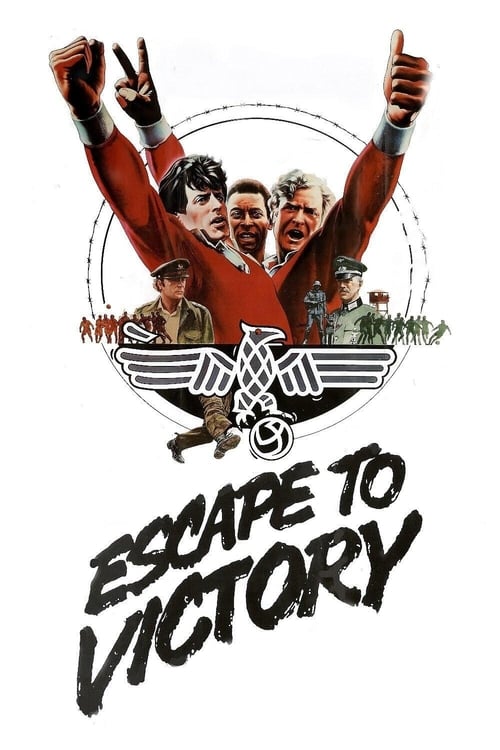
Escape to Victory (1981)
Directed by John Huston
No — Escape to Victory is not woke, scoring 2 out of 100 on our wokeness meter.
John Huston's Escape to Victory arrives from 1981 like a time capsule from a less complicated cultural moment.
Consciousness Markers
The cast includes international footballers like Pelé, but their presence is for sports authenticity and star power, not modern diversity casting with commentary.
No LGBTQ+ themes or characters are present.
The film is set in a WWII POW camp and features no significant female characters or feminist themes.
Race is not a thematic concern; the multi-national Allied team is presented without racial commentary.
No environmental or climate-related themes.
The antagonists are Nazis, not capitalists; the film does not critique capitalism.
No body positivity themes or messaging.
No neurodivergent characters or themes.
While inspired by a discredited historical myth, the film does not engage in modern progressive historical revisionism.
The film is a straightforward sports war drama without preachy modern social justice lecturing.
Why it received this score
John Huston's Escape to Victory arrives from 1981 like a time capsule from a less complicated cultural moment. The premise is straightforward: Allied prisoners of war play a soccer match against their German captors, with a cast that includes Sylvester Stallone, Michael Caine, and the peerless Pelé. The film is a remake of a 1961 Hungarian drama, and it wears its influences without apology. There is no agenda here beyond the thrill of the underdog and the spectacle of professional footballers performing in a prison camp. The Nazis are villains of the old school, unburdened by any contemporary political nuance. The Allied team is a multinational assortment, but their diversity is a matter of wartime geography, not a casting directive. No one comments on race, gender, or sexuality. The film's moral universe is as simple as a penalty kick. What strikes the modern viewer is the absence of sermonizing. The film does not lecture about capitalism, climate change, or the importance of body positivity. It does not pause to explain neurodivergence or offer a revisionist take on history. The historical basis, a discredited myth about a death match in Ukraine, is treated as a convenient backdrop instead of a subject for critical inquiry. The drama comes from the pitch, not from the pulpit. Even the escape plot, which involves a tunnel and the French Resistance, is handled with a straightforwardness that feels almost quaint. The film trusts its audience to root for the prisoners without being told why. In the current cinematic landscape, this is a rare vintage. It is not a film that seeks to instruct or improve. It seeks to entertain, and it does so with a certain earnest clumsiness. The soccer scenes are genuinely well-photographed, and Pelé's bicycle kick remains a highlight. But the dialogue is often wooden, and Stallone's goalkeeping is less convincing than his escape attempts. Yet these flaws are part of its charm. Escape to Victory is a relic of a time when a war film could be just a war film, and a sports movie could be just a sports movie. For that, it earns a place in the cellar of any serious student of cultural temperance.
Analysis generated by our Consciousness Algorithm


Synopsis
A group of POWs in a German prison camp during World War II play the German National Soccer Team in this powerful film depicting the role of prisoners during wartime.
Questions about Escape to Victory
Is Escape to Victory woke?
No — Escape to Victory is not woke, scoring 2 out of 100 on our wokeness meter. That earns it a verdict of Ultra Based.
Does Escape to Victory have any woke elements?
No. All 10 markers score zero.
How does Escape to Victory compare to other 1981 movies?
It ranks #27 of the 43 films from 1981 we've scored; their average is 5. The wokest is The Fox and the Hound (18).
How is the Woke Score calculated?
An AI-assisted process researches the film and its reception, scores it 0–100 on ten markers, then combines those into one 0–100 Woke Score. It measures a specific set of 2020s cultural themes, not film quality.