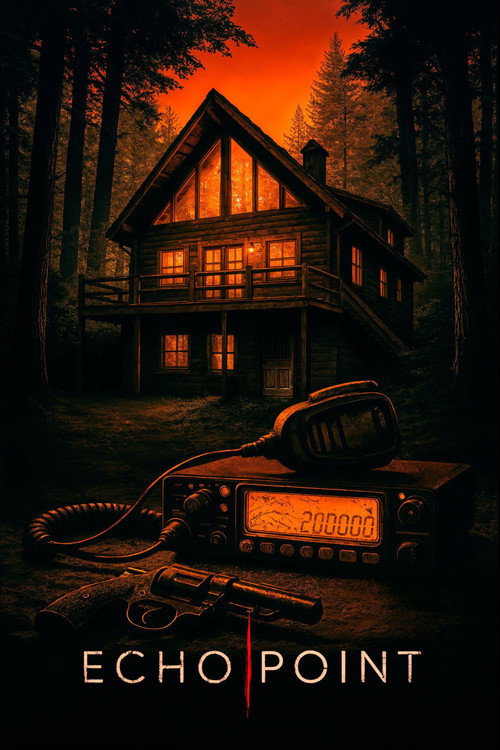
Echo Point (2026)
Directed by Evan Marcewicz
Echo Point is a self-funded micro-budget thriller shot in five days in Somerset County, New Jersey, by first-time director Evan Marcewicz, who also wrote, shot, and edited the film.
Consciousness Markers
No evidence of casting decisions driven by representation mandates. The ensemble appears assembled purely on the basis of availability to a micro-budget New Jersey shoot over five days.
No LGBTQ+ themes, characters, or subtext identified in any available coverage or synopsis material.
The central protagonist is male, the plot concerns inheritance and a killer's victims, and no feminist framing has been identified in any critical or promotional material.
No racial commentary, systemic critique, or race-conscious narrative framing is present in the film's documented reception or synopsis.
A secluded cabin and a mysterious radio do not, on available evidence, serve as metaphors for environmental collapse. The wilderness is backdrop, not sermon.
No anti-capitalist themes identified. The inheritance of a cabin from an estranged father is a genre-standard setup, not a critique of accumulated wealth.
No body positivity themes or messaging identified in any available material.
No neurodivergent characters or related themes have been identified in the film's synopsis or critical coverage.
The film is an original contemporary thriller with no historical setting or revisionist framing of any kind.
Reviewers describe a slow-burn survival mystery in the late-80s/early-90s genre tradition. No preachy messaging of any variety has been reported.
Why it received this score
Echo Point is a self-funded micro-budget thriller shot in five days in Somerset County, New Jersey, by first-time director Evan Marcewicz, who also wrote, shot, and edited the film. A man inherits a cabin from his estranged father and discovers a radio broadcasting the voices of a serial killer's victims. It is, in the taxonomy of genre cinema, a perfectly conventional premise, executed with the earnest resourcefulness of someone who genuinely wanted to make a movie and simply did so. We note this with a degree of respect that surprises us.
From the perspective of progressive social consciousness, Echo Point is a barren landscape. A thorough survey of its critical reception, its promotional materials, and its cultural footprint yields precisely nothing: no representation mandates, no systemic critiques smuggled into the third act, no character whose identity is the point. The killer kills. The radio speaks. The man investigates. The film declines, with admirable consistency, to have any opinions about society whatsoever. In the current cultural climate, this qualifies as a minor act of defiance, even if an entirely unconscious one.
The late-80s and early-90s survival-mystery register that reviewers have identified places Echo Point in a tradition that predates the modern vocabulary of social awareness entirely. It is a film about dread, isolation, and a dead father's secrets. These are old concerns. They were old when the genre was young. The score reflects a complete absence of the markers we are contracted to measure, and we record that absence here with the same solemnity we would bring to any other finding.
Analysis generated by our Consciousness Algorithm
Synopsis
A man inherits a secluded cabin from his estranged father. Inside, he discovers an old radio emitting strange, eerie signals. As he begins to unravel the truth, he realises the voices on the other end belong to the victims of a killer.