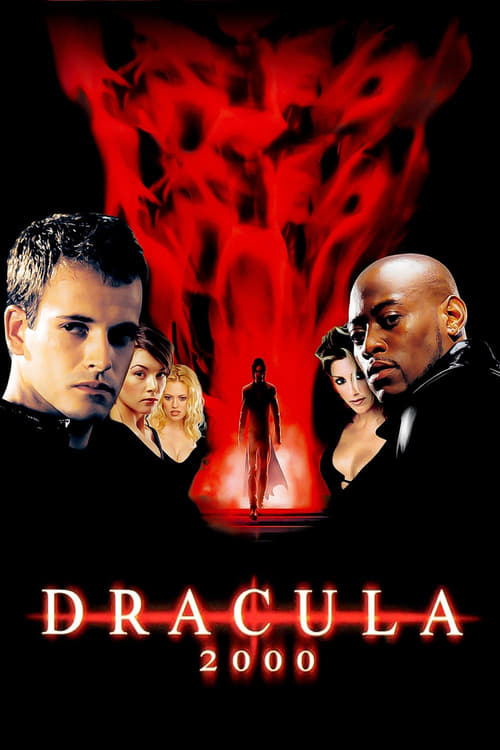
Dracula 2000 (2000)
Directed by Patrick Lussier
No — Dracula 2000 is not woke, scoring 9 out of 100 on our wokeness meter.
Dracula 2000 arrives with the confidence of a film that knows exactly what it is and has no intention of apologizing.
Consciousness Markers
The film reimagines Dracula's origin as Judas Iscariot, a creative theological revision of the vampire myth and Christian lore, though it is a fictional/religious reimagining rather than an ideological rewriting of history.
The cast includes Black actors Omar Epps and Sean Patrick Thomas and Latina Jennifer Esposito in supporting roles, but they exist naturally within the ensemble without any commentary or identity-driven framing.
Mary Heller is the protagonist who ultimately defeats Dracula through her own free will, but this is standard final-girl horror convention rather than a feminist statement.
The Judas backstory is delivered as expositional revelation, but the film is a pulpy horror romp and never preaches at the audience.
No LGBTQ+ characters, themes, or subtext appear anywhere in the film.
The film engages no racial themes or commentary whatsoever.
No environmental or climate content of any kind.
The heist premise is a plot device to release Dracula; the film offers no critique of wealth or capitalism.
No body-positivity themes; the film trades in conventional horror imagery of vampiric transformation.
No neurodivergent characters or themes are present.
Why it received this score
Dracula 2000 arrives with the confidence of a film that knows exactly what it is and has no intention of apologizing. A crew of techno-savvy thieves crack a vault expecting art and find a silver coffin, a premise that announces its intentions early. Wes Craven's name sits atop the poster, the soundtrack is a parade of late-nineties nu-metal, and Gerard Butler was cast as the Count two days before cameras rolled. The result is a pulpy gothic romp through New Orleans, and it carries almost no social agenda beyond the desire to be released before Christmas.
Where the film does flex a little cultural muscle is in its theology. The revelation that Dracula is Judas Iscariot, cursed with eternal life for betraying Christ, is a genuine reimagining of the vampire myth. It rewrites religious lore, not history, so the revisionism stays in the realm of creative invention instead of ideological correction. The exposition lands as a monologue, delivered with a straight face, and the film never pauses to lecture us about anything larger. Mary Heller does dispatch the Count through her own free will, which satisfies the final-girl playbook without mounting an argument about gender. The supporting cast includes Omar Epps, Sean Patrick Thomas, and Jennifer Esposito, all of whom simply exist in the ensemble, unremarked upon.
Strip away the theology and the leather and the Linkin Park needle drops, and little remains. There is no environmental sermon, no critique of wealth despite a heist, no inquiry into identity. It is a vampire movie that wants to be scary and occasionally sexy and mostly succeeds at neither. We are left with a curio, a relic of a rushed production, preserved for the ages like a coffin in a vault.
Analysis generated by our Consciousness Algorithm


Synopsis
When a team of techno-savvy thieves break into a high-security vault, they don't discover priceless works of art... they find a crypt unopened for 100 years.
Questions about Dracula 2000
Is Dracula 2000 woke?
No — Dracula 2000 is not woke, scoring 9 out of 100 on our wokeness meter. That earns it a verdict of Ultra Based.
Does Dracula 2000 have any woke elements?
Very few. None of the 10 markers reaches 30, the level where a marker counts as present; the highest is Revisionist History at 20.
How does Dracula 2000 compare to other 2000 movies?
It ranks #57 of the 125 films from 2000 we've scored; their average is 13. The wokest is But I'm a Cheerleader (72).
How is the Woke Score calculated?
An AI-assisted process researches the film and its reception, scores it 0–100 on ten markers, then combines those into one 0–100 Woke Score. It measures a specific set of 2020s cultural themes, not film quality.