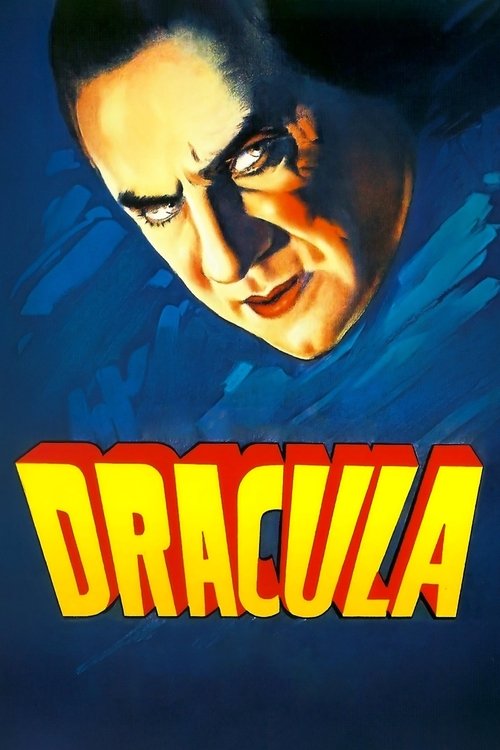
Dracula (1931)
Directed by Tod Browning
No — Dracula is not woke, scoring 0 out of 100 on our wokeness meter.
The 1931 Dracula arrives from a world that had not yet invented the vocabulary our current audit requires.
Consciousness Markers
The cast is uniformly white and drawn from the studio's stage and contract players, with no modern diversity-conscious casting agenda.
No LGBTQ+ characters, themes, subtext, or advocacy appear in the film.
Mina and Lucy are primarily victims and objects of Dracula's predation; the film advances no feminist critique or female-empowerment agenda.
The film uses Hungarian signs and villagers for regional atmosphere, not racial consciousness or social-justice commentary.
No environmental or climate-crisis themes are present.
Property leasing and aristocratic wealth exist as plot mechanics, but the film offers no anti-capitalist critique of wealth or class.
No body-positivity themes or body-diverse representation are present.
Renfield's madness is a Gothic horror device portrayed as grotesque and threatening, not as neurodivergent identity or advocacy.
The film is a supernatural fiction adapted from a novel and play, not a revisionist historical narrative.
Van Helsing's vampire explanations are plot exposition, not modern moralizing or ideological instruction.
Why it received this score
The 1931 Dracula arrives from a world that had not yet invented the vocabulary our current audit requires. Its menace is aristocratic and supernatural. Its victims are women. Its savior is a professor with a crucifix, a mirror, and a makeshift stake. The film carries the looseness of the pre-Code era, which means it could show blood and suggest predation, not that it possessed a modern social program. Universal wanted a hit, and Tod Browning delivered a stage-bound chiller that turned Bela Lugosi into an icon. The agenda, such as it was, was box office.
The cast is uniformly white and stocked with stage and contract players. Mina and Lucy exist to be drained and rescued. Renfield's madness is played as Gothic grotesquerie, a spectacle of insect-eating and servile terror, not as an identity to be honored. The Hungarian prayer and village signs provide regional atmosphere. They do not constitute racial commentary. Van Helsing's explanations of vampirism are exposition, a lecture about fictional biology. They aim to move the plot, not to instruct the audience on contemporary virtue. There is no environmental sermon, no critique of wealth disguised as a vampire tale, no body-positive reading of the undead, and no queer subtext that the film itself advances. Dracula's brides are threats, not a polycule. The film's anxieties are Victorian, sexual in a repressive key, and safely contained by the stake.
Seen through the lens of our current cultural moment, the picture is a clean null result. It matters historically. It does not matter as a vehicle for progressive sensibilities. The count remains a monster, the professor remains the authority, and the women remain furniture with pulses. We record the absence with the gravity it deserves. A classic, yes. A case study in modern social consciousness, no.
Analysis generated by our Consciousness Algorithm
Part of


Synopsis
A British estate agent travels to Transylvania to meet with the mysterious Count Dracula, who is interested in leasing a London castle. After Dracula enslaves and drives the agent to insanity, the pair return to London together, where Dracula, a secret bloodsucker, begins preying on socialites.
Questions about Dracula
Is Dracula woke?
No — Dracula is not woke, scoring 0 out of 100 on our wokeness meter. That earns it a verdict of Ultra Based.
Does Dracula have any woke elements?
No. All 10 markers score zero.
How does Dracula compare to other 1931 movies?
It ranks #4 of the 4 films from 1931 we've scored; their average is 3. The wokest is M (4).
How is the Woke Score calculated?
An AI-assisted process researches the film and its reception, scores it 0–100 on ten markers, then combines those into one 0–100 Woke Score. It measures a specific set of 2020s cultural themes, not film quality.