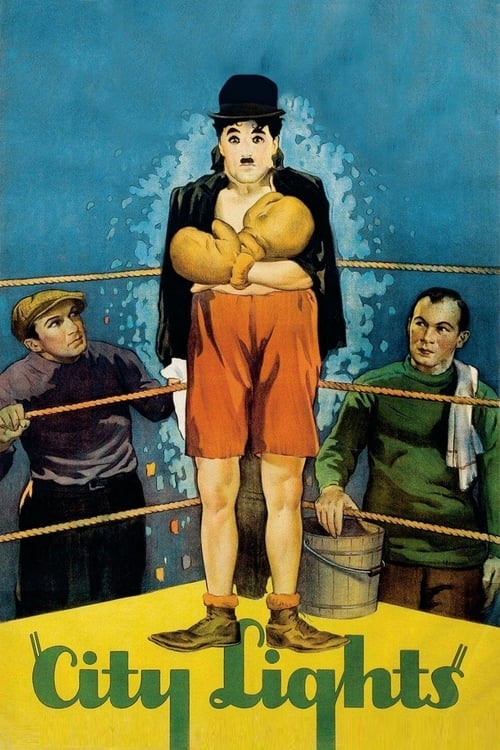
City Lights (1931)
Directed by Charlie Chaplin
No · Ultra Based
How we score movies →Consciousness Markers
The film contains diffuse sympathy for the poor and critique of wealth, but lacks systematic anti-capitalist analysis. The wealthy man is a buffoon rather than a villain. Class commentary is sentimental rather than analytical.
The cast is entirely white and reflects 1931 Hollywood's complete exclusion of non-white actors from anything but background roles. Virginia Cherrill is the sole female lead but exists primarily as a romantic object.
The film's message about poverty and human kindness is conveyed through silent cinema's visual poetry rather than explicit preachiness, but the sentimentality occasionally borders on sermon-like moral instruction.
The female character is sympathetic but passive, dependent on male rescue and romantic intervention. Her blindness and poverty are plot devices for the protagonist's heroism rather than explorations of her own agency.
Body positivity as a contemporary concept does not apply to 1931 cinema. The film contains no conscious engagement with body diversity or acceptance.
The female character's blindness is portrayed as a tragic condition requiring rescue, not as a lived experience to be understood or celebrated. No neurodivergence representation exists in any meaningful sense.
No LGBTQ themes, characters, or representation whatsoever. The film is aggressively heteronormative in its romantic plot.
No racial consciousness or representation of non-white experiences. The film is monolithically white in its casting and perspective.
Climate themes are entirely absent from this 1931 romantic dramedy. Environmental consciousness was not part of the film's conceptual universe.
This is not a historical film and contains no revisionist historical claims or contemporary reframing of past events.


Synopsis
A tramp falls in love with a beautiful blind flower girl. His on-and-off friendship with a wealthy man allows him to be the girl's benefactor and suitor.
Why it received this score
City Lights operates as a pre-modern artifact of humanist sentiment, made in an era when progressive politics meant something closer to "do not starve" rather than any recognizable constellation of contemporary social consciousness. Chaplin's tramp character exists in a world of economic stratification, yes, but the film's class commentary emerges from genuine suffering rather than from any systematic engagement with structural inequality as a concept worthy of interrogation. The wealthy man is not an eat-the-rich villain so much as a buffoon. The blind flower girl is not a disabled woman with agency and representation so much as a tragic figure whose salvation depends on the tramp's romantic devotion and economic intervention.
What we observe here is a film made in 1931 that cannot possibly traffic in 2020s progressive sensibilities because those sensibilities did not exist. The female character, while sympathetic, exists primarily as an object of male desire and rescue rather than as an autonomous being. There are no LGBTQ themes. The representation of disability serves the romantic plot rather than exploring lived experience. The film's anti-capitalist impulses, such as they are, remain diffuse and sentimental rather than pointed or analytical.
Yet we must acknowledge that the film exhibits a kind of unvarnished empathy for the poor and dispossessed that predates contemporary frameworks. This is not wokeness. This is simply Charlie Chaplin being Charlie Chaplin in 1931, which is to say: a man moved by human suffering in ways that transcend historical period. The score reflects the film's complete absence of contemporary progressive markers, tempered only by the recognition that anachronism is not culpability.
Analysis generated by our Consciousness Algorithm
Critic Reviews
“There’s dignity and folly to The Tramp in City Lights, and everything in between.”
“If only one of Charles Chaplin's films could be preserved, “City Lights” (1931) would come the closest to representing all the different notes of his genius. It contains the slapstick, the pathos, the pantomime, the effortless physical coordination, the melodrama, the bawdiness, the grace, and, of course, the Little Tramp--the character said, at one time, to be the most famous image on earth.”
“Both funny and touching, this showcases Chaplin at his best.”
“It’s not Chaplin’s best picture, because the comedian has sacrificed speed to pathos, and plenty of it. This is principally the reason for the picture running some 1,500 or more feet beyond any previous film released by him. But the British comic is still the consummate pantomimist, unquestionably one of the greatest the stage or screen has ever known. Certain sequences in “City Lights” are hilarious.”