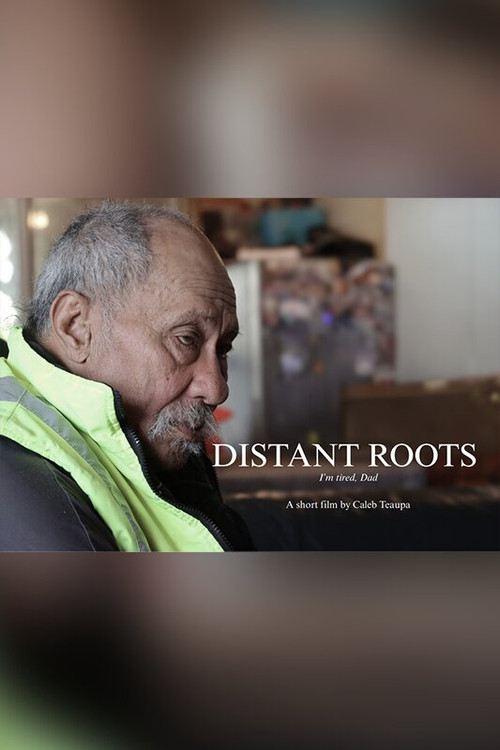
Distant Roots (2026)
Directed by Caleb Teaupa
Caleb Teaupa's fifteen-minute short arrives from the Pasifika festival circuit carrying the specific gravity of a film that knows exactly what it is and declines to be anything else.
Consciousness Markers
The film centres entirely on a Tongan-New Zealand elder, written and directed by a Tongan-New Zealand filmmaker, and is rooted in Pasifika diaspora experience. The representation is organic to the story's premise, not a corrective gesture toward a previously white-cast narrative.
The film engages with the lived experience of a Pacific Islander migrant worker in New Zealand, and themes of cultural distance and heritage preservation are present. This is not framed as systemic racial critique but as personal, interior experience.
The image of a man in his seventies still grinding through construction labor carries an implicit commentary on the economic conditions facing migrant workers. It is understated, not rhetorical.
Festival program notes describe the film as a visual poem rather than a polemic. The thematic concerns are rendered through atmosphere and character rather than speechifying. The score is minimal and reflects only the faintest residual earnestness inherent to diaspora short filmmaking as a form.
No LGBTQ+ themes, characters, or subtext are present or reported in any available material.
The film's central figure is an elderly man. No feminist framing, female empowerment arc, or patriarchy critique is evident in the synopsis or any coverage.
No climate themes, environmental messaging, or ecological consciousness appears anywhere in the film's synopsis or coverage.
No body positivity themes or messaging are present in any available material.
No neurodivergence themes or characters are present or reported.
The film makes no attempt to reframe historical events or challenge a dominant historical narrative. It is a quiet personal drama, not a historical corrective.
Why it received this score
Caleb Teaupa's fifteen-minute short arrives from the Pasifika festival circuit carrying the specific gravity of a film that knows exactly what it is and declines to be anything else. A Tongan man in his seventies. Construction work. New Zealand. The children have left. Vava'u is far away. The film holds these facts up to the light like stones, turning them slowly, and trusts the audience to feel their weight without being told to.
This is, in the taxonomy of cultural awareness, a film about diaspora identity, intergenerational distance, and migrant labor. These are the correct ingredients for a certain kind of earnest progressive short film, and yet Teaupa appears to have made something quieter and more stubborn than that. The racial consciousness score reflects the reality that a Tongan elder's experience in a New Zealand construction site is not a culturally neutral setting, but the film does not seem interested in delivering a verdict. It is interested in the man. The slight anti-capitalist undertow, a septuagenarian still lifting things for wages, is present the way weather is present: as condition, not argument.
We are left with a work that sits comfortably in the Pasifika diaspora tradition without reaching for the megaphone. It will screen at the right festivals, move the right audiences, and generate no partisan controversy whatsoever. In the current landscape, this is either a significant artistic achievement or a missed opportunity, depending entirely on who you ask. We are not going to ask anyone. We are going to note the score and move on.
Analysis generated by our Consciousness Algorithm
Synopsis
In New Zealand, a Tongan father in his seventies labours through the unchanging rhythm of construction work, long after his children have grown and moved on. As the days blur together and time slips away, he is haunted by distance, from his roots in Vava'u, Tonga, and from the family he is still trying to hold onto.