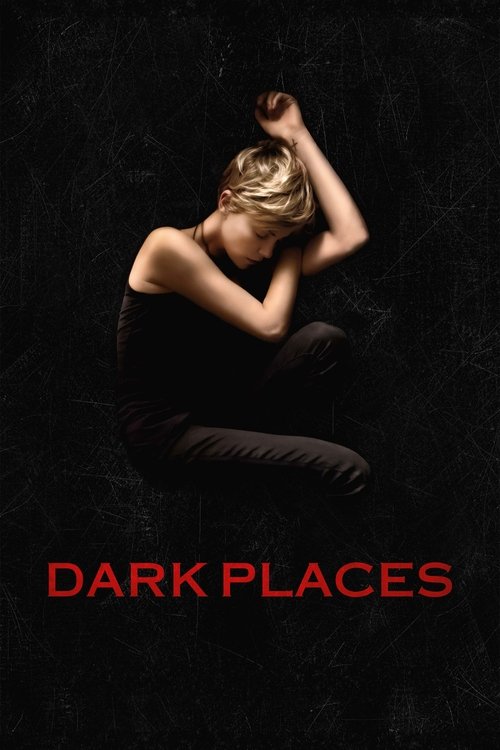
Dark Places (2015)
Directed by Gilles Paquet-Brenner
No — Dark Places is not woke, scoring 9 out of 100 on our wokeness meter.
Dark Places arrives as a reminder that the post-Gone Girl thriller economy was a cruel and crowded marketplace.
Consciousness Markers
Charlize Theron's Libby is a complex, self-directed female protagonist who does her own detective work rather than being a shivering victim, but the film offers no explicit feminist thesis or messaging.
The cast is overwhelmingly white, consistent with the rural Kansas source material; no deliberate diversity casting or color-conscious choices are evident.
Farm foreclosure and the 'Angel of Debt' killer gesture at financial desperation, but the debt motif functions as thriller plotting rather than a political indictment of capitalism.
This is a grim potboiler thriller that prioritizes twist mechanics over moral instruction; it delivers no social lecture to its audience.
No LGBTQ+ characters, themes, or subtext appear anywhere in the plot or cast.
The narrative involves no engagement with race as a theme; characters' racial identities are incidental and unremarked.
Environmental concerns play no role in the story whatsoever.
No body-positive themes or size-diverse representation are present.
No neurodivergent characters or themes are explored.
The film is a straightforward mystery adaptation with no revisionist reframing of historical events.
Why it received this score
Dark Places arrives as a reminder that the post-Gone Girl thriller economy was a cruel and crowded marketplace. Gilles Paquet-Brenner's adaptation of the Gillian Flynn novel has Charlize Theron, a satanic panic subplot, a farm foreclosure, and a hired killer called the Angel of Debt, and it still could not find an audience. It grossed a few hundred thousand dollars in American theaters, which for a film with this cast is less a release than a shrug. The camera work is moody. The Kansas flashbacks are grim. The whole enterprise sits there, competent and unwanted.
On the cultural ledger, the film is nearly inert. Its cast is white in a way that reflects rural Kansas source material instead of any deliberate casting philosophy, and race never enters the conversation. There is no LGBTQ content, no environmental concern, no body politics, no neurodivergent thread, no revisionist history. Theron's Libby is the one mild exception: a scarred, self-interested woman who runs her own investigation instead of waiting for men to solve it, which registers as a small anomaly in the genre without ever hardening into a thesis. The foreclosure hanging over the Day family, and the killer who murders so survivors can collect insurance, gesture toward economic desperation, but the debt is a plot mechanism, not an argument.
Nothing here lectures. The film prefers twist mechanics to moral instruction, and its twists are the problem. A mystery this overstuffed has no room for messaging, which may explain why it plays as neither camp nor tragedy, just a low simmer. We are left with a competent, forgotten thriller that earns its low marks not through hostility to modern sensibilities but through complete indifference to them.
Analysis generated by our Consciousness Algorithm


Synopsis
A woman who survived the brutal killing of her family as a child is forced to confront the events of that day.
Questions about Dark Places
Is Dark Places woke?
No — Dark Places is not woke, scoring 9 out of 100 on our wokeness meter. That earns it a verdict of Ultra Based.
Does Dark Places have any woke elements?
Very few. None of the 10 markers reaches 30, the level where a marker counts as present; the highest is Feminist Agenda at 20.
How does Dark Places compare to other 2015 movies?
It ranks #151 of the 289 films from 2015 we've scored; their average is 15. The wokest is Chi-Raq (78).
How is the Woke Score calculated?
An AI-assisted process researches the film and its reception, scores it 0–100 on ten markers, then combines those into one 0–100 Woke Score. It measures a specific set of 2020s cultural themes, not film quality.